

Review · PALACE ENTRY TICKETS
Copenhagen: Amalienborg Palace Museum Entry Ticket
Amalienborg Palace Museum brings you close to the Danish monarchy through rooms that look as if the royal occupants have only just stepped out. In Christian VIII’s Palace, you’ll see a royal dining room, a dark officer’s study, Russian jewels, family photographs, and the grand Gala Hall, all in the heart of Copenhagen.
I like the museum’s clear route and its personal scale. I also like the way everyday objects, portraits, and furniture explain the people behind the crown, not just the formal side of royal life. One consideration is value: at $19, this is not a large museum, and many people spend only 45 minutes to an hour inside.
Key points
- Preserved royal interiors: See Christian X’s study and the dining room he shared with Queen Alexandrine, maintained much as they were during their lives.
- Fabergé Chamber: View Russian jewelry from 1860 to 1917, including a coronation brooch made for Tsar Nicholas II.
- Eight-meter Gala Hall: Admire gilded decoration, palace-square views, and sculpture by Bertel Thorvaldsen.
- Family-focused storytelling: Portraits, personal belongings, and private rooms cover roughly 150 years of Danish royal life.
- Child-friendly audio material: The museum offers audio content for children, making the visit easier for families.
- Easy central stop: The palace is about a 15-minute walk from central Copenhagen, and the ticket is valid for one day.
What Amalienborg Palace Museum gives you
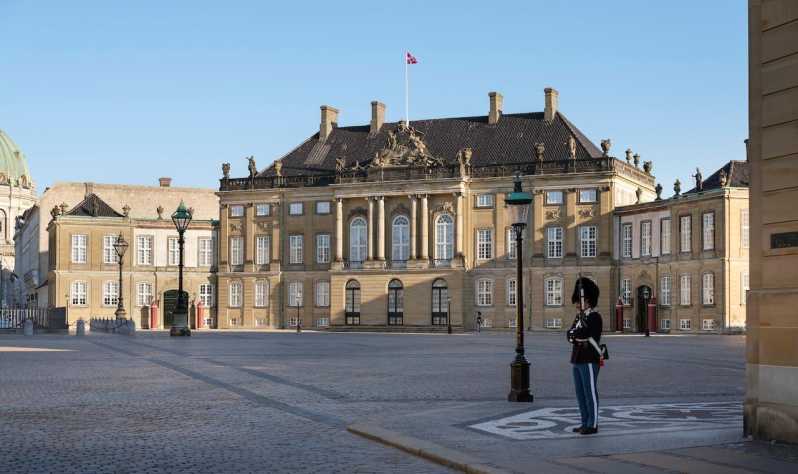
Amalienborg is not one single palace. It is a square made up of four palaces, and the museum occupies part of Christian VIII’s Palace. The Danish Royal Family resides at Amalienborg, so the setting feels like an active royal address rather than a completely frozen monument.
Inside the museum, you move through rooms linked to the monarchy of the last 150 years. The displays focus on the people who lived here, their habits, their family ties, and the objects they chose to keep around them. I find this more revealing than a palace filled only with grand state rooms.
The route is well organized and easy to follow. You do not need to plan a complicated sequence. Allow about an hour if you want to read the displays and listen to the audio material, or around 45 minutes for a quicker visit. You can also spend extra time outside in Amalienborg Square, which is part of the experience even though the ticket covers the museum.
More Palace Entry Tickets in the world:
- Venice: Doge’s Palace Reserved Entry Ticket
★ 4.6 · 42,716 reviews - Sintra: Pena Palace and Park Entrance Ticket
★ 4.2 · 17,410 reviews - Granada: Alhambra and Nasrid Palaces Entry Ticket
★ 4.6 · 15,130 reviews
Finding the museum inside Amalienborg Square
The entrance can be slightly confusing if you arrive without checking the directions. Enter Amalienborg Square from Frederiksgade, near the Marble Church, and use the first building on your left. That is the museum entrance.
Before going upstairs to the exhibition, take your online ticket downstairs to the cashier. Your QR code must be presented and scanned there. This is an important practical detail, since the phone code is not simply a matter of walking straight into the galleries.
Arrive on time. If you are more than 20 minutes late, the ticket is no longer valid. The ticket itself is valid for one day, but that does not mean you can arrive whenever you wish after your booked starting time.
Large bags, backpacks, large purses, food, and drinks are not allowed inside. Baby strollers are also not allowed, and pets cannot enter except for assistance dogs. Pack light and keep your ticket easy to reach.
Christian X’s study and the royal dining room
One of the most effective parts of the museum is Christian X’s study. It has been kept as though the king had just left, with dark walls and heavy furniture typical of a gentleman’s study around 1900.
The room also reflects Christian X’s military background. The setting feels more like an officer’s working room than a glossy royal showcase. That difference matters. You get a sense of the man’s habits and personality through the room itself, not only through a label on a wall.
Christian X used the palace from 1899 until his death in 1947. The period gives the study a strong historical frame, but the furnishings make the information feel personal rather than abstract.
The dining room shared by Christian X and Queen Alexandrine is preserved in nearly the same arrangement used during their time at the palace. They lived there from 1899 until their deaths, in 1947 and 1952. I like this room because it shows the monarchy in a domestic setting. A dining room can explain family life more directly than a ceremonial throne room.
You will not find a huge number of objects here. The value is in the arrangement. Tables, furniture, and decoration work together to show how the royal household functioned from day to day.
Queen Louise’s private salon and a family spread across Europe
Queen Louise’s private salon dates from around 1895 and reflects the more modern interior style of that period. Paintings and framed family photographs fill the room, pointing to her broad network of relatives across Europe.
This is where the museum’s family focus becomes clearest. Royal marriages connected courts across the continent, and Louise’s salon shows those links through images placed in a private setting. Instead of seeing monarchy only as ceremony and politics, you see it as family correspondence, portraits, and household memory.
I would spend time looking at the photographs rather than rushing through to the grander rooms. The salon is smaller and less dramatic than the Gala Hall, but it gives you a better feel for the people who occupied the palace.
The museum is suitable for children, too, especially because audio material is available for younger listeners. One family found that a seven-year-old particularly enjoyed the child-oriented audio content in each section. That does not turn the museum into a children’s attraction, but it gives families a useful way to keep younger attention on the displays.
More Palace Museums in the world:
- Venice’s Best: Basilica, Doge’s Palace, Gondola & History Gallery
★ 4.5 · 2,478 reviews - Royal Palace & Prado Museum Skip the Line Guided Tour
★ 4.5 · 1,347 reviews - Venice: City Pass with Museums including Doge’s Palace
★ 4.1 · 1,020 reviews - The Hague: Escher in The Palace Museum Ticket
★ 4.6 · 896 reviews
Russian jewels in the Fabergé Chamber
The Fabergé Chamber adds a different note to the visit. Here you see hand-crafted Russian jewelry dating from 1860 to 1917, with attention to the close connections between the Danish and Russian monarchies.
The most specific object mentioned is the Fabergé coronation brooch created for the coronation of Tsar Nicholas II. It helps explain why this collection belongs in a Danish royal museum. The pieces are not simply decorative jewelry. They also record the family and political connections between European royal courts.
This room is a good reminder that Amalienborg’s story reaches beyond Denmark. The museum does not treat the royal family as an isolated household. Objects from Russia help place Danish royalty within the larger network of courts, marriages, ceremonies, and inherited relationships.
If jewelry is your main interest, you may wish the room were larger. The museum is not a major jewelry collection, and the Fabergé Chamber is one section within a fairly compact route. Still, it is one of the most distinctive stops inside the palace.
The eight-meter Gala Hall
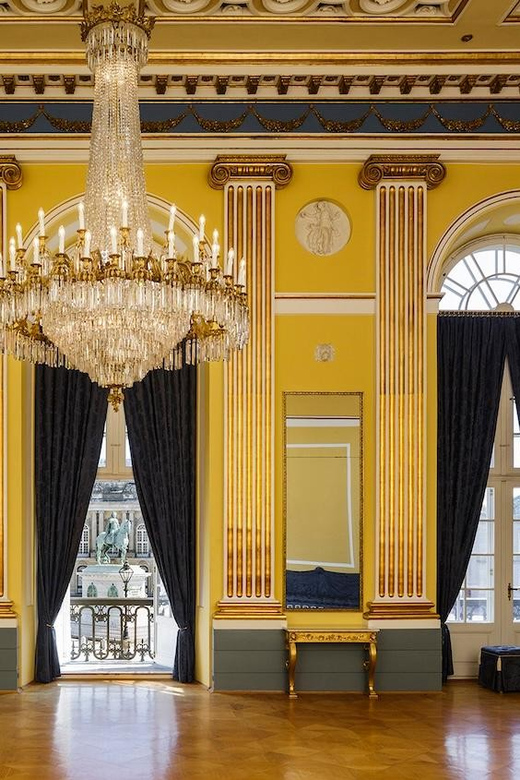
The Gala Hall is the museum’s grand visual moment. Its ceiling rises eight meters above the floor, with lavish gilding and a view toward the palace square.
The Royal Family commissioned the interior in 1794 from artist Nicolai Abildgaard. Sculptor Bertel Thorvaldsen created the sculptures. These details give the room artistic weight beyond its size. You are looking at a space designed for formal royal use, with decoration meant to impress from the moment you enter.
I like the contrast between this hall and Christian X’s study. The study is dark, practical, and personal. The Gala Hall is open, ceremonial, and deliberately magnificent. Together, they show two sides of palace life: the private rooms where people worked and lived, and the formal spaces built for royal display.
The view of Amalienborg Square also helps you understand the palace plan. After the indoor visit, take a little time outside to see how the four palace buildings frame the square. The museum ticket does not turn the entire complex into a guided tour, but the exterior setting adds useful context.
The Frederik X exhibition and changing displays
The museum presented FREDERIK X: King of Tomorrow from March 22 through September 8, 2024. The exhibition marked the succession of the Danish throne on January 14, using photographs, objects, video clips, paintings, and sound to present the new king.
Because that exhibition had a fixed closing date, you should not assume it will be available for a later visit. The permanent rooms remain the main reason to come, while special exhibitions can change with the royal calendar.
This type of temporary display adds a current connection to the older rooms. You move from monarchs whose studies and salons have been preserved to a much more recent royal transition. It gives the museum a link to Denmark today, not only to the past.
Check the current exhibition information before booking if a special display is important to you. The ticket includes access to the exhibitions being shown during your visit, but no guided tour is included.
Audio material, pace, and the lack of a guide
This is a self-guided museum visit. You should not expect a guide to lead you from room to room or provide a live explanation. That keeps the visit flexible, but it also means you need to read, listen, and set your own pace.
Audio material is available, including content aimed at children. That is useful if you want more context than the room displays provide. It also helps families follow the route without turning every stop into a long reading session.
A typical visit takes about 45 minutes to one hour. I would allow closer to an hour if you enjoy royal furniture, portraits, and small historical details. If you are mainly interested in the Gala Hall and the best-known rooms, you can see the essentials more quickly.
The route is described as well planned, which matters in a compact museum. You are not left wondering which room to visit next. The arrangement moves from private interiors and family details toward more formal palace spaces.
Is the $19 ticket good value?
At $19 per person, Amalienborg Palace Museum is reasonably priced for a central Copenhagen attraction, but the value depends on your expectations. You are paying for access to a carefully preserved royal interior, a small jewelry display, the Gala Hall, and the exhibitions available that day.
I would consider it good value if you enjoy royal history, historic interiors, or museums that tell stories through rooms and belongings. Families may also find the price easier to justify because of the child-oriented audio material.
If you expect a large palace complex with many wings, gardens, and hours of exhibits, you may feel the visit is short for the cost. One direct assessment described it as enjoyable but not especially large for the price. That is fair. The museum has quality and character, but not a vast amount of material.
The nearby palace square improves the overall stop. You can combine the indoor museum with time outside, and the location works well in a walking itinerary through central Copenhagen. It is about a 15-minute walk from the city center, according to the visit information.
Who should book this palace visit?
I would recommend the museum to you if you want a manageable royal attraction that fits easily into a day of sightseeing. It suits adults interested in royal families, decorative arts, Danish history, and historic rooms. It also works for families who want a museum with child-friendly audio support.
You may want to skip it if you have little interest in monarchy or if you need a large, all-day attraction. The museum is compact, and the experience is mostly quiet indoor viewing rather than a guided performance or hands-on activity.
The museum is wheelchair accessible, which makes it a practical choice for many visitors. Still, the ticket procedure requires a stop at the downstairs cashier before you go upstairs, so allow time for that step.
Final verdict: a compact and personal royal museum
Amalienborg Palace Museum offers a close look at Danish royal life without requiring half a day. I especially value the preserved study, the family photographs in Queen Louise’s salon, the Russian jewelry, and the sharp contrast between private rooms and the grand Gala Hall.
Book it if those details appeal to you, especially when you can pair the museum with a walk around Amalienborg Square. Go with realistic expectations: this is a focused museum visit of roughly an hour, not a sprawling palace tour. For the right audience, its personal rooms and clear route make the $19 ticket worthwhile.
FAQ
Where is the Amalienborg Palace Museum?
The museum is in Christian VIII’s Palace, one of the four palaces that make up Amalienborg in Copenhagen, in Denmark’s Region Zealand.
Which entrance should I use?
Enter Amalienborg Square from Frederiksgade or the Marble Church. The museum entrance is in the first building on your left.
How long is the ticket valid?
The ticket is valid for one day. You must still arrive within the permitted arrival time, since a ticket is no longer valid if you arrive more than 20 minutes late.
How long does the museum visit take?
Plan on about 45 minutes to one hour. You can spend longer if you read the displays carefully or take extra time with the rooms and audio material.
Is a guided tour included?
No. The ticket includes entry to the Amalienborg Palace Museum and access to all exhibitions, but a guided tour is not included.
Is the museum wheelchair accessible?
Yes. The activity information states that the museum is wheelchair accessible.
Can I bring a large bag or backpack?
No. Large bags, backpacks, large purses, and other oversized luggage are not allowed inside. Food and drinks are also not allowed.
Are children likely to enjoy the museum?
The museum offers audio material for children, with content available in the different sections. This can help younger children follow the visit.
What is included in the ticket?
The ticket includes entry to the Amalienborg Palace Museum and access to all exhibitions available during your visit.
Newly added in the world
- Ayutthaya Full-Day Tour with Bang Pa In (Summer Palace)★ 5.0 · 2 reviews
- Bali: Gate Of Heaven and Water Palace Tirta Gangga Package★ 4.7 · 3 reviews
- Avignon: Around The Palace Tour★ 4.5 · 13 reviews
- Aranjuez: Royal Palace Guided Tour★ 4.5 · 93 reviews
- Asia Continent & Topkapı Palace & Harem. Guided, Small group★ 4.9 · 3 reviews
- Kornik Castle and Rogalin Palace Half-Day Private Tour★ 5.0 · 2 reviews
- Antananarivo: Guided Tour and sunset in queen’s palace★ 3.9 · 13 reviews
- Royal Palace of Aranjuez Small-Group Tour with Entry Ticket★ 5.0 · 2 reviews
Palace Entry Tickets, compared.






Buckingham Palace: The State Rooms Entrance Ticket
Read our review →

Prague Castle and Lobkowicz Palace Entry Tickets
Read our review →Browse the lists this tour appears in