
Review · CHATEAU AND WINE ESTATE TOURS
Château de Luc: Unique visit and wine tasting
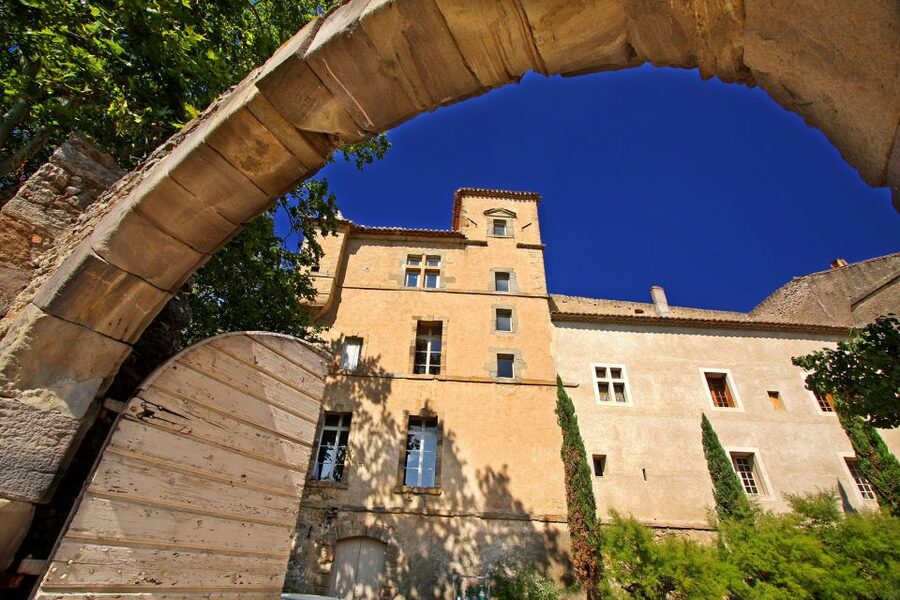
The most unusual part of Château de Luc is below ground: a 14th-century cellar beneath the old home, still tied to the estate’s wine-making story. The visit connects old rooms, family history, and the wider story of Languedoc wine, ending with organic wines in a former stable.
I like two things here. First, the tour gives you more than a tasting, with the 1907 wine revolt and the region’s 19th-century boom adding useful context. Second, the family-run setting feels personal. Jeanne, one of the guides, has been praised for explaining the estate with warmth and simplicity.
The main drawback is that the visit may feel short if you want a large winery operation or a long technical tasting. One visitor also found the wines disappointing, and the visitor-area directions could be clearer, so this is best for people who value history and a small-scale setting as much as the bottle itself.
Key points to know before you go
- A 14th-century underground cellar: See the oldest and most distinctive part of the château visit beneath the historic home.
- A short story of Languedoc wine: Learn about the 19th-century golden age and the major revolt of 1907.
- Three to six organic wines: The tasting covers bottles from IGP Pays d’Oc through AOC Languedoc, Corbières, and Minervois.
- A family-run experience: Guides such as Jeanne explain the estate, wine work, and local sights in a direct, personal way.
- Three languages: The tour is offered in French, English, and Spanish.
- Good value at $15: The fee includes the guided visit and tasting, while children under legal drinking age visit free.
Entering Château de Luc and its family wine story
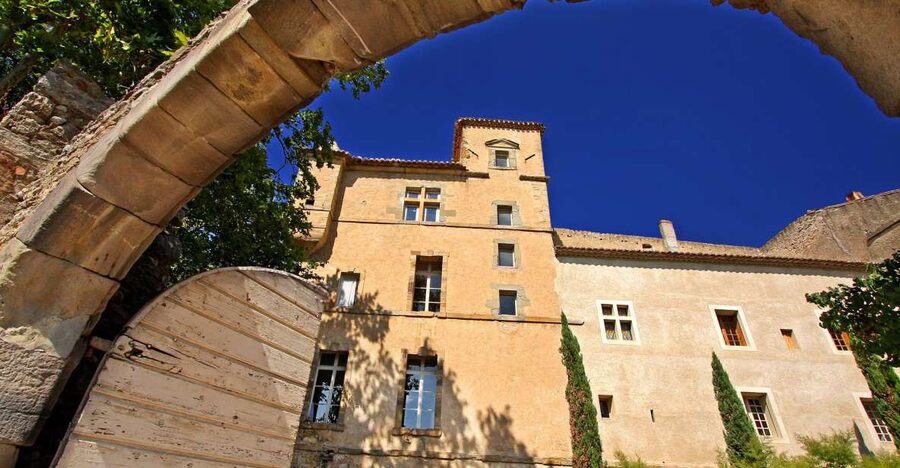
Château de Luc is not simply a place to stand at a counter and taste a few wines. The visit begins with the family business and the château itself, giving you a sense of how wine production, domestic life, and regional history overlap here.
The setting matters. A family-run estate can explain wine in a way that feels closer to a conversation than a sales pitch. You can ask about vineyard management, winemaking, the estate’s different bottles, and places worth visiting nearby.
That personal angle is one of the strongest reasons to choose this visit. Jeanne has been singled out for her enthusiasm, expertise, and straightforward way of talking about the family’s work and its domains. You should expect a guide who wants to explain the place, not simply move you along to the next tasting glass.
The visit is available in French, English, and Spanish. That makes the historical portion much easier to follow, especially since the tour deals with several periods of regional wine history rather than just the names of grape varieties.
More Chateau and Wine Estate Tours in France
- Medoc or Saint Emilion Wine Tasting and Chateau from Bordeaux
★ 5.0 · 1,415 reviews - From Paris: Full-Day Loire Valley Chateaux Tour
★ 4.4 · 1,269 reviews - Versailles Château and Gardens Walking Tour
★ 4.5 · 727 reviews
Historic rooms that lead to the cellar
The first part takes you through the château’s historic rooms. The supplied details do not give a room-by-room list, so you should not expect a fixed palace tour with a long inventory of grand interiors. The purpose is to connect the building with the family’s wine-growing past.
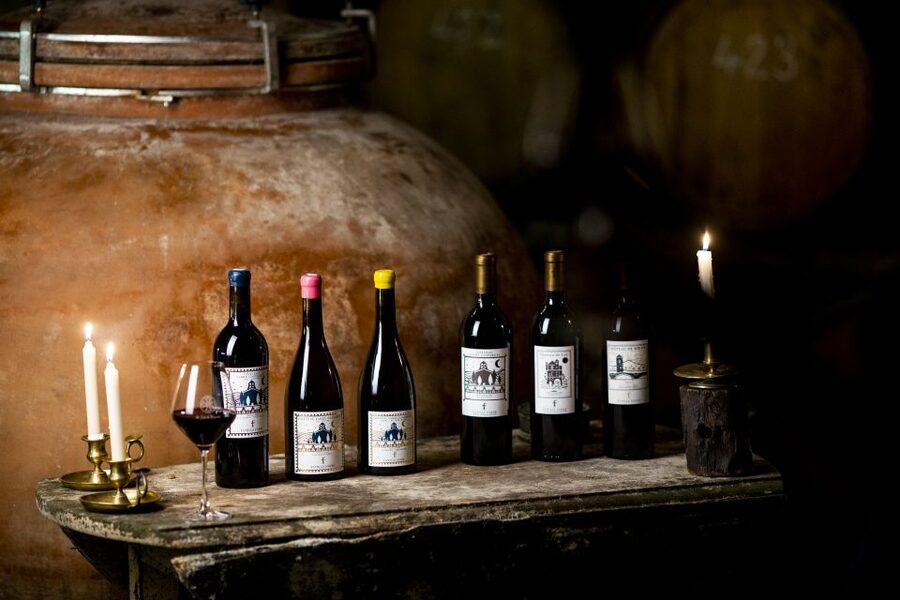
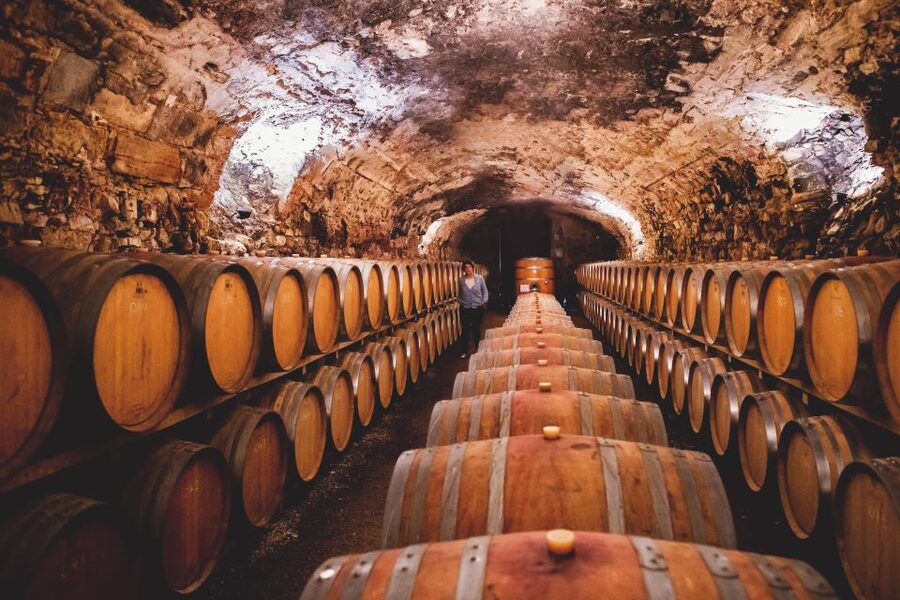
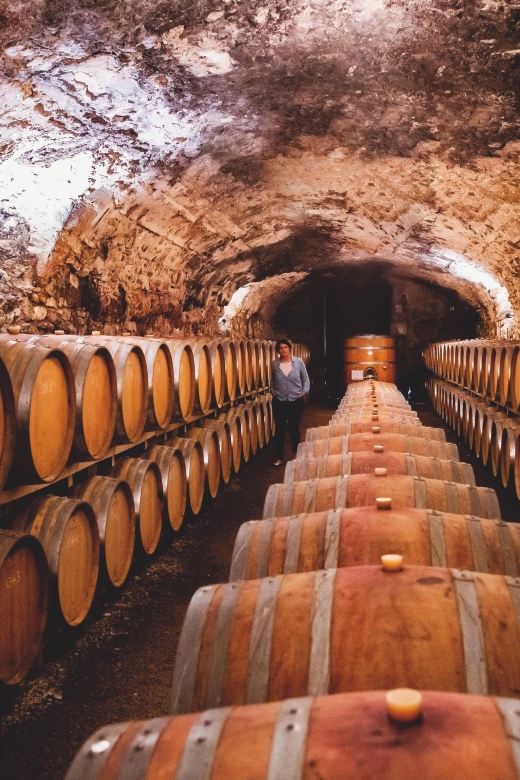
The real prize comes below the old home. The 14th-century underground cellar is the visit’s signature sight, and it gives the tour a physical sense of age that a modern tasting room cannot provide.
You may see aging barrels in the ancient cellar, as one visitor did, but the exact arrangement can vary. The cellar is not presented as a polished museum display. Its appeal comes from being part of a working wine estate and from showing how long wine production has been tied to this property.
For me, this is where the $15 price begins to make sense. Even if you are only a casual wine drinker, an old underground cellar gives the tasting a clear setting and a story. You are not just sampling a drink with a label. You are connecting it to a building that has been used and adapted across centuries.
The physical setting also means this is not ideal for wheelchair users. The experience is specifically listed as unsuitable for wheelchair users, so accessibility should be settled before booking.
The epic of the Midi wine region
The guided history moves beyond Château de Luc and into the wider Languedoc wine region. Two moments receive special attention: the 19th-century golden age of wine and the great revolt of 1907.
The 19th century was a major period for wine production in the Midi. The visit uses that era to explain how vineyards shaped the economy and character of southern France. You do not need to arrive with a background in French wine history. The guide provides the basic frame while walking you through the estate.
The 1907 revolt adds a sharper edge to the story. Wine growing was not always a calm rural trade. Production, prices, commercial pressures, and local livelihoods could create serious tension. Hearing about that revolt helps you see the vineyard as part of social and economic life, not just a pretty backdrop for a tasting.
I appreciate this historical angle because it keeps the tour from becoming a list of appellations. You learn why Languedoc wine matters to the region and how the fortunes of wine growers could affect entire communities.
The history is also likely to appeal to people who are interested in Occitania and southern French culture. The tour presents the château as one piece of a much larger story, from family continuity to the forces that shaped the Midi wine trade.
Tasting organic wines in the former stable
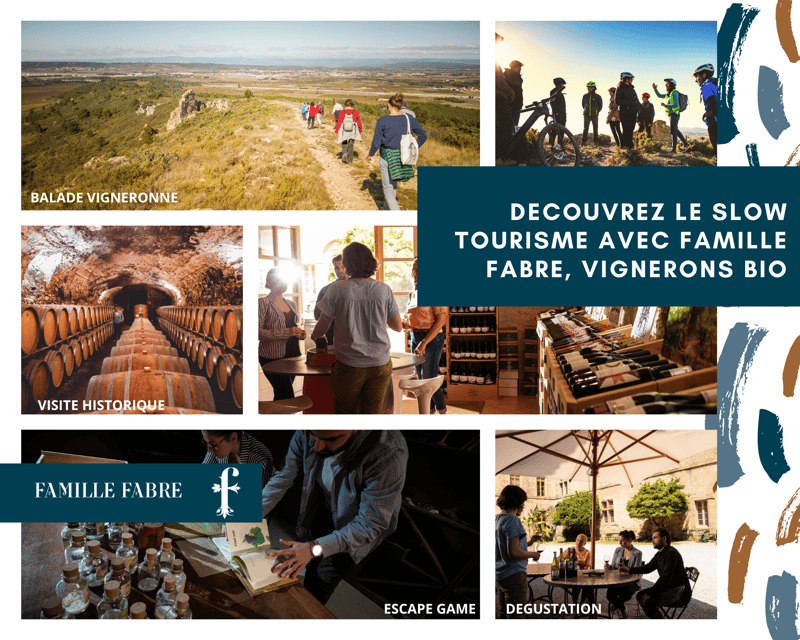
After the historic visit, you head to the tasting cellar, which is housed in an old stable. It is a fitting end to the tour: a practical agricultural space becomes the place where you compare the estate’s current wines.
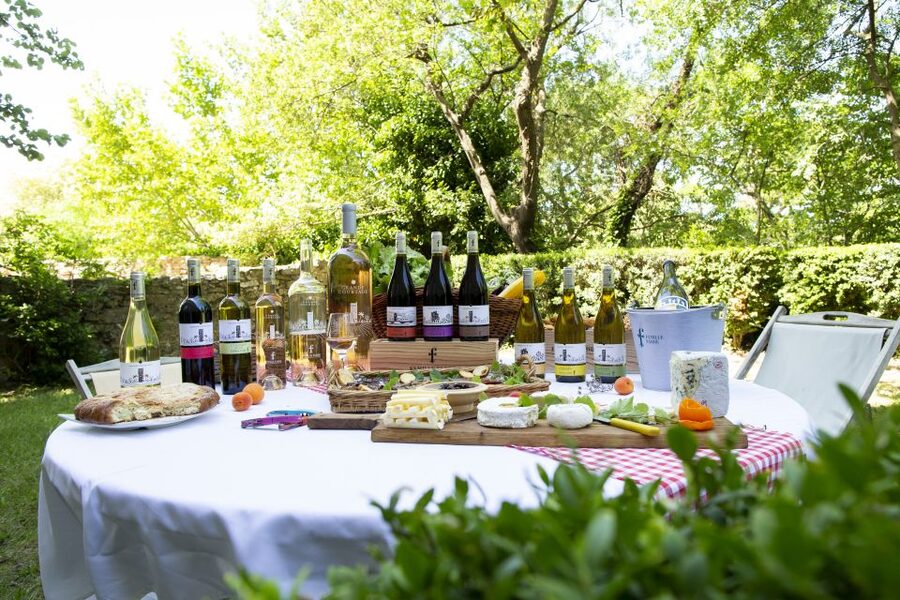
You taste a selection of three to six organic wines. The range includes IGP Pays d’Oc, AOC Languedoc, Corbières, and Minervois. That spread gives you a chance to compare different regional designations rather than tasting one style and calling it a day.
The number of wines may vary from three to six. That is useful to know if you are hoping for a large flight, but it also suggests a manageable tasting rather than a marathon. You can focus on differences between the bottles and ask questions without turning the final part into a rushed parade of glasses.
The organic certification is another important point. The visit is not only about old stone and family anecdotes. It also introduces the estate’s current approach to vineyard work and wine production.
Still, keep your expectations personal and realistic. Wine taste is subjective. Most of the available feedback is very positive, with praise for variety, quality, and reasonable prices, but one visitor found the wines to be of low quality and the visit uninteresting. That dissent is worth taking seriously. The tasting should suit someone curious about organic Languedoc wines, not someone seeking a guaranteed favorite from a prestigious collector’s cellar.
If you find two bottles you like, the estate sells wine at what has been described as a reasonable cost. You can treat the tasting as both a cultural stop and a chance to choose a bottle for later, without assuming that every wine will suit your palate.
Same city, another grand address:
- Paris: Versailles Palace and Gardens Full Access Ticket
★ 4.6 · 41,579 reviews - Versailles: Skip-the-Line Tour of Palace and Gardens Access
★ 4.7 · 10,429 reviews - From Paris: Versailles Palace & Gardens with Transportation
★ 4.6 · 6,222 reviews - Versailles: Skip-the-Line Guided Palace Tour and Full Access
★ 4.6 · 5,214 reviews
What makes the $15 price worthwhile
At $15 per person, the value is strong if you want three parts in one stop: a historic building, an old cellar, and a guided tasting. You are paying for the guide’s time as well as the wine, and the historical explanation gives the visit more substance than a quick pour at a shop.
The price is especially fair for people who enjoy context. You hear about the estate, the family business, regional wine production, and the 1907 revolt before sampling the current wines. That combination would be hard to recreate by simply visiting a tasting counter.
The value is less clear if you only want a highly technical wine class. The available information does not promise detailed instruction on every grape, vintage, fermentation method, or barrel program. You can ask about winemaking and vineyard management, but the advertised focus is the family estate and the story of the Midi wine region.
Children under legal drinking age visit free. That makes the stop easier to consider for families, although only adults would take part in the wine tasting.
How personal the visit can feel
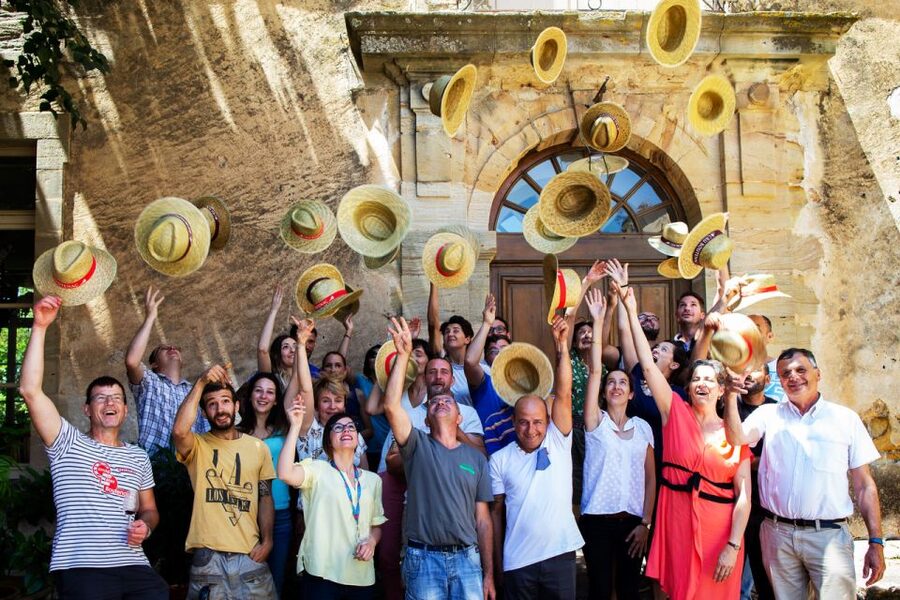
The size of the group is not specified. It may be a standard small group, or it may become more personal on a quiet day. One visitor arrived to find they were the only people booked and received a private tour from a member of the family.
You should not count on a private visit, but the possibility says something useful about the scale of the operation. This is not presented as a large industrial winery with a fixed script and a crowd moving through on a conveyor belt.
Another visitor arrived late because of time problems and was still accommodated. That suggests some flexibility, but I would not treat it as a guarantee. Plan to arrive on time, especially since the visitor area may not be easy to identify. The clearest practical criticism in the available feedback was the need for better directions to the visitor area.
Give yourself extra time to locate the entrance and tasting space. If you are driving between other stops in the Languedoc, check the meeting details carefully before setting off.
Who will enjoy Château de Luc most
I would choose this experience if you like wine but also want a sense of place. The old cellar and regional story provide enough substance for someone who would find a basic tasting too thin.
It is also a good fit for history-minded visitors. The 14th-century cellar, the family estate, and the 1907 revolt create a clear thread through the visit. You do not need to be an expert in French wine to follow it.
The tour suits couples, adult friends, and families with children who can take part in the historic portion without drinking. The free admission for under-age children helps keep the cost reasonable for a mixed-age group.
It may not suit you if you need step-free access. It may also disappoint if your main goal is an extensive professional tasting, a large modern production facility, or a guaranteed set of luxury wines. The visit is strongest as a cultural wine experience with a tasting attached.
Languages, flexibility, and practical details
The live guide speaks French, English, or Spanish, so select the language that lets you get the most from the historical explanation and wine questions. The language option matters here because the visit includes regional events and wine terms that can be easy to miss in a rushed translation.
The booking is valid for one day, with starting times shown according to availability. You can cancel up to 24 hours before the visit for a full refund, and the reserve-now, pay-later option lets you hold a place without paying immediately.
Those policies are helpful if your southern France plans are still shifting. They do not change the character of the visit, but they reduce the risk of locking yourself into a fixed plan too early.
The tour is not suitable for wheelchair users. The visitor-area directions may require extra attention, so save the meeting information and allow a little time to find the correct part of the property.
Should you book Château de Luc?
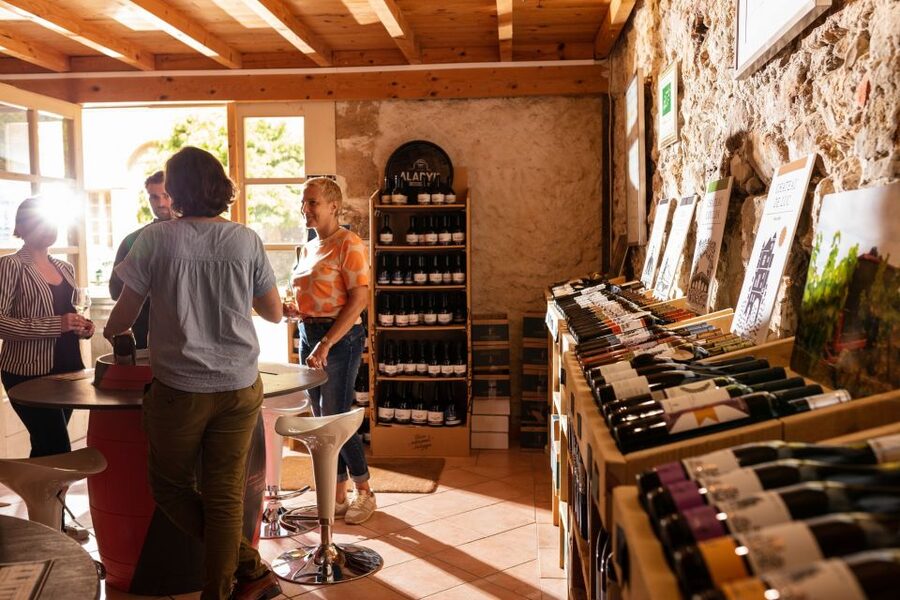
Book it if you want a personal family estate visit that joins local history with organic wine. The 14th-century cellar is the main draw, while the story of the Languedoc wine region gives the tasting a reason to exist beyond the glass.
At $15, it is a sensible buy for curious wine drinkers, history fans, and anyone building a day around the smaller towns and vineyards of southern France. I would be more cautious if you are a serious wine specialist seeking a long technical session or if access needs are a concern.
Go with an open palate. The selection may include a bottle you love, and the estate offers wines at reasonable prices, but personal taste will decide the final verdict. For most people, the strongest value lies in the complete experience: historic rooms, an old underground cellar, a family guide, and a clear introduction to the wine story of the Midi.
FAQ
How much does the Château de Luc visit cost?
The experience costs $15 per person.
How long is the Château de Luc experience?
The activity information states that the booking is valid for one day, but it does not give a specific tour length.
What languages are available?
The live tour is offered in French, English, and Spanish.
What does the visit include?
It includes a guided tour of the château’s historic rooms, a visit to the 14th-century underground cellar, and a tasting of three to six organic wines.
Which wines can I taste?
The selection can include organic wines from IGP Pays d’Oc, AOC Languedoc, Corbières, and Minervois.
Is the wine tasting included in the price?
Yes. A selection of three to six organic wines is included.
Can children join the visit?
Yes. Under-age children can visit free of charge.
Is the experience suitable for wheelchair users?
No. The activity is not suitable for wheelchair users.
Can I cancel my booking?
Yes. You can cancel up to 24 hours in advance for a full refund.
Can I reserve now and pay later?
Yes. You can reserve your place and pay later, keeping your plans flexible.
More Food and Drink Stops in France
- Dijon: La Cave du Palais Burgundy Wine Tasting Experience
★ 4.8 · 400 reviews - Beaune: Wine Tasting at Château de Pommard
★ 4.6 · 353 reviews - Châteauneuf du Pape Wine Day Tasting Tour including Lunch from Avignon
★ 5.0 · 287 reviews - Nice : Wine Tasting at a Historic Château in a Land Rover !
★ 4.9 · 156 reviews
Newly added in France
- The Blending Tour at Château de La Dauphine★ 5.0 · 5 reviews
- Discovery Tour of Château Haut Breton Larigaudière★ 5.0 · 2 reviews
- Luxury Tour of Château de La Dauphine★ 5.0 · 11 reviews
- Discovery visit of Château Rol Valentin with tasting★ 5.0 · 34 reviews
- Wine Gaming at Chateau Lamothe★ 5.0 · 3 reviews
- Wine Tour at Chateau Lanessan★ 4.5 · 13 reviews
- Picnic at the Château de la Selve!★ 5.0 · 26 reviews
- Private Tour in Fontainebleau Palace with Skip-The-Line Ticket★ 5.0 · 9 reviews
Chateau and Wine Estate Tours, compared.
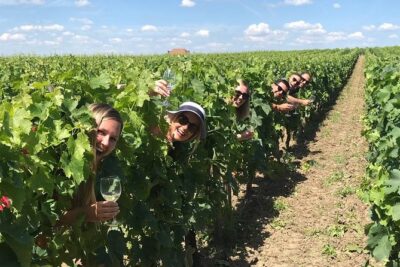
Medoc or Saint Emilion Wine Tasting and Chateau from Bordeaux
Read our review →
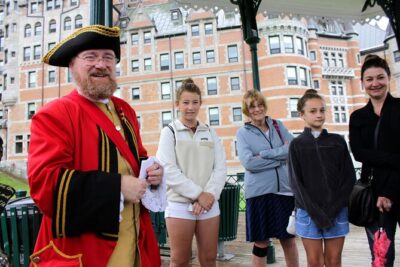
Guided Tour of the Fairmont Le Chateau Frontenac in Quebec City
Read our review →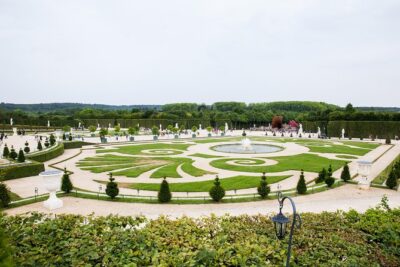
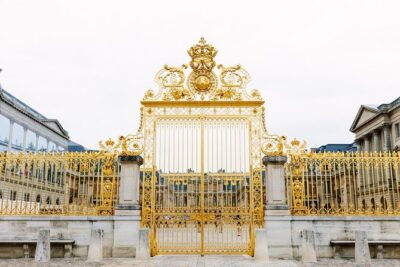
Versailles Château and Gardens Walking Tour from Paris by Train
Read our review →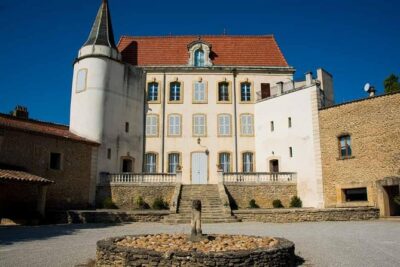

Loire Valley: Château Royal d’Amboise Entrance Ticket
Read our review →
Fontainebleau & Vaux-le-Vicomte Châteaux Day Tour from Paris
Read our review →Browse the lists this tour appears in