Review · DIOCLETIAN'S PALACE TOURS
Split: Diocletian’s Palace Private walking tour
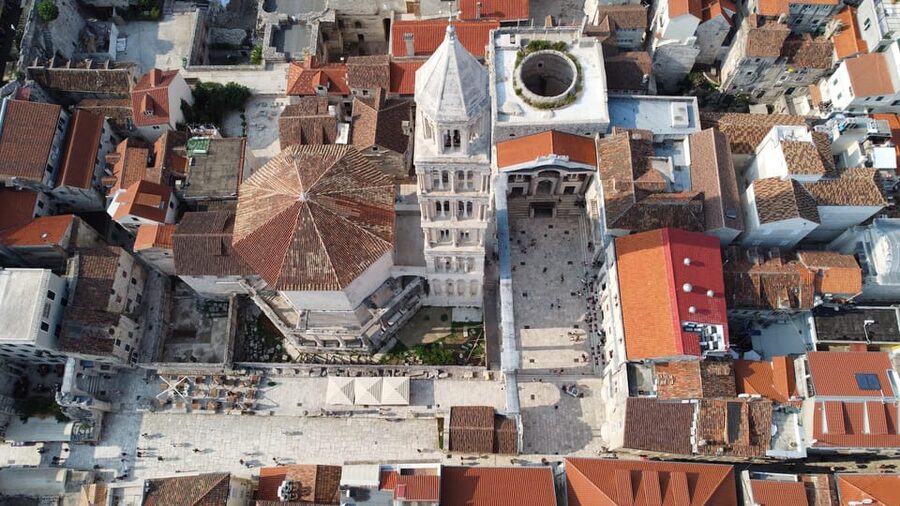
Diocletian’s Palace is not a fenced-off ruin. It is a 1700-year-old Roman palace where people still live, work, worship, and walk to dinner. That makes this tour a useful way to read Split’s old center, where ancient stone and modern life share the same narrow streets.
I like the clear route through the Peristyle, cathedral, Vestibule, and Golden Gate. I also like the small group limit of 10 and the chance to adjust the walk to your interests. The main consideration is that this is a walking tour through an old site with uneven access, and church services or special events may force a change in the route.
Key points at a glance
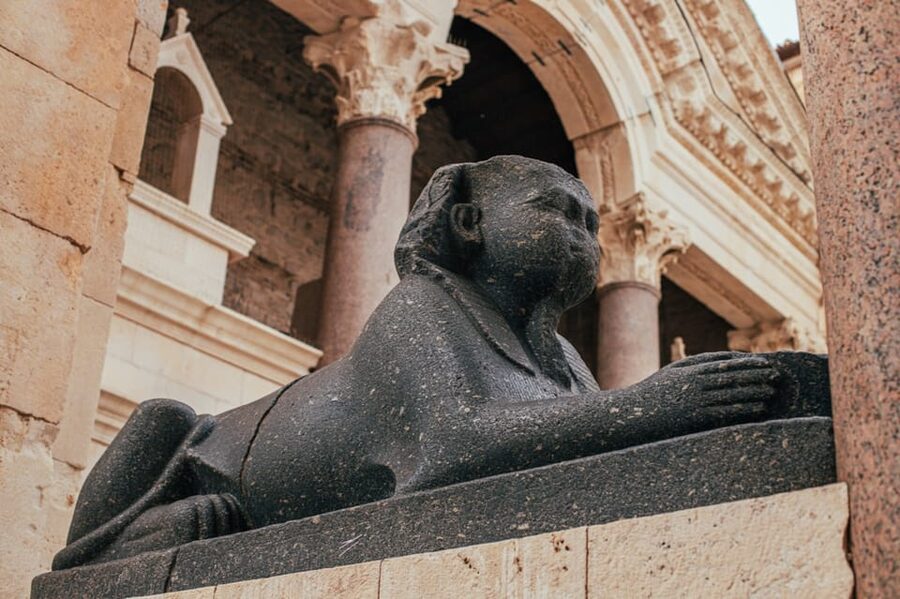
- A Roman palace that is still part of daily Split: You see ancient architecture in an active city center, not behind museum glass.
- The Peristyle explains imperial power: This was where Diocletian presented himself as the son of Jupiter.
- A mausoleum became Split Cathedral: The tour follows the remarkable change from pagan imperial tomb to Christian church.
- The Vestibule leads toward private imperial rooms: This grand entrance helps you picture how visitors approached the emperor.
- The Golden Gate has a small surprise inside: The former guard corridor contains the Church of St. Martin, described as the city’s smallest church.
- A compact group keeps the walk personal: The tour is designed for no more than 10 participants and can be adjusted to your needs.
Why Diocletian’s Palace feels different from a normal ruin
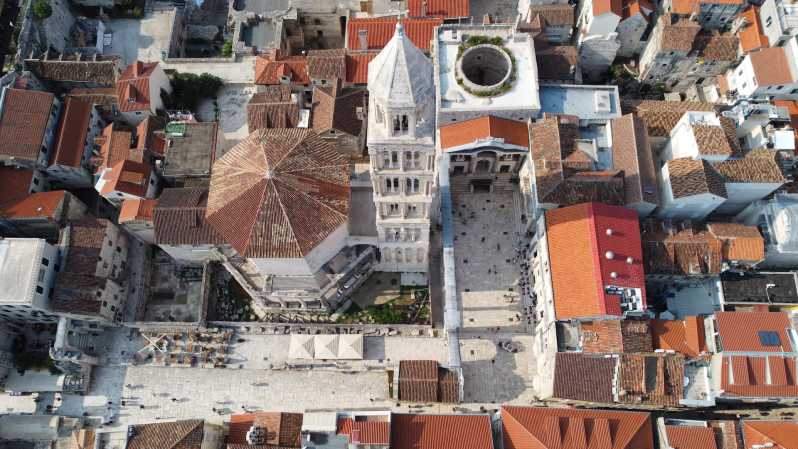
I find the palace most interesting because it has never become just a monument. Its stones form part of Split’s old town, and homes and businesses occupy spaces that once served the Roman emperor. You are not simply looking at where people lived 1,700 years ago. You are walking through an area that still functions as the city center.
That distinction matters. A traditional museum gives you objects in cases and signs on walls. Here, the basic shape of the palace is all around you, but it can be hard to understand without guidance. A private walking tour gives those old stones a purpose. The Peristyle becomes an imperial stage, the Vestibule becomes an approach to private quarters, and the gates become evidence of how the palace was protected and entered.
You should expect a fair amount of standing and walking. Since the site is only partly wheelchair accessible, tell the provider about mobility needs before you book. The route can be adapted, but the ancient setting naturally limits access in some places.
More Palace Walking Tours in Croatia
- Split: Old Town and Diocletian Palace Walking Tour
★ 4.9 · 4,727 reviews - Walking Tour of Split and Diocletian’s Palace
★ 5.0 · 2,588 reviews - Split & Diocletian’s Palace Walking Tour
★ 5.0 · 1,125 reviews
Starting on the Riva and finding the palace
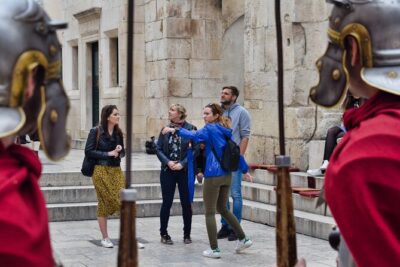
The meeting point is the bronze model of Split at the eastern end of the Riva promenade. This is a practical place to begin because it gives you a clear reference point before you enter the old center. You meet your guide there, then set off on foot through the area tied to Diocletian’s palace.
The tour returns to the same meeting point at the end. That makes the outing easy to fit into a day of sightseeing along the waterfront, and you do not need to arrange transportation back from a distant neighborhood.
Your guide may lead in English, French, or German. Dana is one of the guides associated with the experience, and the supplied information describes her as an enthusiastic young guide who gives the walk a personal touch. You should confirm your preferred language when booking.
There is no stated tour duration, so I would not build a tightly timed connection around it. If you have a ferry, meal booking, or another timed activity, ask for the expected length before paying. The value of a private walk depends partly on having enough time to pause at the main sites rather than rushing from one doorway to the next.
The Peristyle and Diocletian’s public image
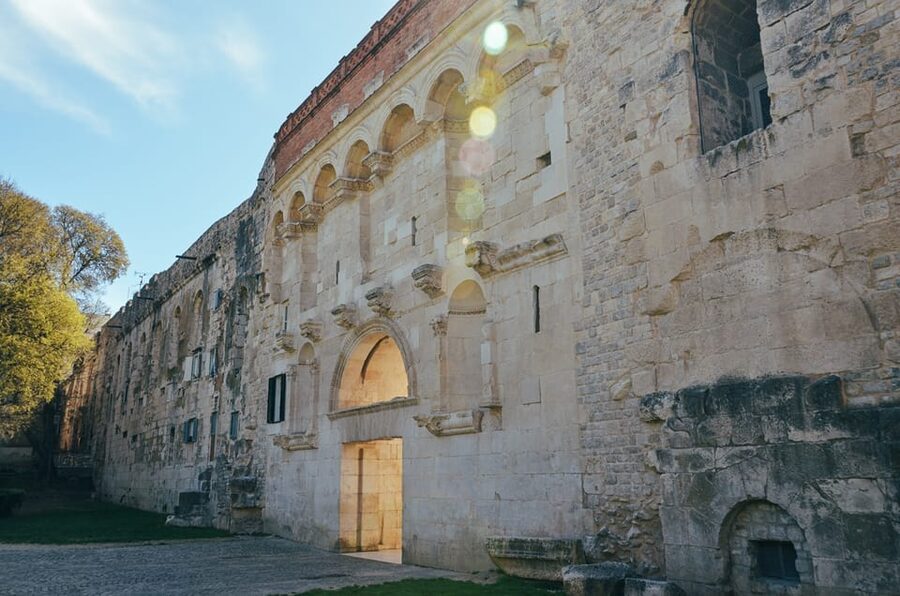
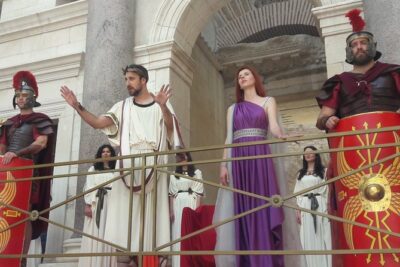
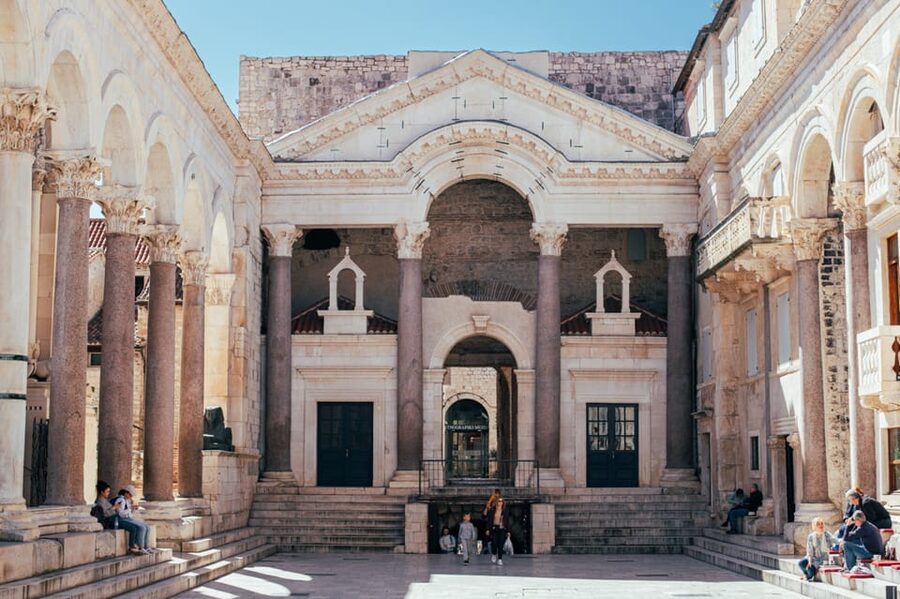
The Peristyle is one of the central stops and one of the best places to understand how Diocletian wanted to be seen. During his reign, this was an important meeting place where the emperor was worshipped as the son of Jupiter.
That idea can sound abstract until you picture the setting. The Peristyle was not simply an open square for people to cross. It helped create a formal meeting point between the emperor and his subjects. The architecture and ceremony reinforced his authority.
I like this stop because it gives the tour a clear theme: the palace was designed not only as a home but also as a stage for power. Your guide can connect the space to Diocletian’s public role, helping you see why the palace needed grand approaches and carefully arranged areas.
This is also where the living nature of Split is especially clear. The square is part of the present-day city, so you will see modern activity against Roman design. That mixture is the point. The palace has changed purpose many times without losing its basic importance.
Split Cathedral, from imperial tomb to Christian church

The cathedral offers one of the strongest stories on the route. Its building began as the mausoleum of Emperor Diocletian, but after Christianization, the emperor’s remains disappeared and the structure became a cathedral.
That change tells you a great deal about Split. The building was not demolished and replaced. Instead, an imperial pagan structure was given a new religious role. The result is an unusual combination of Roman funerary architecture and Christian use.
The tour focuses on the cathedral’s history and exterior. That distinction is useful because you should not assume the walk always includes every interior space. Church services or other religious activity may prevent entry, and the program can be adjusted when that happens.
I especially value this stop for the contrast it creates with the Peristyle. At the Peristyle, Diocletian appears as a living ruler claiming divine status. At the cathedral, his former resting place has been reshaped by a later faith. You get a compact lesson in how cities reuse important buildings instead of leaving them frozen in one period.
If church access matters to you, ask about the expected conditions on your date. The exterior still carries the main story, but the interior may not always be available.
More Palace Walking Tours in Split
- Split: Diocletian Palace & Old Town Guided Walking Tour
★ 4.7 · 882 reviews - Diocletian’s Palace and Old Town SMALL GROUP Walking Tour
★ 5.0 · 502 reviews - SPLIT-PRIVATE Walking Tour of Diocletian’s Palace & Old Town
★ 5.0 · 467 reviews - 90-min Diocletian Palace Walking Tour
★ 5.0 · 323 reviews
The Vestibule and the road to private rooms
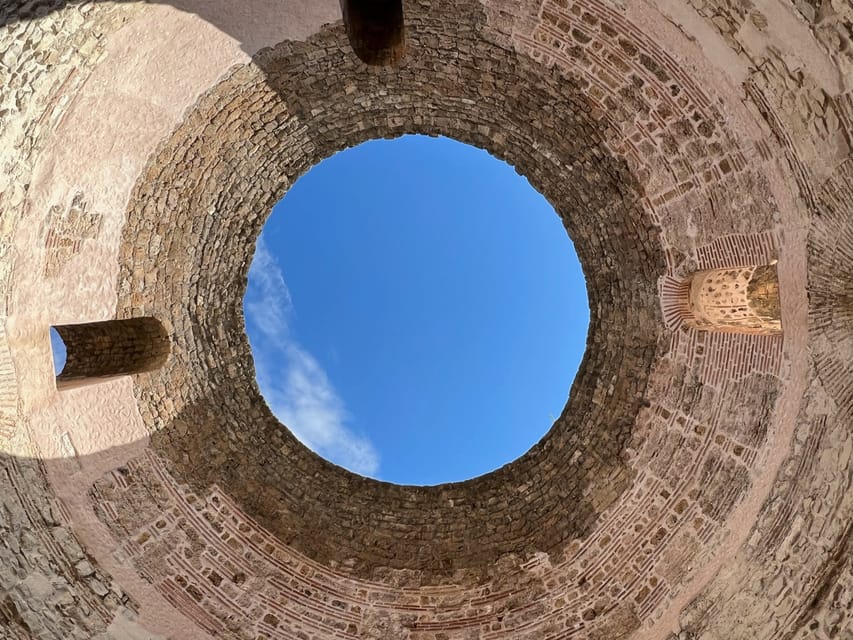
The Vestibule was the grand entrance to Diocletian’s private chambers. It served as a formal gateway for visitors and dignitaries arriving to meet the emperor.
This is a helpful reminder that the palace had different levels of access. The Peristyle presented imperial authority to a wider audience. The Vestibule marked the transition toward the private quarters, where entry would have been more controlled.
I would pay attention here to the change in mood and purpose. The tour is not only showing you beautiful stonework. It is explaining how an emperor’s home worked as a system of public display, ceremony, protection, and personal space.
The supplied information does not specify which private rooms remain accessible, so you should think of the Vestibule as the main confirmed stop for this part of the palace. Your guide can still help you understand what stood beyond it and why such an entrance mattered.
A private group is useful at a stop like this. With no more than 10 participants, it should be easier to ask a question or request a short explanation than it would be in a large group. The tour is also individually customizable, so you can tell your guide if Roman architecture, imperial politics, religious change, or local life interests you most.
The Golden Gate and the Church of St. Martin
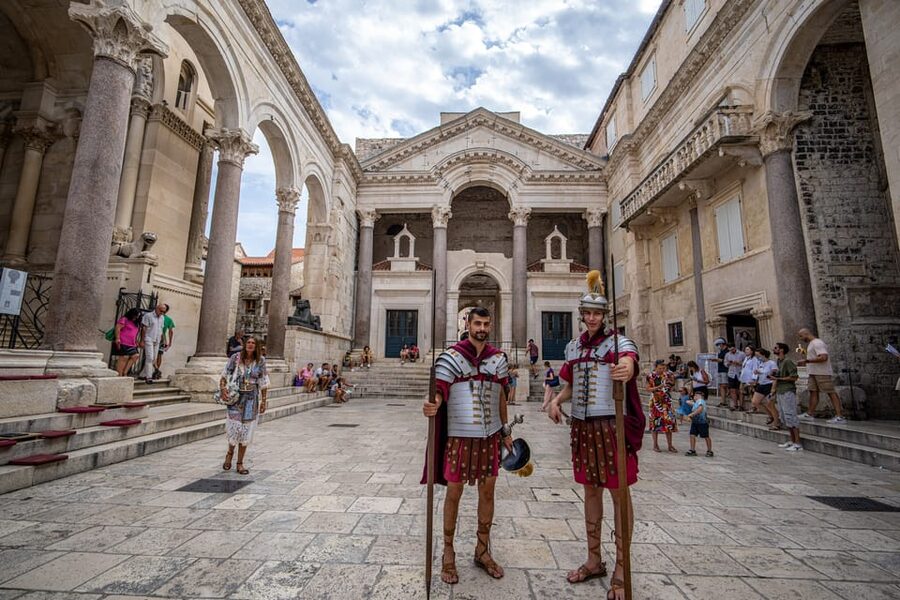
The North Gate, also called the Golden Gate or Porta Aurea, was the most important city gate during the Roman period. It is one of the clearest places to think about the palace as a fortified complex rather than only an imperial residence.
A gate controls movement. It tells you who entered, who left, and how the palace connected with the world outside its walls. The name Golden Gate adds a grand note, but its practical role was just as important as its appearance.
Inside the former guard corridor is the Church of St. Martin, described as the city’s smallest church. This is the sort of detail I like on a walking tour because it gives the route a human scale. After hearing about an emperor and a major city gate, you find a very small place of worship tucked into a former defensive space.
Access to this church or other sights may change because of services and events. The route can be adjusted, so the exact order or availability of stops is not guaranteed. Still, the Golden Gate is an important part of the tour because it ties the palace to security, city planning, and everyday passage.
What the private format adds
The tour is designed for a maximum of 10 participants. That is small enough to make the walk feel more personal without requiring you to pay for a completely separate guide for every member of a large family or friend group.
The experience is described as individually customizable. You can use that flexibility well by deciding what you want from the walk before you arrive. If you want a fast orientation, ask the guide to emphasize the main landmarks. If you care more about Roman rule and the palace’s religious changes, allow more time for the Peristyle and cathedral.
Dana’s enthusiastic style may suit you if you enjoy a guide who brings energy to the story rather than simply pointing out walls. The rating information is limited to three reviews, so I would not treat it as a broad statistical record. Still, the available feedback points to two useful strengths: a quick way to see the central sights and a good introduction to the city center.
That first point matters if you have only a short stay in Split. The palace can feel confusing when you first walk in, with old passages and active streets blending together. A guided circuit can help you get your bearings early, then return later on your own.
Is $135 per person good value?
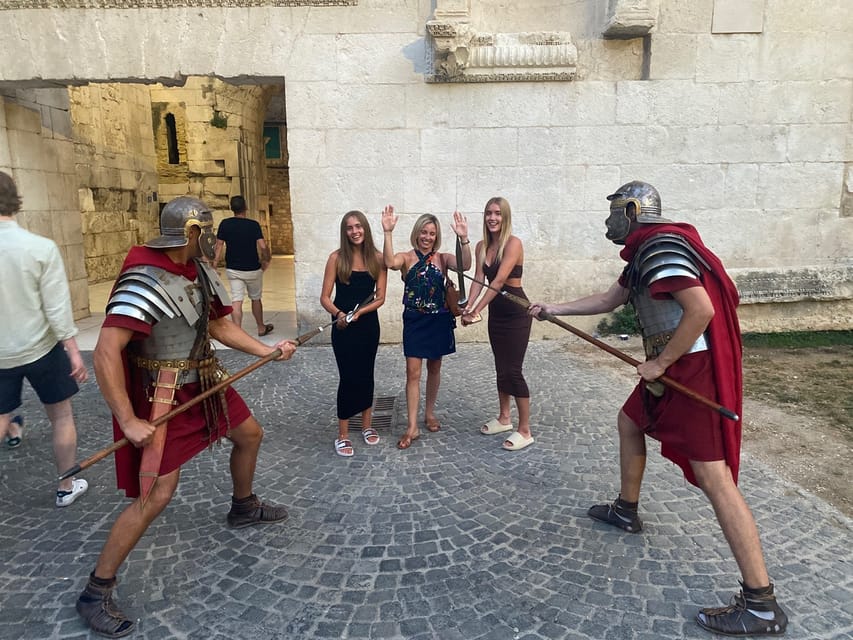
At $135 per person, this is not a bargain-priced orientation walk. The value depends on how you use the private format and how much you care about context.
For a couple or small group, the price may make sense if you want direct access to a guide and a route that can be adjusted around your interests. You are paying for interpretation, not transportation, meals, or a long list of included admissions. The main product is the guide’s explanation of a complex site.
I would consider it strongest value on a first visit to Split, especially if you want to understand the old center quickly. The tour connects the key pieces: public imperial ceremony at the Peristyle, the transformed mausoleum, the formal entrance to private rooms, and the defensive North Gate.
The value is weaker if you prefer to wander without structure, or if you already know Roman architecture and the city’s basic layout. It may also feel expensive if your main goal is simply to photograph the palace. In that case, you can see much of the old center independently, though you will lose the explanations that make each stop meaningful.
Because no duration is provided, I would ask for that detail before booking. A private tour at this price should give you enough time for questions and a thoughtful pace, not just a rapid checklist of sights.
Who should book this Split walking tour?

I would recommend it to first-time visitors who want a clear introduction to Split’s old center. It also suits history-minded people who want to understand how Roman, pagan, Christian, and modern uses overlap in one place.
Families and small groups may appreciate the customizable route. A guide can adjust the emphasis and, where possible, the route for special needs. The small group limit also avoids the feel of a large procession through narrow streets.
The tour is a good choice if you want a guide in English, French, or German. Dana may be a particularly appealing guide if you prefer an energetic presentation, though the assigned guide can vary.
I would think twice if you need guaranteed access to every interior. Church services and events can change the program, and the site is only partly wheelchair accessible. I would also ask about duration before booking if your day in Split is tightly scheduled.
Practical details before you reserve
Meet at the bronze model of Split at the eastern end of the Riva. The walk ends back at that same point, so you can continue along the waterfront afterward.
The provider allows you to reserve and pay later, which can help if you are still arranging your Split plans. Cancellation is allowed up to 24 hours in advance for a full refund.
Tell the provider about accessibility needs ahead of time. The tour can be adapted, but the ancient palace cannot offer fully level access throughout.
Finally, keep the route flexible. A church service or city event may prevent access to a particular sight, in which case the guide will change the program slightly. That is a normal limitation of a living historic center, not a reason to skip the experience.
Should you book it?
Book this tour if you want the palace to make sense, not just look old. The strongest parts are the Peristyle, the former mausoleum and cathedral, the Vestibule, and the Golden Gate with the tiny Church of St. Martin. Together, they show how one place shifted from imperial residence to Christian center to modern city quarter.
The $135 price is easiest to justify for a small group that values personal explanation and a flexible route. Ask about duration, confirm your language, and mention any mobility needs before you reserve. If you prefer independent wandering and do not need historical context, save the money and explore on your own. If you want a fast, focused introduction with a guide such as Dana, this is a practical way to begin your time in Split.
FAQ
Where does the Diocletian’s Palace walking tour start?
The tour starts at the bronze model of the city of Split at the eastern end of the Riva promenade.
Where does the tour end?
The activity ends back at the same meeting point on the Riva.
How many people can join the tour?
The tour is designed for a group of no more than 10 participants.
Is the tour private and customizable?
Yes. The experience is individually customizable, allowing the route or emphasis to be adjusted to the group’s interests where possible.
What languages are available?
The tour is available in English, French, and German.
Which main sights are included?
The route includes the Peristyle, Split Cathedral, the Vestibule, and the North Gate, also known as the Golden Gate or Porta Aurea. The former guard corridor and Church of St. Martin are also part of the planned sightseeing.
Can I enter every sight on the route?
Not always. Some sights may be unavailable because of events or church services, and the program may be changed slightly.
Is the tour wheelchair accessible?
The site is partly wheelchair accessible. The tour can be adapted to special needs, but you should inform the provider in advance.
Can I cancel for a full refund?
Yes. You can cancel up to 24 hours in advance for a full refund. You can also reserve now and pay later.
More Private Palace Tours in Split
- Split: Palace & Old Town Private Walking Tour-Entrance incl.
★ 4.8 · 8 reviews - Split: Private Walking Tour and Diocletian’s Palace
★ 5.0 · 3 reviews
More Private Palace Tours in Croatia
- Split by Private Electric Rickshaw – Palace & Hidden Gems
★ 5.0 · 412 reviews - YOUR BEST PRIVATE TOUR – amazing Split and Diocletian’s palace
★ 5.0 · 83 reviews - Jewish Heritage & Diocletian’s Palace Private Split Tour
★ 5.0 · 80 reviews - Split: Private Walking Tour with Diocletian’s Palace
★ 5.0 · 30 reviews
Newly added in Split
- Split: Private Walking Tour and Diocletian’s Palace★ 5.0 · 3 reviews
- Split: Jewish Heritage & Diocletian’s Palace Walking Tour★ 5.0 · 3 reviews
- Split and Diocletian’s Palace walking tour with a local guid★ 4.9 · 36 reviews
- Split: Private Walking Tour with Diocletian’s Palace★ 5.0 · 30 reviews
- Split: Old Town and Diocletian’s Palace Walking Tour★ 3.3 · 3 reviews
- Essential Diocletian’s Palace Tour for First-Time Visitors★ 4.9 · 79 reviews
- Split: Old Town & Diocletian’s Palace Earlybird Walking Tour★ 4.0 · 12 reviews
- Split: Palace & Old Town Private Walking Tour-Entrance incl.★ 4.8 · 8 reviews
Diocletian's Palace Tours, compared.


Diocletian Palace & Old Town Guided Walking Tour
Read our review →

Game of Thrones Tour with Diocletian’s Palace Cellar
Read our review →
Diocletian’s Palace and Old Town SMALL GROUP Walking Tour
Read our review →