Review · DIOCLETIAN'S PALACE TOURS
SPLIT-PRIVATE Walking Tour of Diocletian’s Palace & Old Town
Diocletian’s Palace is not a fenced-off ruin. It is the center of Split, with homes, cafés, shops, churches, and narrow lanes built into a Roman emperor’s retirement complex. This private walk helps you read those layers instead of simply wandering past them. The palace dates to AD 305, and the tour links it to Split’s medieval Old Town, markets, squares, and waterfront.
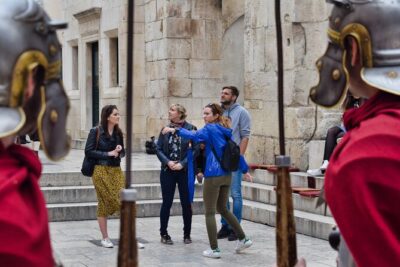
I like the private format, especially for families or groups with different interests. You can ask questions, adjust the pace, and hear the story in a way that suits your group. I also like the guide’s storytelling style. Josko, also referred to as Joško, Joko, or Joseph in guest accounts, is praised for making complex history clear, funny, and easy to remember.
The main consideration is time. Two hours is enough for a strong introduction, but not for every corner of Split at a leisurely pace. The palace cellars receive substantial attention, and one account describes a three-hour experience, so ask about the expected length if you have a strict schedule or want more time in the medieval streets.
Key points to know before booking
- A Roman palace still used as a city: Diocletian’s Palace is woven into everyday Split, not separated from it as a conventional archaeological site.
- Private access for up to 12 people: The $240 group price can be good value for a larger party, but expensive for one or two people.
- Josko’s history-first approach: Expect clear explanations, humor, questions, and stories about Diocletian, Roman rule, and later rulers.
- The cellars are a major part of the walk: Entry to the Diocletian Palace Substructures costs €10 per person and is not included.
- Several optional indoor visits: Cathedral entry costs €3.50 per person, while the Temple of Jupiter costs €1.50 per person.
- An excellent first activity in Split: The route gives you bearings around the Riva, palace, squares, gates, and Old Town before you explore on your own.
Why this private Split walk works so well
The best reason to book this experience is that Split can be confusing at first. The Roman palace, medieval streets, later buildings, and modern businesses overlap in a tight area. Without context, you may see stone walls, a bell tower, a square, and a market without understanding how they fit together.
A local licensed guide gives those places a timeline. You learn how an imperial residence became the core of a living city, why the palace cellars are so well preserved, and how Split grew around the original structure. The guide also connects grand events with practical details, such as how people used the palace spaces and how the city changed over more than 1,700 years.
I would book this near the start of a stay. It gives you a useful mental map of central Split, and the guide can point out places worth revisiting later. The tour is also a good match for families. Josko’s humor and short, memorable explanations have kept younger visitors interested, including children around 12 and 14.
More Palace Walking Tours in Croatia
- Split: Old Town and Diocletian Palace Walking Tour
★ 4.9 · 4,727 reviews - Walking Tour of Split and Diocletian’s Palace
★ 5.0 · 2,588 reviews - Split & Diocletian’s Palace Walking Tour
★ 5.0 · 1,125 reviews
Starting on the Riva waterfront
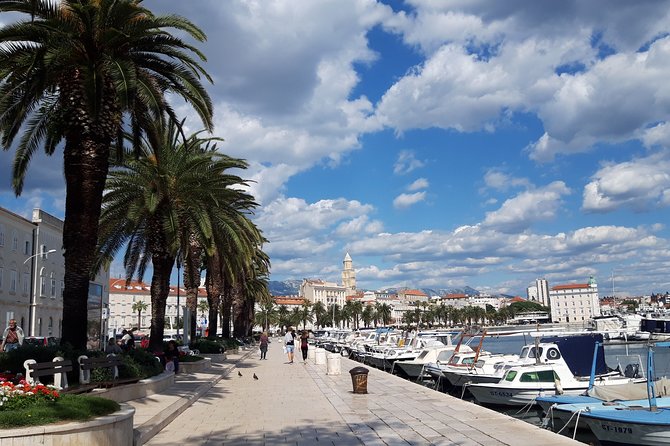
The tour begins and ends at the main Riva promenade, at Obala Hrvatskog narodnog preporoda 22. This is a sensible meeting point because the Riva is easy to identify and sits directly beside the historic center.
The waterfront also sets up the story nicely. You begin outside the palace, looking toward the part of Split that feels most open and modern, then move into the dense stone lanes and courtyards behind it. Since the walk returns to the same meeting point, you do not need to plan around a distant finish.
The tour is offered in English and includes a mobile ticket. The meeting area is near public transportation, though the actual sightseeing takes place on foot inside the center. Wear practical shoes. The route includes old paving, narrow passages, and frequent stops rather than a smooth, continuous promenade.
Entering Diocletian’s Palace in AD 305
The first main stop covers Diocletian’s Palace, built for the Roman emperor Diocletian and completed in AD 305. The important point is that this was not simply a military fort or a country house. It was a large imperial residence with ceremonial areas, private quarters, religious buildings, service spaces, and strong defensive walls.
Your guide’s job here is to make the plan of the palace understandable. The palace is large enough to feel scattered when you walk through it alone, especially because modern Split has filled in many of its spaces. A good explanation shows you which areas belonged to the emperor, which parts served public ceremony, and how later construction changed the site.
This is where the guide’s delivery matters most. The praise for Josko centers on his ability to break a large amount of Roman history into clear pieces. He uses humor and memorable details rather than giving you a long list of dates. That approach is especially useful if you are tired, arriving from a cruise, or visiting Split with children.
The Peristyle, Vestibule, and imperial center
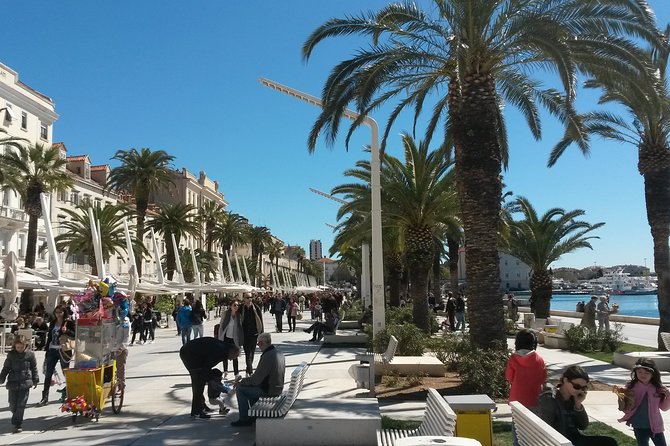
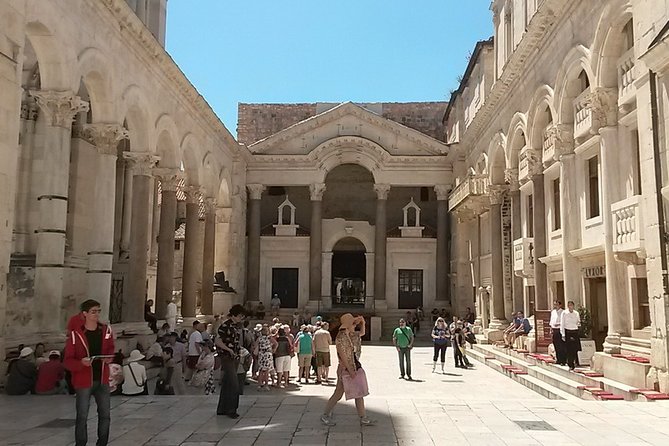
The Peristyle is the symbolic heart of the palace. This former imperial square gives you the clearest sense of ceremony and power. It was designed as a place where the emperor could appear before visitors and subjects, and it remains one of the most impressive open spaces in central Split.
The nearby Vestibule was the main entrance to the emperor’s private residence. Your guide explains how visitors moved from the public areas toward the private part of the complex. That distinction helps you understand the palace as a working residence rather than a collection of unrelated stone fragments.
The short stop descriptions can make this sound rushed, but the points are close together. A guide can explain the Peristyle, Vestibule, and palace layout in a compact sequence without long walks between them. If your group wants more architectural detail, use the private format to ask for it.
More Palace Walking Tours in Split
- Split: Diocletian Palace & Old Town Guided Walking Tour
★ 4.7 · 882 reviews - Diocletian’s Palace and Old Town SMALL GROUP Walking Tour
★ 5.0 · 502 reviews - 90-min Diocletian Palace Walking Tour
★ 5.0 · 323 reviews - Split: 1.5-Hour Walking Tour and Diocletian’s Palace
★ 4.7 · 256 reviews
The palace cellars and the €10 choice
The Diocletian Palace Substructures are one of the tour’s most important sections. They are described as the best-preserved part of the palace, and they help explain what once stood above them. The cellar spaces preserve the original plan in a way that the upper level often cannot, because later homes and streets have altered the surface.
Entry costs €10 per person and is not included in the tour price. That extra charge is worth considering when you compare the total cost. If you care about Roman architecture, palace construction, or the physical layout of Diocletian’s residence, I would include it. If you mainly want outdoor views and photographs, you may prefer to skip the paid section.
Be aware of the emphasis. One account specifically notes that much of the experience takes place in the cellars and that the walk is an historical tour rather than a simple sightseeing circuit. That is not a flaw, but it is an important expectation. Book this for explanation and context, not just for a quick look at attractive façades.
Cathedral of Saint Domnius and the Temple of Jupiter
The Cathedral of Saint Domnius is viewed from outside, with an optional interior visit for €3.50 per person. The exterior stop helps show how a Roman imperial site was later adapted to Christian use. The building’s presence near the Peristyle is one of the clearest reminders that Split’s story did not end with the Roman period.
The Temple of Jupiter is another short exterior stop. It was dedicated to the main Roman god, and you can pay €1.50 per person to enter. The modest extra fee makes this a simple add-on if you want a closer look, but the itinerary does not include the admission.
These optional costs are small individually, though they add up for a large group. A family of four paying for both sites would spend €18 in extra admission, before the €10 cellar fee per person. Ask the guide early which entries fit your interests and available time.
Golden Gate and the story of Split’s rulers
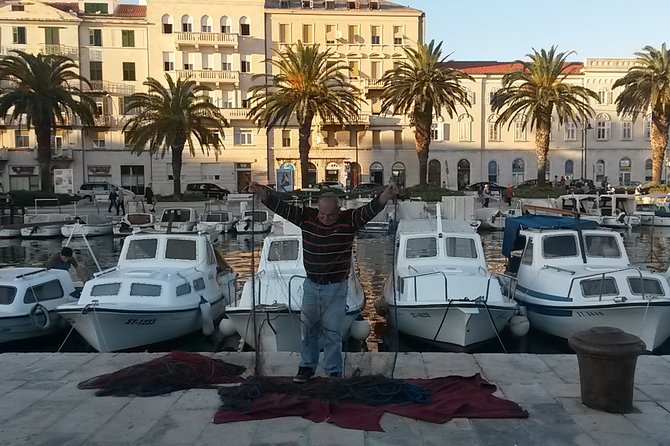
The Golden Gate was the main and most impressive entrance into the palace. It gives you a strong sense of the defensive side of the complex and helps you understand how people entered the imperial residence from outside.
The guide also stops at the Grgur Ninski Statue, linked to one of Croatia’s important historical figures. This is a useful shift away from Roman history toward Croatian identity and local memory. You are not only hearing about an emperor from late antiquity. You are also seeing how later generations chose to remember their own leaders and cultural figures.
The City Clock adds another small but memorable detail. This 500-year-old 24-hour clock is easy to miss when you walk alone, yet it helps show how the medieval city continued using and adapting the spaces left by earlier rulers.
Medieval squares, markets, and local Split
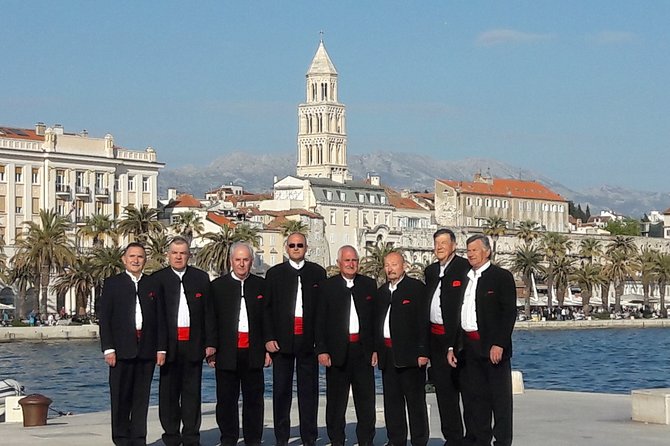
The walk through Old Split includes Fruit’s Square, formally Trg Brace Radic, a former green market associated with a statue of Marul, regarded as the father of Croatian literature. Narodni Trg, or People’s Square, is the largest and liveliest piazza in the Old Town.
These stops make the tour more than a Roman palace lecture. You see how commerce, literature, public life, and daily routines developed around the old imperial structure. The squares also give you a better feel for modern Split, not just its ancient remains.
One useful point to keep in mind is that the palace section may receive more attention than the open-air Old Town walk. A guest who enjoyed the tour wished for more time in the medieval streets. If you want a longer stroll through local lanes and markets, say so at the beginning. The private format gives the guide some room to adjust the balance.
A guide who teaches through stories
The strongest praise for this experience focuses on the guide rather than on the route alone. Josko is repeatedly described as friendly, funny, professional, and deeply familiar with Split’s past. He is also praised for answering questions, adding sites beyond the basic route, and giving practical advice for the rest of a stay.
That style can make a real difference in Split. A guide who only lists dates may leave you with facts but no sense of place. Here, the useful approach is to connect Diocletian’s decisions, Roman architecture, medieval changes, and modern local life.
The reviews also point to good communication before the tour and flexibility during the walk. One family was able to reschedule because of rain, and another group appreciated the guide finding shade while explaining a site. Those details matter in Split’s summer heat, especially if you are traveling with children or older relatives.
The guide has also been praised for taking photographs and for offering a small Croatian sweet treat during one outing. Those touches are not promised features, so do not book specifically for them, but they suggest a warm and personal style.
Is $240 good value for your group?
The advertised cost is $240 per group of up to 12 people. That is a strong deal for a full group. Split among 10 people, the guide costs $24 each. Split among four people, it is $60 each. For a couple, the price is much harder to justify unless you place a high value on having a private guide.
The private arrangement gives you more than a standard group walk. You can ask detailed questions, request a slower pace, keep children involved, and focus more on architecture, Roman history, or local life. The guide can also avoid spending time on subjects your group does not care about.
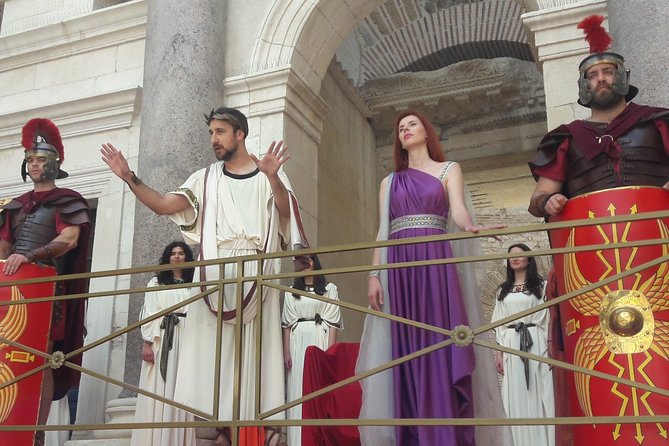
Remember to add the €10 cellar entry if you choose it, plus €3.50 for the cathedral and €1.50 for the Temple of Jupiter if you go inside. Gratuities are not included. There is no costumed theatre performance or similar show, so this is a spoken historical walk rather than an entertainment production.
Timing, weather, and who should book
The stated duration is about two hours, with an approximate itinerary that includes 13 stops. That is enough for an introduction, but the number of stops means some explanations are brief. If you want to linger, take photographs, or enter all optional sites, the walk may take longer. One account refers to three hours, so confirm the timing if you need to catch transport.
The experience requires good weather. If poor weather cancels it, you are offered another date or a full refund. You can also cancel for a full refund up to 24 hours before the start time. Changes or cancellations inside that 24-hour window are not accepted, and the minimum group requirement can also affect scheduling.
I would choose this tour if you want:
- A private guide for your family or friends
- A clear introduction to Diocletian’s Palace
- Historical storytelling with humor
- Help understanding the palace cellars and Old Town layout
- A flexible walk near the start of your stay
- A tour that can hold the interest of older children
I would look elsewhere if you want a long, relaxed walk focused mainly on cafés, markets, or photography. I would also think twice if you are a couple watching every dollar, since the group price is much better for larger parties.
Should you book the Diocletian’s Palace walk?
Yes, if you want Split to make sense rather than simply look attractive. The route covers the palace, Peristyle, Vestibule, cellars, Golden Gate, cathedral, Temple of Jupiter, medieval squares, city clock, statue, and Riva. More important, it connects those pieces into a timeline you can remember.
The best value comes when several people share the $240 cost and when you include the cellar visit. Ask for Josko or Joško if he is available, since his clear explanations and humor receive especially strong praise. If you have limited time, book it early in your stay and tell the guide whether you prefer Roman architecture, Croatian history, family-friendly storytelling, or more Old Town walking.
FAQ
Where does the tour start and finish?
It starts at Obala Hrvatskog narodnog preporoda 22 on Split’s main Riva promenade and ends back at the same meeting point.
How long does the tour last?
The stated duration is approximately two hours. Some experiences have taken longer, especially when questions, optional entries, or extra stops are included.
Is this a private tour?
Yes. Only your group participates, and the group size can be up to 12 people.
What language is offered?
The tour is offered in English.
Is entry to the palace cellars included?
No. Entry to the Diocletian Palace Substructures costs €10 per person and is paid separately.
Are the cathedral and Temple of Jupiter included?
No. The cathedral interior is optional and costs €3.50 per person. The optional Temple of Jupiter entry costs €1.50 per person.
Are gratuities included?
No. Gratuities for the guide are not included.
What happens if the weather is poor?
The experience requires good weather. If it is canceled because of poor weather, you will be offered another date or a full refund.
More Diocletian's Palace Tours in Split
- Split Old Town and Diocletian’s Palace Tour
★ 4.8 · 716 reviews - Split: Game of Thrones Tour with Diocletian’s Palace Cellar
★ 4.8 · 545 reviews - Split: Diocletian’s Palace Virtual Reality Experience
★ 4.4 · 308 reviews
More Private Palace Tours in Croatia
- Split by Private Electric Rickshaw – Palace & Hidden Gems
★ 5.0 · 412 reviews - YOUR BEST PRIVATE TOUR – amazing Split and Diocletian’s palace
★ 5.0 · 83 reviews - Jewish Heritage & Diocletian’s Palace Private Split Tour
★ 5.0 · 80 reviews
Newly added in Split
- Jewish Heritage & Diocletian’s Palace Private Split Tour★ 5.0 · 80 reviews
- YOUR BEST PRIVATE TOUR – amazing Split and Diocletian’s palace★ 5.0 · 83 reviews
- Split: 1.5-Hour Walking Tour and Diocletian’s Palace★ 4.7 · 256 reviews
- Split: Diocletian’s Palace Virtual Reality Experience★ 4.4 · 308 reviews
- 90-min Diocletian Palace Walking Tour★ 5.0 · 323 reviews
- Split by Private Electric Rickshaw – Palace & Hidden Gems★ 5.0 · 412 reviews
- Diocletian’s Palace and Old Town SMALL GROUP Walking Tour★ 5.0 · 502 reviews
- Split: Game of Thrones Tour with Diocletian’s Palace Cellar★ 4.8 · 545 reviews
Diocletian's Palace Tours, compared.


Diocletian Palace & Old Town Guided Walking Tour
Read our review →

Game of Thrones Tour with Diocletian’s Palace Cellar
Read our review →
Diocletian’s Palace and Old Town SMALL GROUP Walking Tour
Read our review →