
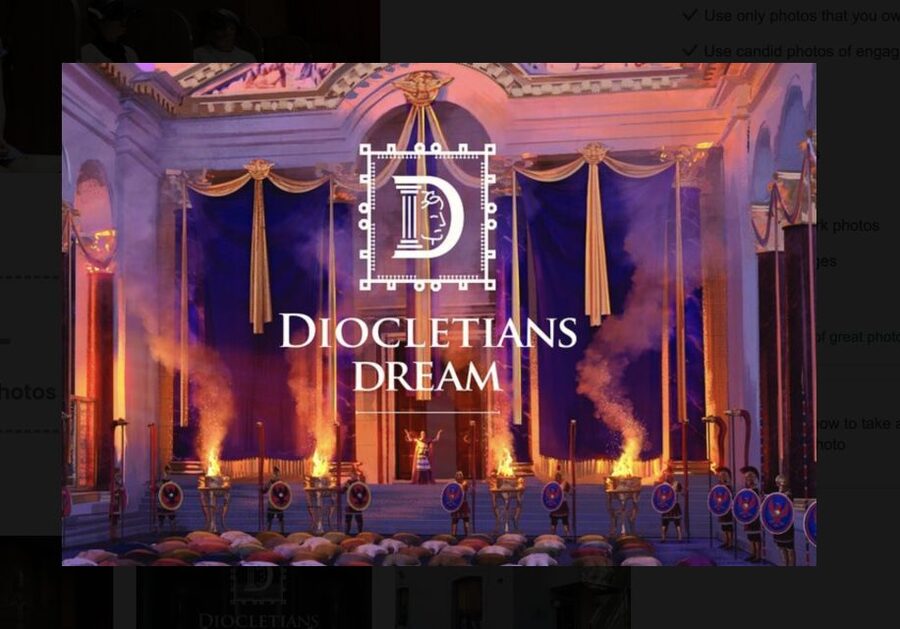
Review · DIOCLETIAN'S PALACE TOURS
Split: Diocletian’s Palace Virtual Reality Experience
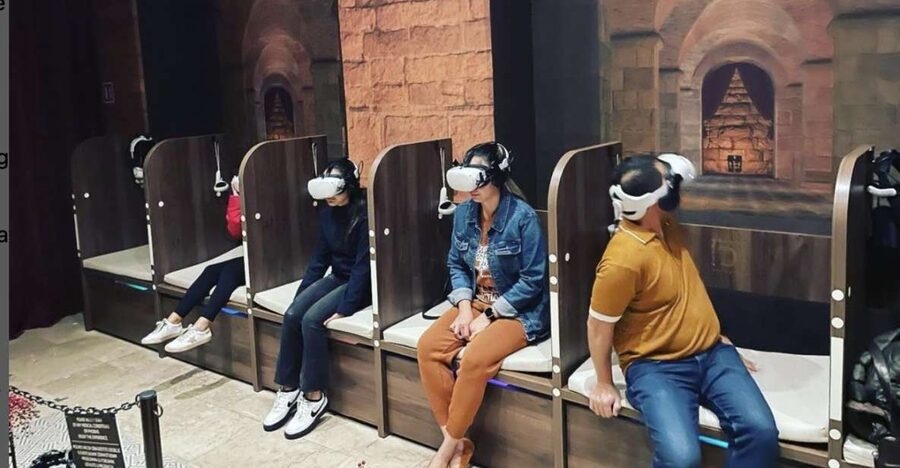
Diocletian’s Palace is easier to understand when you can first see it whole. This 15-minute virtual reality film shows the Roman complex as it appeared in 305 A.D., before centuries of rebuilding turned it into today’s maze of streets, shops, homes, and ruins.
I like two things right away: the viewing room is air-conditioned, a welcome break from Split’s summer heat, and the virtual reconstruction gives you a clear sense of the palace’s original scale. The narration is available in six languages, too.
The trade-off is simple: this is a short introduction, not a full museum visit or a detailed walking tour. If you want a long explanation of Roman engineering or a close look at every surviving structure, 12 to 15 minutes may feel thin.
Key points to know before you book
- See the palace in 305 A.D.: The film recreates Diocletian’s Palace at the time of the emperor’s retirement.
- Look down from above: The VR view includes an overhead perspective that helps you understand the palace layout.
- Go before the real ruins: The experience is only 50 meters from the Golden Gate, making it easy to pair with a walk through the palace.
- Stay cool while sightseeing: You watch from a modern, air-conditioned room rather than standing outside in the heat.
- Choose from six languages: Narration is offered in English, Croatian, German, Italian, Spanish, and French.
- Plan for a short visit: The experience lasts about 12 to 15 minutes, and the $15 price reflects that limited length.
Seeing Diocletian’s Palace before the stones were scattered
Diocletian’s Palace can be confusing at first. It is not an empty archaeological site with neat paths and signs. It is part of central Split, with people living, eating, shopping, and walking among the old Roman walls.
That is part of its charm, but it also makes the original plan hard to picture. The virtual reality experience gives you that missing first view. You travel back to 305 A.D., when the palace was newly built and connected to the Roman emperor Diocletian.
The film presents the palace as a functioning imperial residence rather than a collection of broken columns. You get a stronger sense of how the major parts belonged together and how different the site looked in its Roman prime.
I find this especially useful if you are visiting Split for only a day. You can spend a quarter of an hour getting your bearings, then step outside and compare the reconstruction with the actual gates, walls, cellars, and courtyards next door.
More Diocletian's Palace Tours in Split:
- Split: Old Town and Diocletian Palace Walking Tour
★ 4.9 · 4,727 reviews - Walking Tour of Split and Diocletian’s Palace
★ 5.0 · 2,588 reviews - Split & Diocletian’s Palace Walking Tour
★ 5.0 · 1,125 reviews
What happens inside the 12 to 15-minute film
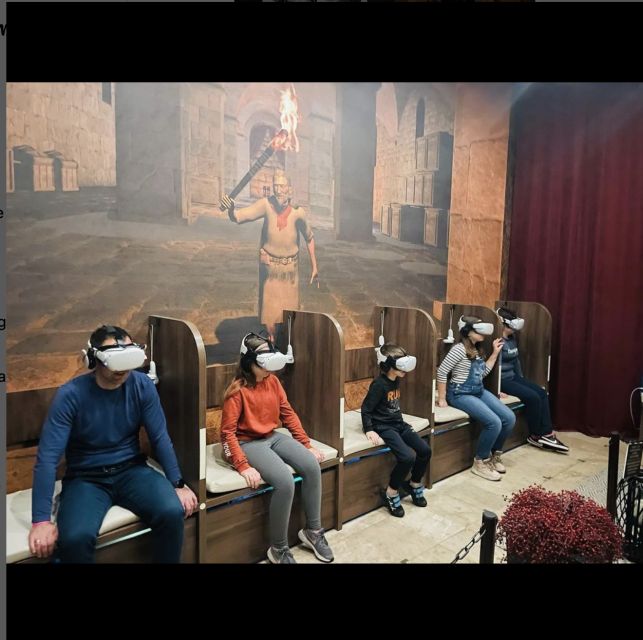
You begin at Diocletian’s Dream, the modern venue for this experience. Staff help you put on the VR headset, which matters if you have never used one before or need a quick adjustment.
The presentation then takes you into a computer-created version of the palace. The exact sequence is not a long stop-by-stop walking tour. Instead, it works as a short historical film about Split, Diocletian, and the palace at the start of the fourth century.
The narration explains the city’s Roman background and Diocletian’s role in its story. You can listen in English, Croatian, German, Italian, Spanish, or French. Choose your language before the presentation begins so you can follow the story without trying to read while wearing the headset.
One of the most memorable parts is the ability to view the scene from above. That high viewpoint gives you something the real ruins cannot easily provide. Standing among the remains, you see fragments. In VR, you can understand the entire complex as one planned place.
The film also adds a sense of movement and scale. The palace is not shown only as static walls. It comes back as a place connected to an emperor, a city, and the people who lived within it.
Keep your expectations in check, though. Several parts of the presentation are designed to make the history entertaining, not to provide a long academic lecture. You will come away with a useful outline and a better visual memory of the palace, but you may still want a walking tour or museum visit if Roman history is your main interest.
Why the overhead view helps so much
The bird’s-eye perspective is more than a visual trick. Diocletian’s Palace is large enough that the street-level remains do not always explain their relationship to one another.
From above, you can better grasp the shape of the complex and see how the palace functioned as a single imperial project. That makes the later visit to the ruins more rewarding. You are no longer looking at an isolated arch or wall. You have a mental map to guide you.
I especially recommend paying attention to this part if you plan to walk around the palace afterward. Use the VR film as a warm-up, then look for the places that connect the modern city to the old Roman structure.
The experience cannot replace standing beside the surviving stones. It does something different. The real palace gives you texture, age, and a sense of place. The virtual version gives you the missing height, completeness, and original appearance.
The best way to combine VR with the real palace
The venue is about 50 meters from the Golden Gate, and it is a one-minute walk from the statue of Gregory of Nin. That makes it easy to fit into a central Split sightseeing plan without arranging transport.
I would do the VR experience before exploring the palace ruins. This order gives you the clearest comparison. First, you see the Roman version in its golden era. Then you walk outside and notice what remains, what changed, and what has been built into the old walls.
You can also place it after a walking tour. That order works well if you have already heard the basic story and want a visual reconstruction to pull the details together. The experience is short enough to add between other sights, but you should still allow a little extra time for arriving, getting fitted with the headset, and leaving the venue.
The activity ends back at the same meeting point. You are not transported elsewhere, and the entrance fee covers Diocletian’s Dream only. Entry to the actual palace ruins is not included, so budget separately if you plan to visit any paid sections.
More Palaces to Tour in Split:
- Split: Diocletian Palace & Old Town Guided Walking Tour
★ 4.7 · 882 reviews - Split Old Town and Diocletian’s Palace Tour
★ 4.8 · 716 reviews - Split: Game of Thrones Tour with Diocletian’s Palace Cellar
★ 4.8 · 545 reviews - Diocletian’s Palace and Old Town SMALL GROUP Walking Tour
★ 5.0 · 502 reviews
Is $15 a fair price for 15 minutes?
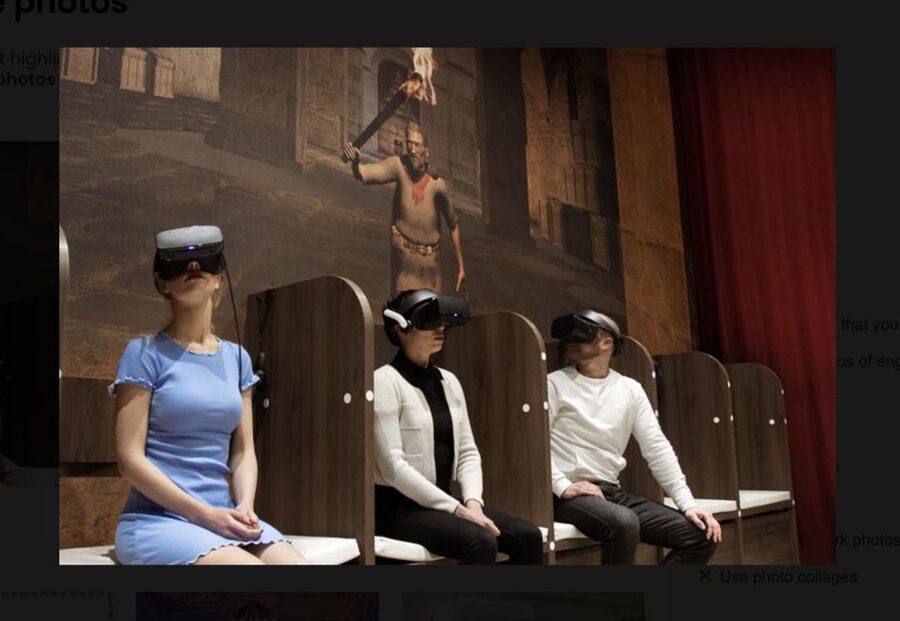
At $15 per person, this is not a cheap replacement for a full tour. The presentation lasts roughly 12 to 15 minutes, so the cost per minute is noticeable.
Still, value depends on what you need. If you want a quick visual introduction before exploring Split, the price can make sense. You are paying for a purpose-built VR presentation, multilingual narration, staff assistance with the headset, and a view of the palace that is impossible from the street.
I would be more cautious if you are traveling on a tight budget or already know Roman history well. The short running time and general historical approach may not justify the price for someone seeking detailed content.
For families, couples, and first-time visitors, the cost is easier to defend as an add-on. It gives you a different way to approach one of Split’s main sights, and it does not require half a day. The air-conditioned room is another practical benefit during hot weather, especially when you need a break from outdoor sightseeing.
What the narration adds
The spoken story covers Split’s ancient Roman past and Diocletian’s life. That context helps explain why the palace exists and why it became the core of modern Split.
You should not expect a personal guide walking beside you or answering questions. This is a timed, recorded presentation. Its strength is consistency: you receive the same structured introduction in your chosen language, without needing to match a tour schedule.
The six language choices make the activity useful for mixed-language groups. English, Croatian, German, Italian, Spanish, and French are available.
The narration also gives the film a clear purpose. Without the story, VR could become a string of attractive images. With the explanation, you can connect the emperor, the building, and the city’s later development.
Some visitors may want more historical detail. I would treat the narration as a starting point rather than a complete account of Diocletian or Roman Split. It gives you the basic framework, then leaves room for further exploration outside.
Comfort, age limits, and practical details
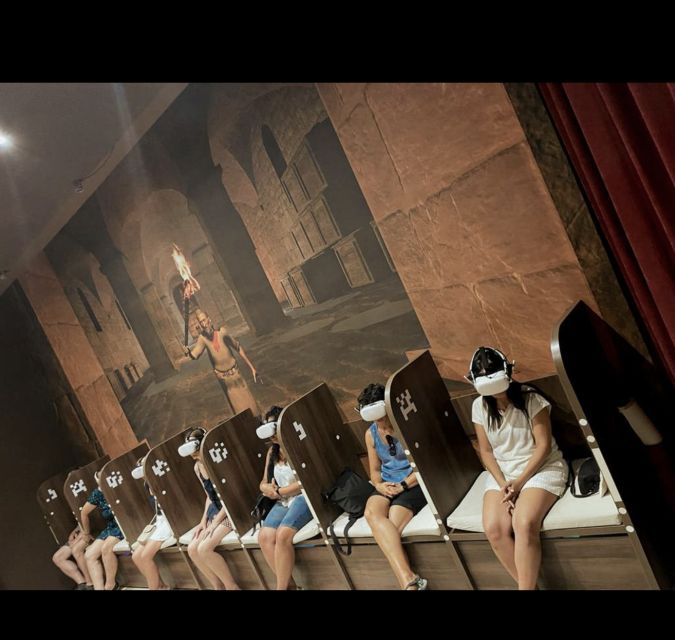
The viewing room is modern and air-conditioned. That is not a minor detail in Dalmatia, where a sunny day can make outdoor sightseeing tiring. The cool indoor setting lets you pause without giving up your sightseeing time.
Food and drinks are not allowed inside, and you should not arrive intoxicated. Children must be at least 8 years old. That age limit makes sense for a headset-based activity, though younger children will need another way to pass the time.
Staff assist with putting on the equipment. This is helpful if you are unfamiliar with VR or want a quick hand before the film starts.
The activity does not include the ruins themselves. Afterward, walk outside and explore the palace independently or continue with another planned tour. The VR ticket is an introduction, not a combined admission pass.
You can reserve now and pay later, which keeps your schedule flexible. Cancellation is allowed up to 24 hours in advance for a full refund. Those terms are useful if your Split plans depend on the weather or the timing of a cruise stop.
Who will get the most from this experience
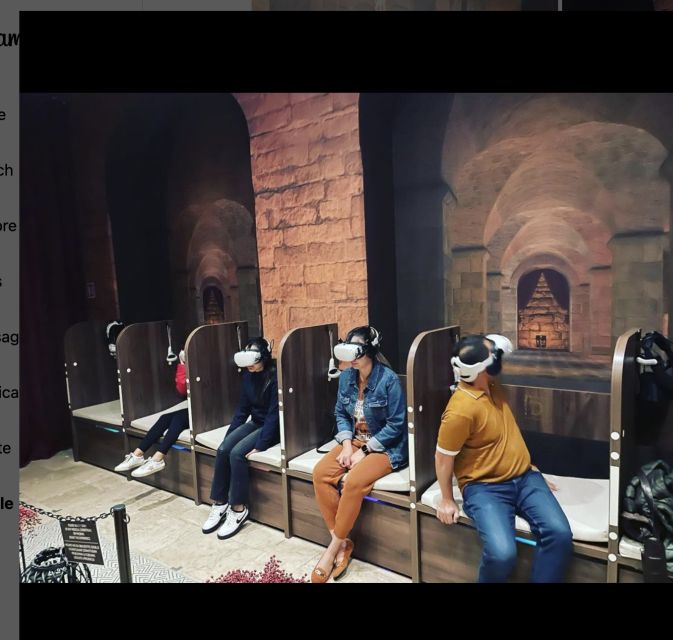
I would recommend it most strongly to first-time visitors who have trouble picturing ancient sites from ruins alone. The overhead view and full reconstruction give you a much clearer starting point than a few surviving walls.
It also suits families with children aged 8 and older, provided everyone is comfortable wearing a headset. The presentation is short, visual, and designed to make history entertaining rather than solemn.
This is a good choice for you if:
- You want a fast introduction to Diocletian’s Palace.
- You plan to explore the ruins afterward.
- You prefer visual storytelling to a long lecture.
- You need an air-conditioned break from Split’s streets.
- You want narration in English, Croatian, German, Italian, Spanish, or French.
- You are curious to see how the palace may have looked when new.
I would be less likely to book it if you want a detailed architectural tour, a long Roman history lesson, or a hands-on museum visit. The film provides an overview, and its brevity is both its appeal and its main limitation.
Should you book Diocletian’s Dream?
Book it if you want to understand the palace before you walk through it. The overhead view, the reconstructed Roman setting, and the short format make it a useful companion to the real ruins rather than a substitute for them.
At $15, it is best viewed as a focused add-on. Go before visiting the palace if you need help with the layout, or after a walking tour if you want the story to become more visual. Skip it if your schedule is packed or if you expect a full virtual tour of every structure.
For most first-time visitors with 15 minutes to spare, I think it earns its place, especially on a hot day. Just remember what you are buying: a concise, entertaining reconstruction that helps you see the real palace with better eyes.
FAQ
Where does the Diocletian’s Palace VR experience begin?
It begins at Diocletian’s Dream, about 50 meters from the Golden Gate entrance to the palace and a one-minute walk from the Gregory of Nin statue.
How long does the VR experience last?
The presentation lasts about 12 to 15 minutes.
What languages are available?
Narration is available in English, Croatian, German, Italian, Spanish, and French.
Is entry to the real palace ruins included?
No. The ticket includes entrance to Diocletian’s Dream, but entry to the Diocletian’s Palace ruins is not included.
What is the minimum age for children?
Children must be at least 8 years old to take part.
Is the experience indoors?
Yes. The VR presentation takes place in a modern, air-conditioned viewing room.
Can I cancel for a full refund?
Yes. You can cancel up to 24 hours in advance for a full refund.
Newly added in Split
- Jewish Heritage & Diocletian’s Palace Private Split Tour★ 5.0 · 80 reviews
- YOUR BEST PRIVATE TOUR – amazing Split and Diocletian’s palace★ 5.0 · 83 reviews
- Split: 1.5-Hour Walking Tour and Diocletian’s Palace★ 4.7 · 256 reviews
- 90-min Diocletian Palace Walking Tour★ 5.0 · 323 reviews
- Split by Private Electric Rickshaw – Palace & Hidden Gems★ 5.0 · 412 reviews
- SPLIT-PRIVATE Walking Tour of Diocletian’s Palace & Old Town★ 5.0 · 467 reviews
- Diocletian’s Palace and Old Town SMALL GROUP Walking Tour★ 5.0 · 502 reviews
- Split: Game of Thrones Tour with Diocletian’s Palace Cellar★ 4.8 · 545 reviews
Diocletian's Palace Tours, compared.


Diocletian Palace & Old Town Guided Walking Tour
Read our review →

Game of Thrones Tour with Diocletian’s Palace Cellar
Read our review →
Diocletian’s Palace and Old Town SMALL GROUP Walking Tour
Read our review →
Browse the lists this tour appears in