
Review · DIOCLETIAN'S PALACE TOURS
Diocletian’s Palace & Old Town Split Walking Tour
Split’s great surprise is that Diocletian’s Palace is not a silent ruin. It is the core of the modern city, with people living, walking, eating, and going about daily business inside walls built more than 1,700 years ago. This 90-minute walk gives you a quick way to understand how the emperor’s retirement home became Split’s Old Town.
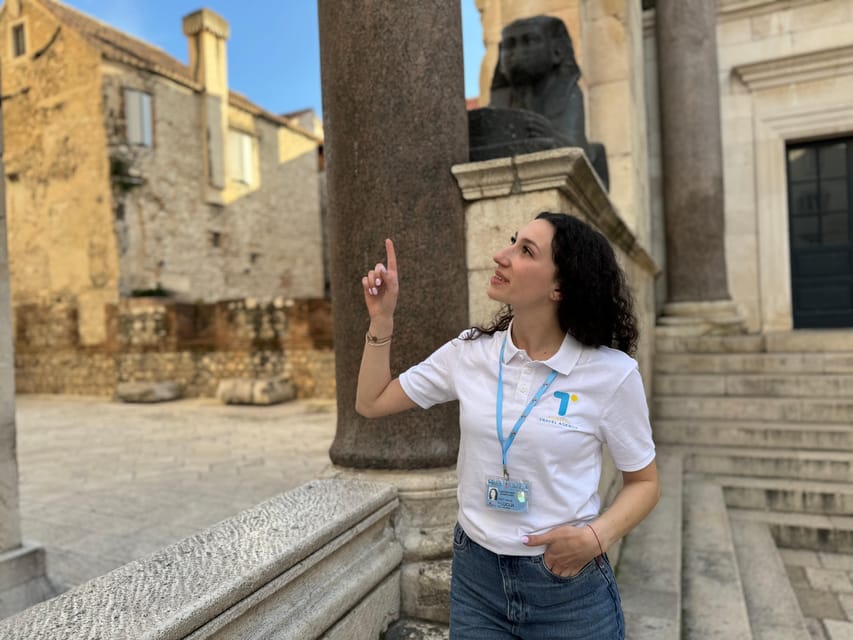
I like the local point of view. Guide Lucija, who was born and raised in Split, explains more than dates and stones. I also like the small-group format, which gives you a better chance to ask about present-day life, local customs, and what to see after the tour.
The main limitation is that entrance tickets are not included. You will see and hear about the major sites, but any cultural or religious interiors must be visited later at your own cost. The route is also not suitable for wheelchair users and requires comfortable walking shoes.
Key points about the Split walking tour
- A 1,700-year-old palace still forms the city center, rather than sitting apart as an isolated archaeological site.
- Lucija’s local background adds modern context, including insight into daily life in Split beyond imperial history.
- The 90-minute route covers the main Old Town sights, including Peristil, Vestibul, the Golden Gate, and two lively squares.
- The $23 price is good for a first orientation, especially if you want a useful introduction before exploring alone.
- Small groups and private tours are available, giving you more room for questions than a large city walk.
- You need to bring comfortable shoes, and you should plan separately for paid entry into cultural and religious sites.
Why Diocletian’s Palace is the right place to begin in Split
If you have only just arrived in Split, this tour puts the city into focus quickly. The palace is not one attraction at the edge of town. Its streets, gates, courtyards, and old walls are woven into the center of everyday Split.
That makes the site slightly confusing at first. You can walk through an ancient passage and, a moment later, find yourself on a regular street with shops and cafés. A guide helps you understand what you are looking at and why the palace still matters.
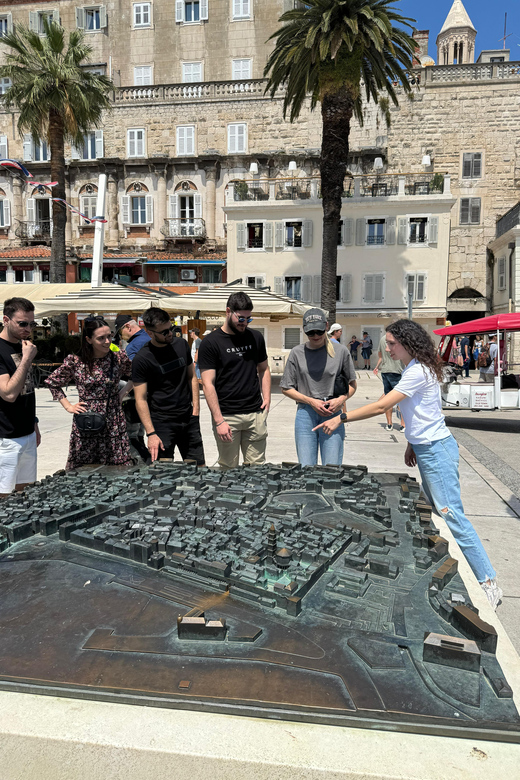
The tour begins from one of two possible meeting options. One is the model of Split’s historic core at Obala Hrvatskog narodnog preporoda 22, near the Riva. The other is the Riva itself. Check the exact option you booked so you do not waste time searching along the waterfront.
From there, you will walk rather than ride between stops. The route is compact, but the old streets are paved and can be uneven. I would wear shoes with good support, especially if you plan to keep exploring after the tour.
More Palace Walking Tours in Croatia
- Split: Old Town and Diocletian Palace Walking Tour
★ 4.9 · 4,727 reviews - Walking Tour of Split and Diocletian’s Palace
★ 5.0 · 2,588 reviews - Split & Diocletian’s Palace Walking Tour
★ 5.0 · 1,125 reviews
Starting on the Riva, Split’s waterfront living room
The Riva is a useful starting point because it gives you a clean view of Split as a modern city before you move into the palace. This waterfront promenade is where the tour begins its story of change, from Roman imperial residence to a functioning Dalmatian city.
Your guide sets the scene here before leading you toward the Old Town. This opening is valuable because it helps you see the palace as part of Split, not as a separate monument with a single entrance and exit.
The Riva also makes a practical meeting point. If you arrive early, you have room to find the guide and orient yourself. Since the exact meeting point can vary by booking option, read your confirmation carefully.
Inside Diocletian’s Palace after 1,700 years
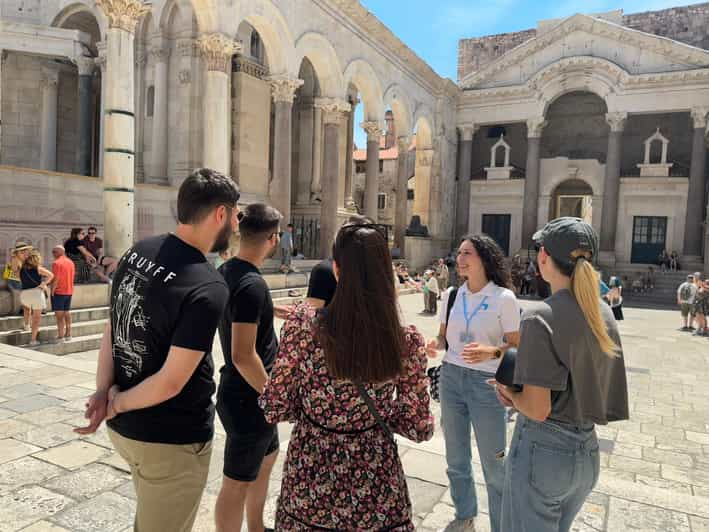
The central subject is Emperor Diocletian’s palace complex. Diocletian chose this location for his luxurious residence, and the remains have shaped Split for roughly 1,700 years.
The useful thing about a guided walk is that you will not simply pass through old stone without context. Lucija explains the palace’s architecture, its walls, and its transformation over time. You get a sense of how an imperial project became the framework for a living town.
I especially like the way this tour connects the ancient and the current. The palace is not presented as a frozen Roman set. You hear about Diocletian’s era, but also about more recent events and daily life in Split. That wider view helps you understand why local people feel such a strong connection to the Old Town.
Because the walk lasts 90 minutes, expect an overview rather than a detailed archaeological study. That is a strength if you are new to Split and want the main structure first. If you already know the palace well, you may prefer a longer specialist visit or more time inside the paid sites.
Vestibul, the palace’s memorable threshold

Vestibul is one of the tour’s key stops. This circular space formed part of the palace entrance and offers a strong example of the scale and design used for Diocletian’s residence.
A guide makes this stop more useful than a quick photograph. You learn how the space fitted into the palace plan and why it mattered as a transition between exterior areas and the imperial interior.
Vestibul is also a good place to notice how Split layers old and new together. You are looking at a major piece of palace architecture, but you are still moving through the active center of the city. Keep your attention on the explanation, since the surroundings can be distracting.
The tour does not include admission to cultural or religious interiors. Your guide will explain what you can return to see later, allowing you to decide which sites deserve more of your time and money.
More Palace Walking Tours in Split
- Split: Diocletian Palace & Old Town Guided Walking Tour
★ 4.7 · 882 reviews - Diocletian’s Palace and Old Town SMALL GROUP Walking Tour
★ 5.0 · 502 reviews - SPLIT-PRIVATE Walking Tour of Diocletian’s Palace & Old Town
★ 5.0 · 467 reviews - 90-min Diocletian Palace Walking Tour
★ 5.0 · 323 reviews
Peristil, the palace’s grand central square
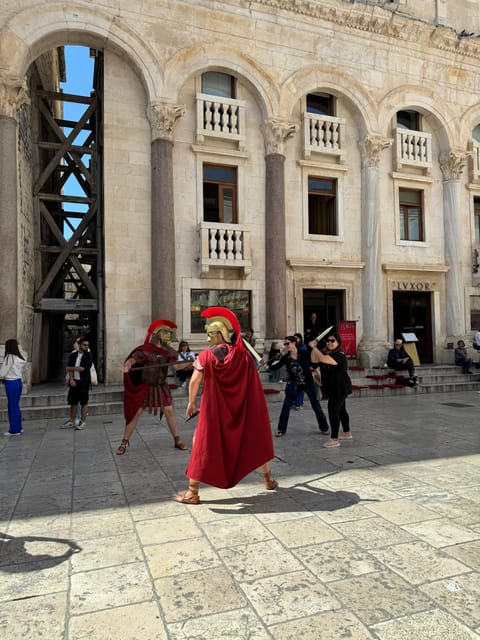
Peristil is likely to be one of the most impressive outdoor stops. This was the palace’s central ceremonial square, and its open space gives you a better sense of the original plan than the narrower lanes do.
Here, the palace feels most monumental. The architecture, proportions, and surrounding stonework show how much power Diocletian wanted the residence to express. Your guide explains the role of the square and places it within the emperor’s palace.
I would pay close attention here even if you are not usually interested in ancient architecture. Peristil helps explain the whole site. After seeing it, the smaller passages and gates make more sense because you can picture how they connected to the ceremonial heart of the complex.
Since the tour is guided in English, you will need enough English to follow explanations about history, architecture, and local stories. The guide also leaves room for questions in a small group, which can make the stop feel less rushed than a large walking tour.
The Golden Gate and the palace’s outer edge
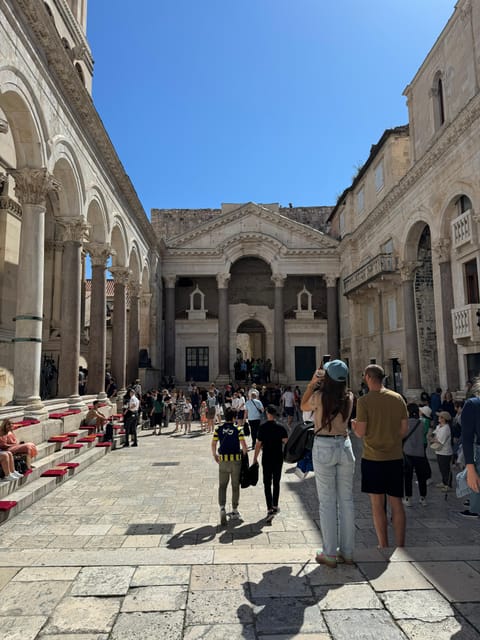
The Golden Gate is one of the most recognizable entrances to Diocletian’s Palace. It shows how the palace was organized as a fortified complex, with major gates controlling movement through the walls.
This stop adds balance to the central courtyards. At Peristil, you see the ceremonial side of Diocletian’s home. At the Golden Gate, you get a stronger sense of the palace as a protected compound with formal routes in and out.
The walk between landmarks also matters. You are not being taken from one isolated monument to another by vehicle. You pass through the Old Town on foot, with the guide explaining how the ancient structure relates to the city around it.
The route is not designed for wheelchair users, and the old streets can make movement harder for anyone with limited mobility. If you have concerns about walking on historic paving, ask before booking rather than assuming the compact route will be easy.
People’s Square and the shift beyond the palace
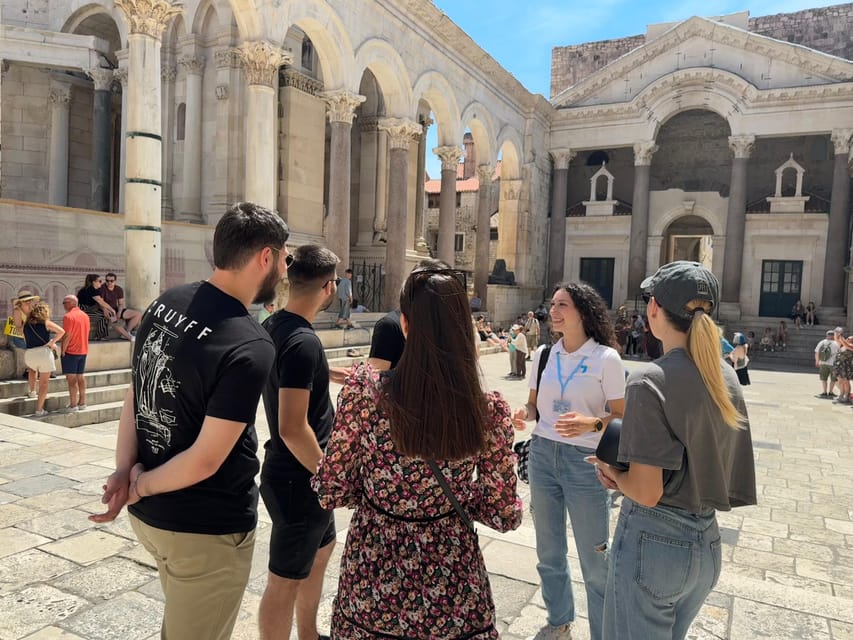
People’s Square takes the tour beyond the most obvious Roman remains. This is where you begin to see Split’s later urban identity more clearly.
The square helps show that Split’s story did not end with Diocletian. The city changed, expanded, and developed around the old palace. A local guide can connect the major historical outline with more recent stories, which is one of the most useful parts of this experience.
The square is also a good reminder that Split is not only an archaeological destination. You are walking through a real city center, not an empty museum. That makes the tour especially helpful if you want to understand how the Old Town functions before you set off on your own.
Fruit Square and the final look at daily Split
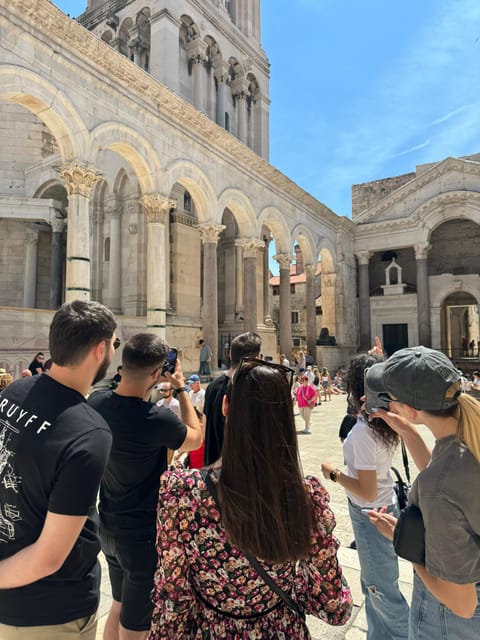
Fruit Square is the final listed sightseeing stop. Like People’s Square, it shifts your attention toward the lived-in city and away from the palace alone.
This part of the route gives Lucija a chance to add local detail and answer questions about Split today. The strongest feedback about her guiding style focuses on her warmth, local knowledge, and ability to talk about life in the city as well as its past.
That personal connection is important. A standard history lecture can tell you when a wall was built. A local guide can also help you understand how the old center feels to someone who grew up there. You may want to use this time to ask what areas to explore next, though the tour itself is not presented as a restaurant or nightlife guide.
The walk ends at one of two drop-off points, including the model of Split’s historic core at Obala Hrvatskog narodnog preporoda 22. This returns you near the waterfront and leaves you in a useful position for independent sightseeing.
What the $23 price gives you
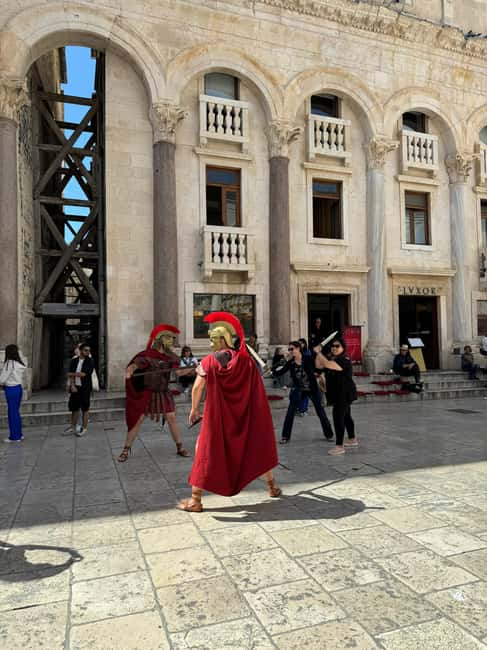
At $23 per person, this is a reasonably priced orientation walk. You are paying for a licensed guide, a focused route through Split’s most important central sights, and the chance to ask questions in a small group.
The value is strongest if you are visiting Split for the first time. Without a guide, you can certainly walk through the palace, but it is easy to miss the connection between the walls, courtyards, gates, and modern streets. Ninety minutes gives you a framework you can use for the rest of your stay.
The price does not cover entrance tickets to cultural or religious sites. That keeps the initial cost down, but it means you should budget separately if you want to go inside places discussed during the walk.
Private groups are available, which may be worth considering if you want the guide’s full attention or prefer to shape the conversation around your interests. A shared small group should be enough for most first-time visitors who want a friendly introduction at a lower price.
Who will get the most from this 90-minute walk
I would choose this tour for a first visit, a short stay, or the first morning of a longer trip. It gives you the basic map and story before you spend time exploring individual sites.
It also suits people who prefer a human explanation to reading signs at every corner. Lucija’s background in Split adds a personal layer, and the tour includes both ancient history and more recent local life.
Families can join, but children must remain with an adult for the full duration. The route is suitable for most visitors, although the walking surface and lack of wheelchair suitability are important limits.
You should choose something else if you want a long, highly detailed archaeological lecture, a museum-focused tour, or included admission to interior sites. This experience is a lively introduction, not a full-day study of the palace.
The tour operates in English. If you are not comfortable following spoken English for 90 minutes, you may find the experience less useful.
Practical advice before you book
Wear comfortable shoes. That is not a throwaway suggestion here, since you will walk through the Old Town and its historic streets for the full tour.
Allow time to find the correct starting location. The meeting point depends on the option selected, and the choices include the Riva and the model of Split’s historic core at Obala Hrvatskog narodnog preporoda 22.
The activity depends on weather. If poor conditions cause cancellation, you can reschedule or receive a full refund. You can also cancel up to 24 hours in advance for a full refund, and the reserve-now, pay-later option keeps your plans more flexible.
The tour is offered with a live English-speaking guide. Confirmation is sent immediately after booking, so check the details rather than relying on a general map pin.
Should you book the Diocletian’s Palace walking tour?
Book it if you want a well-paced first look at Split, especially if you value local stories and practical orientation. The route covers the central sights, the price is modest, and Lucija’s connection to the city gives the tour more personality than a bare list of dates.
Think twice if you need wheelchair access, want entrance tickets included, or prefer a long specialist tour. For most first-time visitors who can comfortably walk for 90 minutes, this is a smart way to begin: you learn how the palace fits together, then return to the places that deserve a closer look.
FAQ
How long does the Split walking tour last?
The tour lasts 90 minutes.
How much does the tour cost?
The listed price is $23 per person.
Is the tour conducted in English?
Yes. The tour operates in English with a live English-speaking guide.
Who guides the tour?
The tour is led by a licensed guide. Lucija is identified as a local guide born and raised in Split and has led this experience.
What places does the tour visit?
The route includes the Riva, Diocletian’s Palace, Vestibul, Peristil, the Golden Gate, People’s Square, and Fruit Square.
Where does the tour start?
There are two possible starting options: the model of Split’s historic core at Obala Hrvatskog narodnog preporoda 22, or the Riva in Split. The exact meeting point depends on the option booked.
Are entrance tickets included?
No. Entrance tickets to cultural and religious sites are not included. The guide provides information so you can visit those places later at your own pace.
Is the tour suitable for children?
Children may join, but they must be accompanied by an adult for the entire tour.
Is the tour suitable for wheelchair users?
No. The activity is not suitable for wheelchair users.
What happens if bad weather cancels the tour?
If poor weather causes cancellation, you can choose to reschedule or receive a full refund. You can also cancel up to 24 hours before the tour for a full refund.
More Diocletian's Palace Tours in Split
- Split Old Town and Diocletian’s Palace Tour
★ 4.8 · 716 reviews - Split: Game of Thrones Tour with Diocletian’s Palace Cellar
★ 4.8 · 545 reviews - Split: Diocletian’s Palace Virtual Reality Experience
★ 4.4 · 308 reviews - Split: 1.5-Hour Walking Tour and Diocletian’s Palace
★ 4.7 · 256 reviews
Newly added in Split
- Split: Private Walking Tour and Diocletian’s Palace★ 5.0 · 3 reviews
- Split: Jewish Heritage & Diocletian’s Palace Walking Tour★ 5.0 · 3 reviews
- Split: Diocletian’s Palace Private walking tour★ 5.0 · 3 reviews
- Split and Diocletian’s Palace walking tour with a local guid★ 4.9 · 36 reviews
- Split: Private Walking Tour with Diocletian’s Palace★ 5.0 · 30 reviews
- Split: Old Town and Diocletian’s Palace Walking Tour★ 3.3 · 3 reviews
- Essential Diocletian’s Palace Tour for First-Time Visitors★ 4.9 · 79 reviews
- Split: Old Town & Diocletian’s Palace Earlybird Walking Tour★ 4.0 · 12 reviews
Diocletian's Palace Tours, compared.

Diocletian Palace & Old Town Guided Walking Tour
Read our review →

Game of Thrones Tour with Diocletian’s Palace Cellar
Read our review →
Diocletian’s Palace and Old Town SMALL GROUP Walking Tour
Read our review →

Browse the lists this tour appears in