
Review · MUSEUMS
Palazzo Barberini (Bernini Exhibition Is Not Included)
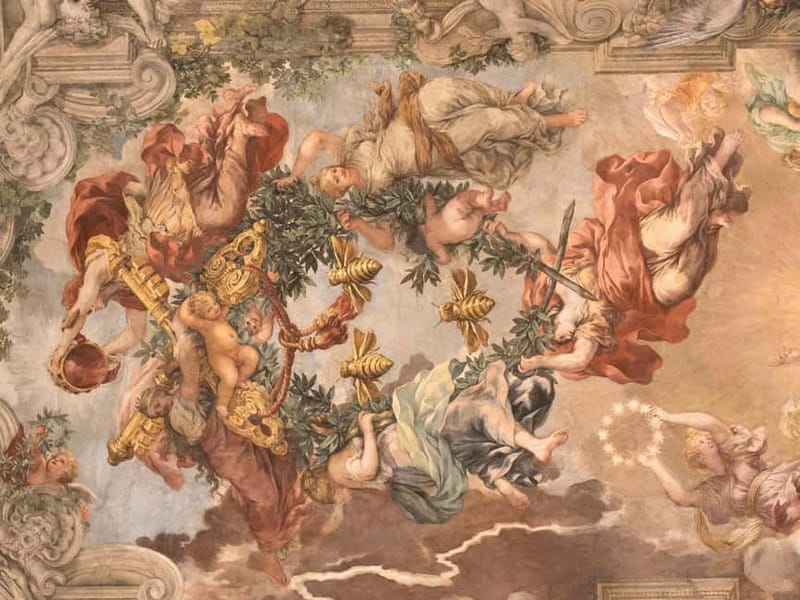
Palazzo Barberini gives you one of Rome’s finest pairings: a grand Baroque palace and a serious art collection. The central hall rises through the full height of the building, with Pietro da Cortona’s ceiling fresco turning architecture into a theatrical illusion.
I like the chance to see Raphael’s Fornarina alongside works by Caravaggio, Bernini, Borromini, and Filippo Lippi. I also like the added Palazzo Corsini admission, which lets you spread the art over two days instead of rushing through both collections.
The main catch is that this is not a live guided tour. You use an app on your own phone, and one booking issue deserves attention: your voucher is not the entry ticket. You must coordinate with the Touristation office before entering, and weak internet inside the thick-walled palace may make the audio guide harder to use.
Key points to know before you go
- Pietro da Cortona’s ceiling fresco fills the central hall with classic Baroque illusionism.
- Raphael’s Fornarina is the collection’s best-known painting and a major reason to visit.
- More than 1,400 works cover art from the 13th through the 18th century.
- Palazzo Corsini admission is included, with a separate visit possible on another day.
- The €29 price includes services beyond basic admission, whose stated adult retail price is €15.
- The Bernini exhibition is not included, so check your expectations before booking.
Why Palazzo Barberini deserves two hours
Palazzo Barberini is not simply a container for paintings. The building itself is half the experience. Commissioned by Pope Urban VIII, born Maffeo Barberini, it was designed to project the power and ambition of one of Rome’s most important families.
Urban VIII helped spread the Baroque style across Europe. His papacy is tied to the Jubilee of 1625, the practice of nepotism, and the condemnation of Galileo Galilei, but his influence on Roman art is just as visible here. Palazzo Barberini was meant to compete with the grand residences of Rome’s nobility, and its scale still makes that point clearly.
You should allow about two hours if you want to look carefully and use the audio guide. A faster visit is possible, but it would reduce the palace to a quick list of famous names. The best approach is to give the architecture a few minutes before turning your full attention to the paintings.
More Palace Museums in Rome:
- Rome: Palazzo Venezia Reserved Entrance with Museum
★ 4.2 · 52 reviews - Private Tour – National Museum of Palazzo Massimo
★ 5.0 · 51 reviews - Doria Pamphilj Palace Gallery and Museum Private Tour with Local Guide
★ 4.5 · 10 reviews
Entering the palace and finding your way inside
The meeting instructions require care. The voucher you receive is not the admission ticket, and an operator contacts you with the information needed to arrange entry. Plan time for this step rather than walking straight to the gallery and expecting the voucher to scan at the door.
The experience includes assistance at the Touristation office, entrance to Palazzo Barberini, and access to the audio guide app. The available audio languages are English, German, French, and Italian.
This arrangement adds a service layer to what would otherwise be a simple museum admission. That helps explain the difference between the €15 adult admission value and the $29 price of the experience. You are paying for the booking service, entry coordination, and audio guide access, not only for the museum ticket.
One practical point matters here. Keep your phone charged and download or open the audio guide as instructed before you begin. A visitor had trouble with the internet signal inside the old building because of its thick walls and ended up renting an audio guide. You do not want to spend your opening minutes solving a phone problem.
The central hall and Pietro da Cortona’s ceiling
Make the large central hall your first major stop. It occupies the full height of the palace, creating the sort of dramatic vertical space that Baroque architects loved.
Then look up. Pietro da Cortona’s monumental ceiling fresco is a lesson in visual trickery. Baroque art often aims to make painted space feel as if it continues beyond the real ceiling, and this work gives you a strong example of that approach.
This is the place where the building’s design and its collection come together. You are not just looking at a painted ceiling in isolation. You are standing inside a room built to frame it, with scale, movement, and decoration working as one large statement.
The hall can also reset your eyes before you examine smaller paintings. After looking upward at Cortona’s sweeping composition, you can pay closer attention to the portraits, religious scenes, and details in the galleries. I would not rush past this room in pursuit of the famous paintings. It is one of the clearest reasons to visit the palace rather than view the collection in a plain modern gallery.
Raphael’s Fornarina and the major paintings
The Galleria Nazionale d’Arte Antica holds more than 1,400 works dating from the 13th to the 18th century. That span gives you a broad view of Italian art, but it also means you should not expect every room to receive equal attention during a two-hour visit.
Raphael’s Fornarina is the painting most likely to anchor your visit. Its fame comes partly from the identity and story attached to the woman portrayed, making it one of those works that attracts attention before you have even studied the brushwork. Give it time beyond a quick photograph. Look at the figure, the pose, and the way the painting draws your eye toward the subject.
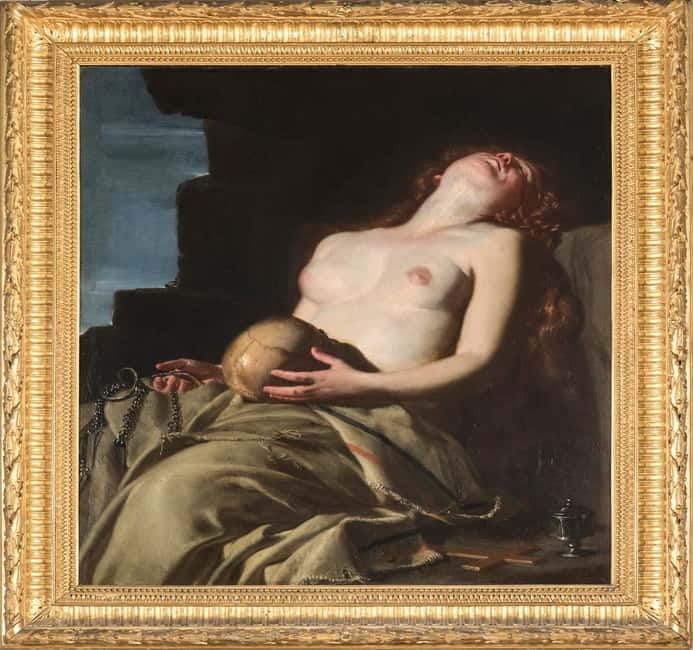
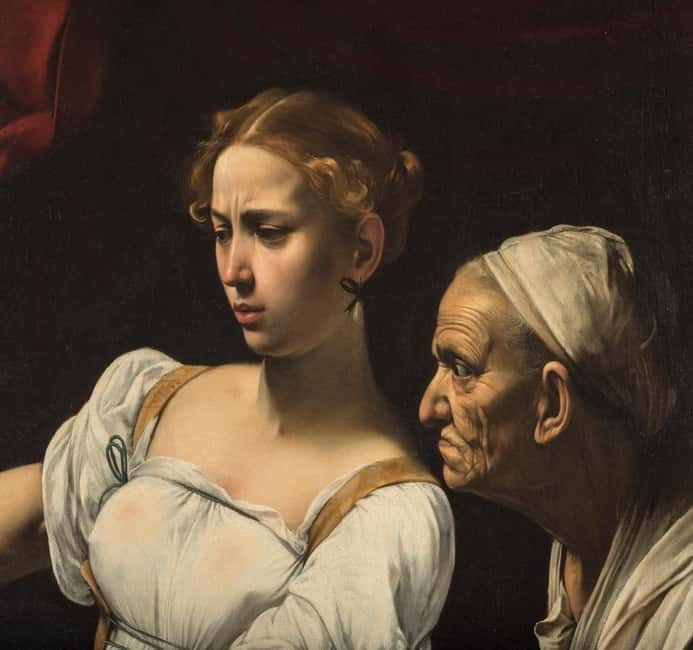
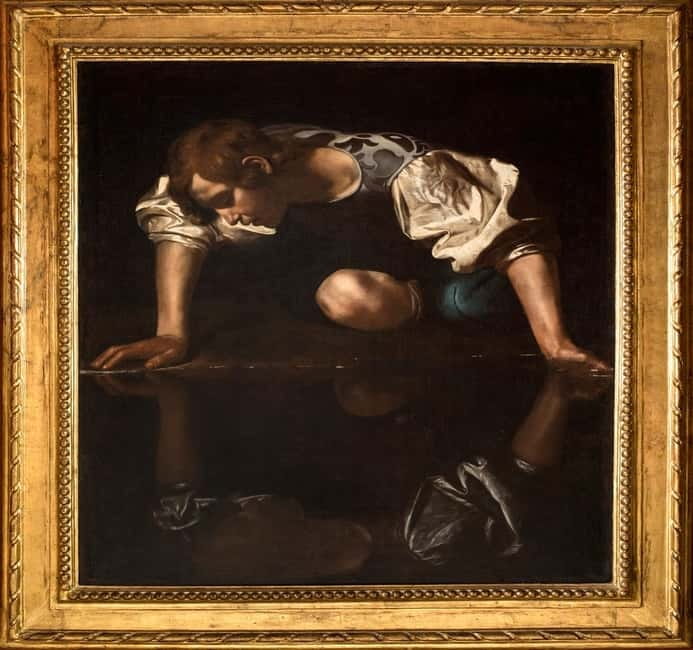
The collection also includes works connected with Filippo Lippi, Bernini, Borromini, and Caravaggio. These names cover very different approaches to art, from Renaissance grace to the emotional force of Caravaggio and the theatrical energy of the Baroque.
You may want to use the audio guide selectively. If you listen to every available explanation, two hours can pass quickly. A better plan is to hear the introduction to the palace and then choose the works that interest you most. The app lets you set your own pace, but it does not provide the conversation or personal recommendations of a live guide.
More Palaces to Tour in Rome:
- Rome: Opera Concert at Palazzo Poli – Fontana di Trevi
★ 4.7 · 1,026 reviews - Rome: Colonna Palace Entry Ticket
★ 4.8 · 609 reviews - The Great Opera Arias Concert at Palazzo Poli – Trevi Fountain
★ 5.0 · 533 reviews - Colosseum Underground, Roman Forum & Cesar Palace Special Access
★ 4.5 · 421 reviews
The Baroque story behind the collection
Palazzo Barberini makes more sense when you understand its original purpose. Urban VIII did not commission a modest townhouse. He wanted an urban villa that could match the wealth and status of Rome’s leading families while also expressing the new Baroque taste.
The Baroque style favored movement, drama, bold decoration, and a strong relationship between architecture and painting. You can see those ideas in the palace’s soaring hall and in Cortona’s ceiling fresco. The collection then gives you examples of how painting changed across several centuries.
That context makes the visit useful even if you are not an art specialist. You do not need to identify every painter to appreciate the shift from earlier religious works to the emotional intensity of later Baroque art. The audio guide can help connect those changes without requiring you to read every wall label.
I especially like the contrast between the famous works and the rooms around them. Raphael and Caravaggio draw the obvious attention, but the palace setting gives each painting a more formal presentation than you might find in a crowded, modern exhibition hall.
How the self-guided audio visit works
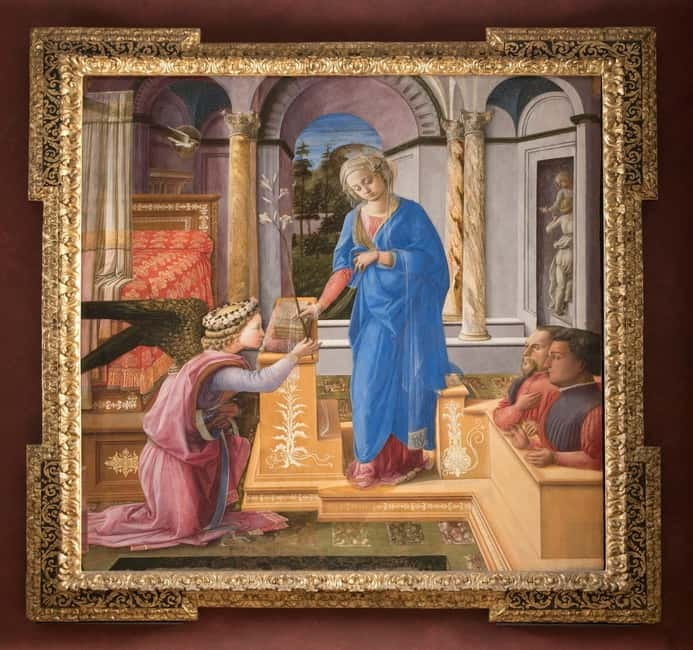
The audio guide app is included and can be used in English, German, French, or Italian. It gives you independence, which is useful if you want to linger over Raphael or move quickly through a section that does not interest you.
The tradeoff is simple: you are responsible for your own route and timing. There is no guide to notice that you have missed the central hall, explain a confusing reference, or answer a question on the spot. If you prefer a person leading the way, this product may not fit your style.
Bring comfortable shoes, water, a hat, sunscreen, and a camera. Some of those items matter mainly while you are getting to and from the attraction, since the museum visit itself is indoors. Photography is allowed without flash, so check your camera or phone before entering.
The most useful preparation is not extensive reading. Know the three priorities: the central hall, Cortona’s fresco, and Raphael’s Fornarina. Then let the audio guide add detail where you want it.
Using the Palazzo Corsini ticket
The same ticket includes entrance to Palazzo Corsini, an elegant collection of Renaissance and Baroque masterpieces. You can visit it on another day during your stay in Rome, which gives this booking more value for an art-focused itinerary.
That extra admission also changes how you should plan Palazzo Barberini. You do not need to squeeze every room into one hurried visit simply because another collection is attached to the ticket. Treat Barberini as a two-hour palace and painting visit, then save Corsini for a separate day when you have the time and energy to look carefully.
The information provided does not give a separate duration or tour format for Palazzo Corsini, so do not assume it follows the same exact audio route. Confirm the practical entry details when you receive the instructions from the operator.
What the $29 price really buys
At $29 per person, this experience costs more than the stated €15 adult admission to Palazzo Barberini. The supplied information explains that the difference comes from services included in the offer. Those services include assistance at the Touristation office, ticket coordination, and the Palazzo Barberini audio guide app.
The added Palazzo Corsini admission improves the value if you plan to use it. If you visit both collections, the cost becomes easier to justify, especially if you want a flexible self-guided experience rather than basic entry only.
The value is weaker if you want only a quick look at Palazzo Barberini and do not intend to visit Corsini. In that case, you are paying a notable premium over the stated museum admission. Also check that you are comparing like with like, since free admission is listed for minors from 0 to 17 years old, while this offer’s service charges may not work the same way for every age.
The Bernini exhibition is excluded. This is important. If a temporary Bernini display is your main reason for visiting, this ticket will not cover it and you should make separate arrangements.
Timing, closures, and practical limits
The gallery is closed on Mondays, and the last admission is one hour before closing. Check the available starting time before you commit your day, especially if you are pairing the visit with another timed attraction.
The stated duration is two hours. That is enough for a focused visit, but not necessarily enough for every one of the more than 1,400 works. I would plan to arrive with a short priority list rather than try to absorb the entire collection.
The experience is not recommended for people with mobility impairments or wheelchair users. Since the supplied information does not explain the exact barriers, contact the provider before booking if access is a concern.
There is no hotel pickup or drop-off, and food and drinks are not included. A panoramic bus tour with informative audio guides is also mentioned in the supplied activity information, but it is not listed among the specific inclusions for this Palazzo Barberini ticket. Do not assume the bus tour is part of this price without confirmation.
Free cancellation is available up to 24 hours in advance, and you can reserve now and pay later. Those terms are useful if your Rome schedule is still shifting, but they do not remove the need to check Monday closures and entry instructions.
Who should book Palazzo Barberini
I would recommend this experience to you if you enjoy art, architecture, and the chance to set your own pace. It suits someone who wants more than a basic museum ticket but does not need a live guide speaking continuously for two hours.
It is also a good match if you can use the Palazzo Corsini admission on another day. That second visit is the main way to get stronger value from the $29 price.
You may want to skip it if the Bernini exhibition is your priority, if you strongly prefer a live guide, or if you need wheelchair access. You should also think twice if your schedule allows only a rushed visit and you will not use the added Corsini entry.
For the best experience, arrange the voucher instructions early, prepare the audio guide before entering, and make Cortona’s ceiling fresco your first fixed target. Then seek out Raphael, Caravaggio, and the other major names at a pace that leaves room for the palace itself.
FAQ
Is Palazzo Barberini included in the ticket?
Yes. The experience includes entrance to Palazzo Barberini and the Galleria Nazionale d’Arte Antica.
Is the Bernini exhibition included?
No. The Bernini exhibition is specifically excluded from this experience.
How long does the visit last?
The stated duration is two hours.
Is a live guide included?
No. An audio guide app is included instead. It is available in English, German, French, and Italian.
What is the main artwork to see?
Raphael’s Fornarina is the collection’s best-known painting. Pietro da Cortona’s monumental ceiling fresco in the central hall is another major highlight.
Can I visit Palazzo Corsini with the same ticket?
Yes. Palazzo Corsini admission is included, and you can visit it on another day during your stay in Rome.
Is the museum open every day?
No. The gallery is closed on Mondays. Last admission is one hour before closing.
Can I take photographs?
Yes. Photography is allowed without flash.
Is the voucher the entry ticket?
No. The voucher is not the entry ticket. An operator will provide the information and instructions needed to coordinate your entry.
Is the experience suitable for wheelchair users?
No. The activity is listed as unsuitable for wheelchair users and people with mobility impairments.
Newly added in Rome
- Rome: Palazzo Venezia Reserved Entrance with Museum★ 4.2 · 52 reviews
- Rome: Palazzo Altemps Reserved Entrance Ticket★ 4.5 · 49 reviews
- Rome: Opera Concert in Palazzo Doria Pamphilj★ 4.1 · 28 reviews
- Rome: Colonna Palace Guided Tour★ 4.9 · 70 reviews
- Rome: Barberini Palace Guided Tour★ 4.8 · 4 reviews
- Palazzo Barberini: 2-Hour Private Tour★ 4.9 · 9 reviews
- Rome: Dinner and Opera Performance at Palazzo Pamphili★ 4.9 · 14 reviews
- Rome: New Year’s Concert at Palazzo Doria Pamphilj with Tour★ 4.0 · 3 reviews
Museums, compared.
Venice’s Best: Basilica, Doge’s Palace, Gondola & History Gallery
Read our review →
Royal Palace & Prado Museum Skip the Line Guided Tour
Read our review →
City Pass with Museums including Doge’s Palace
Read our review →
Crete: Knossos Palace and Museum E-Tickets with Audio Guides
Read our review →
Venice Museum Pass & Doge’s Palace Entrance Ticket
Read our review →
Palace, Museum, Madrasa & Medina Highlights Tour
Read our review →
Browse the lists this tour appears in