
Review · PRIVATE PALACE TOURS
Private Tour – National Museum of Palazzo Massimo
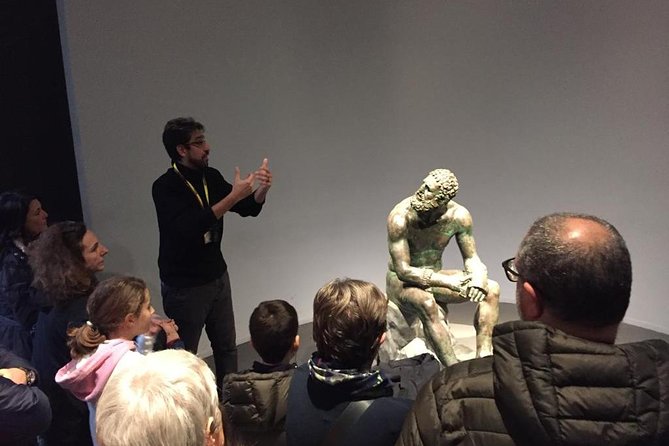
Rome’s Palazzo Massimo is the place to go when you want ancient Rome explained through objects, not just ruins. In two hours, your private English-speaking guide connects Roman calendars, family worship, heroic portraits, house decoration, religion, frescoes, and mosaics. I especially like the chance to see the famous Boxer at Rest and the frescoes from Villa Livia in one focused visit.
I also like that admission is included and that the tour is private, so your group can keep the conversation moving at its own pace. The main caution is reliability: one published account describes a guide who never arrived, leaving the visitor to explore alone. The 4.9 rating from 51 reviews and 98 percent recommendation are encouraging, but I would still confirm the meeting details before setting out.
Key points at a glance
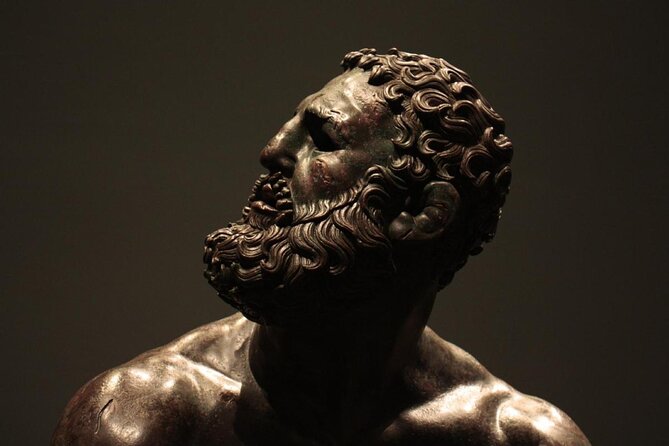
- The Boxer at Rest: See one of the museum’s most memorable ancient sculptures as part of a guided visit.
- Villa Livia frescoes: Examine Roman wall paintings that show how wealthy homes were decorated.
- Ancient Roman customs: Learn about calendars, ancestor worship, religious practice, and the way Romans honored heroes.
- Private two-hour format: Your group has the guide to itself, which allows for questions and a more focused pace.
- Admission included: The $150.18 per-person price covers the museum ticket as well as the guide.
- Central meeting point: Meet at Palazzo Massimo alle Terme at 2:30 p.m., near public transportation.
Why Palazzo Massimo is worth your time
Rome gives you plenty of ruins, columns, and broken walls. Those remains can tell you where Roman buildings once stood, but they do not always show how people used, decorated, or understood those spaces. Palazzo Massimo helps fill in that gap.
Here, you are not simply looking at old objects in glass cases. The tour is built around the habits and institutions behind them. You learn how Romans organized time through calendars, represented important people, treated the dead, and decorated their homes. That approach gives you a useful bridge between the museum and the ruins you see elsewhere in Rome.
I like this focus because it makes the city’s scattered remains easier to read. After learning about Roman decoration inside the museum, a fragment of fresco or mosaic at another archaeological site can feel less like a pretty piece of color and more like evidence of a lived-in home.
The museum visit is also a sensible choice for a short afternoon. You meet at 2:30 p.m. and spend about two hours inside. That is long enough to focus on major works without committing your entire day to a large museum.
More Private Palace Tours in Italy
- Private 4hrs Venice Tour: Doge’s Palace, Grand Canal & St Mark’s
★ 4.5 · 715 reviews - Venice: Private Entry Doge Palace & St. Mark Terraces Tour
★ 4.8 · 337 reviews - Private or Semi Doge’s Palace & Saint Mark’s Basilica Guided Tour
★ 5.0 · 316 reviews
A two-hour route through Roman life
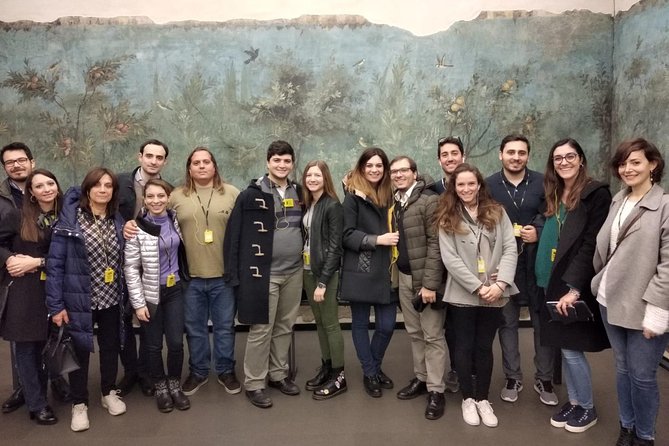
The tour centers on Museo Nazionale Romano Palazzo Massimo, also called Palazzo Massimo alle Terme. The experience is private, so only your group participates. That matters in a museum where a good explanation can be more useful than a fast march from one famous object to the next.
The first theme is the Roman calendar. This may sound dry at first, but calendars reveal how a society organized public life, religious observances, and ordinary routines. The guide uses the collection to explain how ancient Romans understood and arranged time.
Next comes the way Romans portrayed their heroes. This section connects art with public memory. You are not only looking at faces and bodies as artistic exercises. You are considering how Romans wanted important people to be remembered and what those images communicated about status and character.
The visit then moves toward domestic decoration. Frescoes and mosaics show how Roman homes were made attractive and meaningful. The museum gives you a way to picture rooms that no longer survive intact, along with the artistic choices that shaped them.
The tour also examines ancestor worship and the religious side of Roman life. This is one of the most useful parts of the plan because Roman religion was tied to family, public customs, and the treatment of the dead. The guide’s job is to connect those ideas to the museum objects rather than present them as isolated facts.
Finally, the tour helps you understand the buildings that produced these works. When you walk through Rome and see the remains of ancient structures, Palazzo Massimo gives you clues about how those spaces were decorated and experienced. The museum becomes a companion to the city’s archaeological sites.
The Boxer at Rest and the power of a single sculpture
The Boxer at Rest is one of the clear highlights. Its inclusion gives the tour a strong visual anchor, especially if you have limited time in Rome and want to see an important ancient sculpture without wandering through every room.
The subject also fits the larger themes of the visit. Roman art was not only about ideal beauty. It could show physical effort, age, status, heroism, and the human body in different conditions. A guided explanation can help you look at the work as part of ancient artistic practice, not just as a famous statue to photograph.
You should expect the guide to place the sculpture within the museum’s wider story of Roman culture. The provided information does not name the guide or give a detailed script, so I would not assume a particular interpretation before you arrive. Still, the private format gives you a good opportunity to ask about the work’s style, purpose, and connection to Roman values.
Villa Livia’s frescoes and Roman home decoration
The frescoes from the Villa Livia are another major reason to choose this visit. They show the decorative side of Roman life at a level that ruins often cannot. Instead of seeing only fragments attached to a wall, you get a better sense of how painted interiors helped shape the atmosphere of a home.
The tour presents these works alongside mosaics and other examples of decoration. That comparison matters. A Roman house was not decorated with one medium alone. Painted walls, patterned floors, and displayed objects worked together to create an interior setting.
I find this particularly helpful if you enjoy architecture but do not always know how to read archaeological remains. A guide can point out the difference between a building’s structure and the decoration that made it feel personal, impressive, or religious.
The information supplied does not promise a full tour of every section of Palazzo Massimo. With only two hours, the guide will need to keep the visit focused. That is a benefit if you want the important works and a clear theme, but less suitable if you prefer to inspect the entire collection at your own speed.
More Private Palace Tours in Rome
- Private Tour – Palazzo Barberini
★ 5.0 · 23 reviews - Colosseum, Roman Forum and Emperors’ Palace Private Guided Tour
★ 5.0 · 14 reviews - Doria Pamphilj Palace Gallery and Museum Private Tour with Local Guide
★ 4.5 · 10 reviews
From museum objects to the ruins of Rome
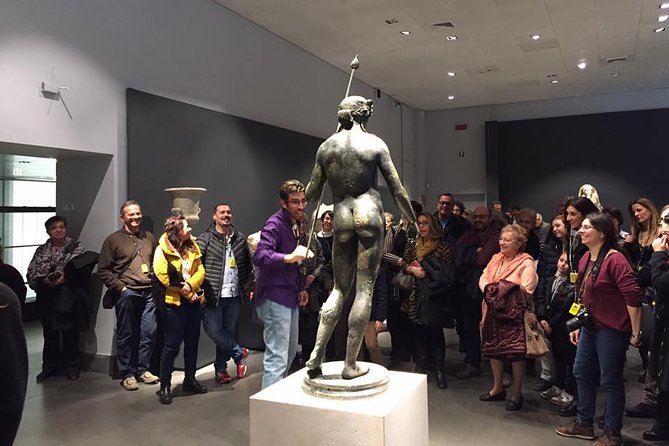
One of the best ideas behind this experience is its connection to the rest of the city. Rome’s ruins can be visually powerful but incomplete. You may see a foundation, a broken wall, or a surviving floor and have little sense of the original room.
Palazzo Massimo supplies some of that missing context. The tour looks at how ancient buildings were used, decorated, and experienced. That means you can carry the museum’s lessons into later sightseeing, especially when you visit archaeological remains elsewhere in Rome.
The focus on calendars, heroes, religion, ancestors, and household decoration also keeps the tour grounded in human behavior. You are not only studying dates and styles. You are considering what people valued and how they expressed those values.
That makes the visit a good match for you if you want more than a list of emperors and construction dates. It is also useful if you are traveling with someone who finds ruins hard to interpret. The museum’s preserved art gives the guide more concrete material to work with.
Is $150.18 per person a fair price?
At $150.18 per person, this is not a cheap museum entry. The price includes admission tickets, a professional local guide, and a private tour. You also receive a two-hour visit in English, with only your own group participating.
The value depends heavily on your group size and how much you want guidance. A solo visitor or couple pays more per person for privacy. A larger group can make better use of the private format, and group discounts are available. Since the exact discount is not provided, you should check the final rate for your party before booking.
I see the strongest value in the interpretation rather than the ticket itself. You can enter a museum on your own, but this experience is designed to connect individual works to Roman calendars, ancestor worship, religion, portraiture, and domestic art. If those connections matter to you, the added cost may be worthwhile.
If you already know the collection well and prefer to read labels quietly, the private guide may not justify the price. You are paying for explanation, structure, and the chance to ask questions, not just entry.
Meeting point, timing, and practical details
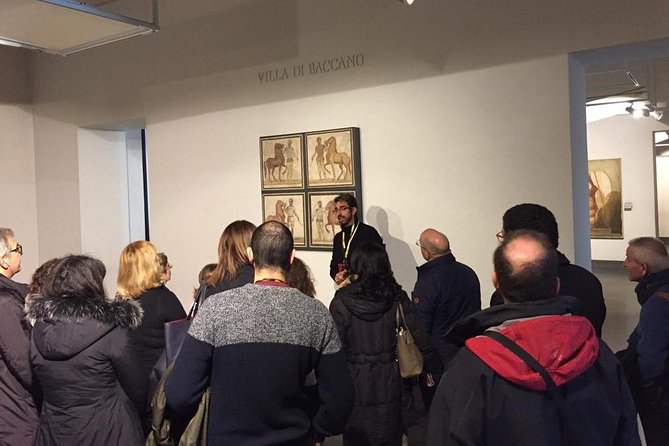
The meeting point is Palazzo Massimo alle Terme, Largo di Villa Peretti 2, Rome. The start time is 2:30 p.m., and the activity ends back at the same meeting point after roughly two hours.
The museum is near public transportation, but private transportation is not included. Hotel pickup and drop-off are also not included, so you need to make your own way to the museum and plan your return.
A key rule is easy to miss: you must leave bags and backpacks in the checkroom. Pack lightly for the visit and allow enough time to deal with your belongings before the tour starts. The supplied information does not give checkroom procedures or fees, so do not assume that large bags will be accepted.
Most people can participate, and the activity is described as being near public transportation. Specific accessibility details are not provided, so you should ask the provider directly if you have mobility or other access needs.
Rome Guides is the provider. The guide’s name is not supplied, so you cannot choose a particular person in advance. Because one account reports that the guide failed to appear, I would keep your booking confirmation handy and verify the meeting point and start time before the afternoon visit.
Who will enjoy this private museum tour?
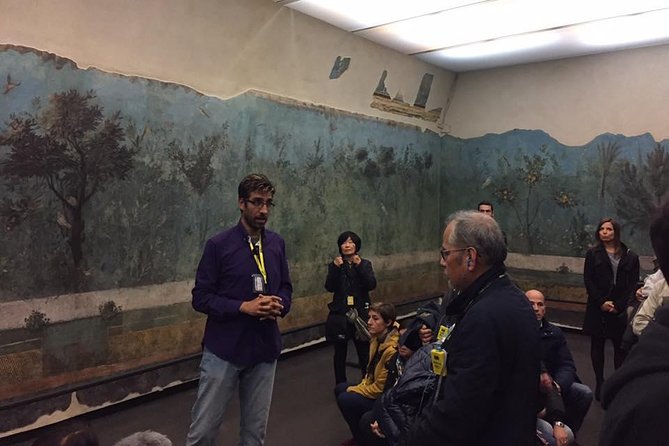
This tour suits you if you want a clear introduction to ancient Roman culture without spending half a day trying to decide which rooms matter. The two-hour limit gives the visit shape, and the private format lets your group ask questions that may be difficult in a large public tour.
It is also a good pick for anyone interested in daily life, religion, art, and family customs. The subject is broader than sculpture alone. You move from calendars to portraits, from frescoes to mosaics, and from house decoration to the treatment of the dead.
Families and mixed-interest groups may appreciate the focused structure. Someone fascinated by art can concentrate on the Boxer at Rest and Villa Livia frescoes, while someone more interested in Roman customs can follow the discussion of calendars and ancestor worship.
You may want a different plan if you prefer an unstructured visit or want to see every room. The tour is designed around selected themes and major works, not an all-day survey of the museum.
The rating is 4.9 from 51 reviews, with 98 percent of participants recommending the experience. Those figures suggest strong satisfaction, but the single account describing an absent guide is important enough to keep in mind. A little confirmation before you go is a sensible precaution.
Should you book Palazzo Massimo with a private guide?
I would book this tour if you want ancient Roman art explained in relation to real customs and buildings. The Boxer at Rest, Villa Livia frescoes, mosaics, and Roman religious traditions give the two-hour visit plenty of substance. Admission is included, and the private format should make the experience more personal than a standard group tour.
I would skip it if you want the lowest possible museum cost or prefer to explore alone. The $150.18 per-person price is a serious spend, especially for a small group, and you must arrange your own transportation.
For most visitors who value context, this is a well-focused way to spend an afternoon in Rome. Just pack lightly, arrive at Largo di Villa Peretti 2 before 2:30 p.m., confirm the guide arrangements, and use the museum visit to make better sense of the ruins waiting outside.
FAQ
How long does the private Palazzo Massimo tour last?
The tour lasts approximately two hours.
What time does the tour begin?
The tour starts at 2:30 p.m.
Where does the tour meet?
You meet at Palazzo Massimo alle Terme, Largo di Villa Peretti 2, 00185 Rome, Italy.
Where does the tour end?
The activity ends back at the meeting point.
Is admission to Palazzo Massimo included?
Yes. The price includes museum tickets.
Is this a private activity?
Yes. Only your group participates in the private tour.
Can I cancel for a full refund?
Yes, if you cancel at least 24 hours before the experience start time. Cancellations made less than 24 hours in advance are not refunded, and changes within that period are not accepted.
More Palace Museums in Italy
- Venice’s Best: Basilica, Doge’s Palace, Gondola & History Gallery
★ 4.5 · 2,478 reviews - Venice: City Pass with Museums including Doge’s Palace
★ 4.1 · 1,020 reviews - Venice Museum Pass & Doge’s Palace Entrance Ticket
★ 3.9 · 769 reviews - Basilica, Doge’s Palace, History Gallery & Bell Tower Option
★ 5.0 · 586 reviews
Newly added in Italy
- Turin: Palazzo Madama Museum of Ancient Art Entrance Ticket★ 4.6 · 149 reviews
- Venice Doge’s Palace & St. Mark’s Semi-Private Tour, Max 6 People★ 5.0 · 192 reviews
- Colosseum, Roman Forum and Emperors’ Palace Private Guided Tour★ 5.0 · 14 reviews
- Doria Pamphilj Palace Gallery and Museum Private Tour with Local Guide★ 4.5 · 10 reviews
- Private Tour – Palazzo Barberini★ 5.0 · 23 reviews
- Florence: Pitti Palace and Boboli Gardens Private Tour★ 4.8 · 46 reviews
- Pitti Palace and Boboli Gardens Private Tour★ 4.5 · 38 reviews
- Pitti Palace and Boboli Gardens Private Tour★ 4.7 · 38 reviews
Private Palace Tours, compared.
Alhambra Private/Small Group Tour & Nasrid Palaces Skip the Line
Read our review →
Mutianyu Great Wall&Summer Palace Excursion:Group/Private Options
Read our review →
Private Tour of Sintra, Cabo da Roca and Cascais with 2 Palaces
Read our review →
Private 4hrs Venice Tour: Doge’s Palace, Grand Canal & St Mark’s
Read our review →
Knossos Palace Skip-the-Line Ticket & Private Guided Tour
Read our review →

Private Tour Sintra from Lisbon Palaces of Pena and Regaleira
Read our review →
Browse the lists this tour appears in