
Review · PRIVATE PALACE TOURS
Private Tour – Palazzo Barberini
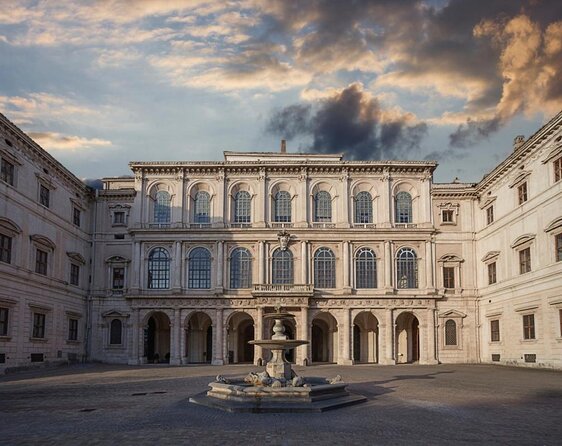
Palazzo Barberini is one of Rome’s best stops for seeing how art changed when religion and political power changed with it. Inside, this private tour links works by Caravaggio, Titian, and El Greco to the Renaissance and Baroque worlds that produced them, then gives you time to ask questions instead of trailing behind a large crowd.
I like two things right away: admission is included, and the private format lets your guide adjust the pace to your interests. I also like that the tour gives real attention to Pietro da Cortona’s huge ceiling fresco, a work that can easily be missed if you hurry through the palace.
The main consideration is the price, $138.03 per person for about two hours. That can be fair for a private guide and ticket, especially for a small group, but it is not the economical choice if you only want to wander through the collection on your own.
Key points before you book
- Pietro da Cortona’s ceiling fresco is a major reason to choose this museum over a quick gallery visit.
- Caravaggio, Titian, and El Greco anchor a tour that moves across several periods of Italian and European art.
- A private English-language guide gives your group room for questions and discussion.
- Tickets are included, so you are paying for the guided experience rather than arranging museum entry separately.
- Bags and backpacks must go in the checkroom, so arrive ready to leave them behind.
- The 3:30 pm start makes this a useful afternoon museum plan, with no hotel pickup or transport included.
Why Palazzo Barberini deserves two hours
Rome has no shortage of famous museums, but Palazzo Barberini offers a more focused way to read the city’s art story. The collection carries you from the Middle Ages through the Renaissance and into the Baroque, so you can watch styles shift rather than view isolated masterpieces with no connection between them.
That timeline matters. Art in Rome was shaped by powerful patrons, changing religious priorities, and political ambition. A painting is not just a pretty object here. It can show you what a church wanted people to believe, what a ruling family wanted people to admire, or how an artist challenged the expectations of the day.
You should expect the guide to select key works rather than attempt every room. Two hours is enough for a clear route through the main highlights, but not for a slow inspection of the entire museum. That is a strength if you want context and direction. It is a limitation if your main goal is to study every painting at length.
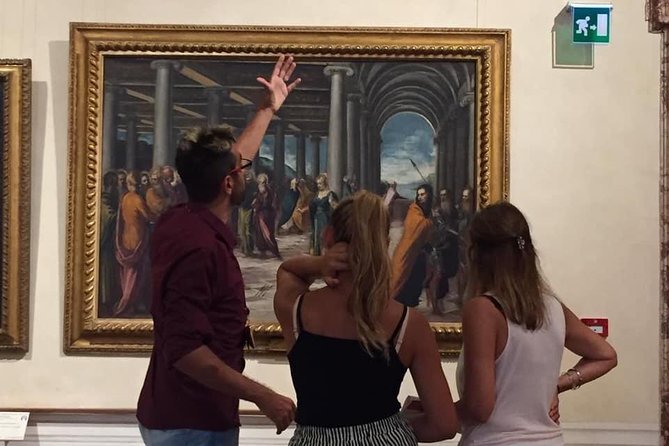
The private setting changes the feel of the visit. You can stop when a work catches your attention, ask why a figure is posed in a certain way, or request more background on an artist. In a large group, those questions often wait until the end. Here, they can shape the visit as you go.
More Private Palace Tours in Italy
- Private 4hrs Venice Tour: Doge’s Palace, Grand Canal & St Mark’s
★ 4.5 · 715 reviews - Venice: Private Entry Doge Palace & St. Mark Terraces Tour
★ 4.8 · 337 reviews - Private or Semi Doge’s Palace & Saint Mark’s Basilica Guided Tour
★ 5.0 · 316 reviews
From medieval art to the drama of the Baroque
The tour begins with Italian art from the Middle Ages and follows its movement toward the Baroque style. You will not simply get a list of dates and names. The useful part is seeing how artists gradually handled space, emotion, light, and the human figure in different ways.
Renaissance art brought new interest in proportion, perspective, and the physical world. The Baroque period pushed toward motion, theatrical lighting, strong feeling, and grand visual effects. The change was not only artistic. It was tied to the needs of churches and rulers who wanted images to persuade, impress, and move the viewer.
This is where a private guide can earn the fee. A painting can look impressive on its own, but the story behind its commission often explains why it looks the way it does. You may find yourself looking differently at a gesture, a shaft of light, or the size of a figure once the guide explains its religious or political purpose.
The tour’s focus on political and religious change is particularly useful for first-time art visitors. You do not need a degree in art history to follow the conversation. The guide’s job is to connect the visible details to the world that created them.
Caravaggio, Titian, and El Greco in one route
The collection includes works by several of the names most people hope to see in Rome. Caravaggio brings direct emotion and dramatic light. Titian represents the power and color of Venetian painting. El Greco offers a more unusual, expressive approach to the human form and spiritual subjects.
You should not expect an equal-length lecture on every artist. The guide will likely use selected works to show different ways painters solved similar problems. How do you make a religious scene feel immediate? How do you direct the eye? How do you make a patron look powerful? Those questions help tie the rooms together.
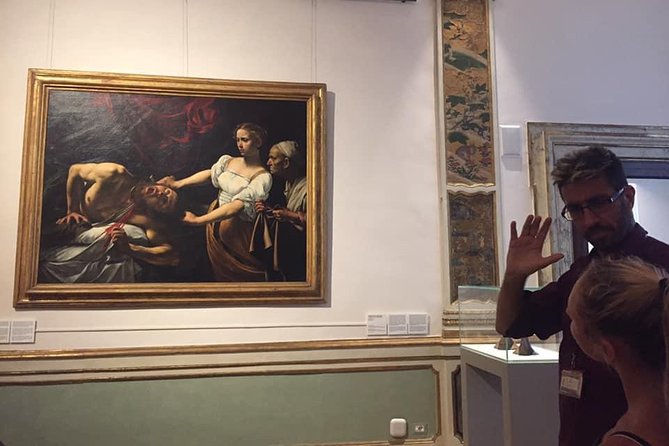
Caravaggio is especially rewarding with explanation. His scenes can feel startlingly close to ordinary life, even when the subject is religious. A guide can point out how light controls your attention and how the arrangement of bodies creates tension. You may already recognize the name, but the details are easier to notice when someone gives you a clear way to look.
Titian gives the visit another tone. His handling of color and texture helps show why Venetian painting mattered so much to later artists. El Greco, meanwhile, lets you see how personal an artist’s style could become. The point is not to rank them. It is to understand how different artistic choices create different emotional effects.
Pietro da Cortona’s ceiling fresco
The ceiling fresco by Pietro da Cortona is a central reason to take this tour. Large ceiling paintings are easy to admire for a few seconds and then leave behind, but the work rewards a closer look at its scale, movement, and purpose.
A guide can help you read the composition from the floor. You may notice how the figures, clouds, gestures, and architectural effects pull your eyes across the ceiling. The work was designed to make a strong impression, and the setting gives you a clear example of how Baroque art used spectacle to communicate power.
This is also a good place to ask questions. If you want to know how the fresco fits the palace, what the imagery means, or why ceiling paintings became such a forceful part of Baroque interiors, a private tour gives you the right setting.
The ceiling may be your favorite part of the visit, or you may prefer the quieter concentration of a painting gallery. Either way, it gives the tour a memorable visual center. Do not rush past it while looking only at eye-level works.
More Private Palace Tours in Rome
- Private Tour – National Museum of Palazzo Massimo
★ 5.0 · 51 reviews - Colosseum, Roman Forum and Emperors’ Palace Private Guided Tour
★ 5.0 · 14 reviews - Doria Pamphilj Palace Gallery and Museum Private Tour with Local Guide
★ 4.5 · 10 reviews
What the private format really adds
Private does not automatically mean better, but here it solves several common museum problems. Your group is the only group on the activity, and the guide can respond to your level of interest. If you already know Caravaggio, you can ask for more attention to another artist. If art museums are new territory, you can pause for basic explanations without feeling behind.
The tour is offered in English and includes a local professional guide. One guide specifically praised for this experience is Viscenzo, whose approach is described as enthusiastic, interactive, and full of stories about the artists. That style suits this museum because the collection benefits from connections between people, places, commissions, and ideas.
You should still keep your expectations realistic. A private tour does not mean unlimited time or a guarantee that every room will be covered. The stated duration is about two hours, so the guide must make choices. If you want a detailed study of one painting, say so early.
The chance to ask questions is one of the strongest reasons to book this instead of entering alone. You can ask about technique, symbolism, the artist’s life, or the role of the church and ruling families. Those small exchanges often turn a museum visit from a parade of famous names into something you can remember.
The 3:30 pm start and meeting point
The tour starts at 3:30 pm at Gallerie Nazionali di Arte Antica, Palazzo Barberini, on Via delle Quattro Fontane, 13, in Rome. It ends back at the meeting point, which keeps the plan simple if you have another activity afterward.
There is no hotel pickup, hotel drop-off, or private transportation. You need to make your own way to the museum, but the location is near public transportation. Check your route before setting out and allow enough time to arrive at the named entrance.
The afternoon start is useful if your morning is already full of Roman ruins, churches, or a long meal. It also gives you a clear two-hour block rather than asking you to sacrifice a full day. Since the activity ends where it begins, you can continue with your own evening plans without arranging a return transfer.
Bring as little as possible. Bags and backpacks must be left in the checkroom, so avoid arriving with items you will need during the visit. That rule is easy to handle, but it is worth knowing before you leave your hotel.
Is $138.03 per person a fair price?
At $138.03 per person, this is a premium museum visit. The price makes the most sense when you value a private guide, included admission, and the ability to ask questions throughout the two hours.
For a couple, family, or small group that wants a personal introduction to Italian art, the cost may be reasonable. Group discounts are available, so the final value can improve when several people book together. You are not just buying entry. You are paying for someone to shape the visit around your group and explain what you are seeing.
The price is harder to justify if you prefer to read labels, move at your own speed, or spend a long time with a small number of works. In that case, a self-guided museum visit may suit you better, assuming you arrange admission separately.
The included ticket removes one practical task, and the private format offers something a standard group tour cannot: direct conversation. I would consider this a good-value splurge for someone who wants the museum to make sense, rather than simply checking it off a list.
Who will enjoy this tour most
I would recommend this experience to you if you want a guided introduction to Italian art but do not want a large group. It is a good fit for couples, families, and friends who enjoy asking questions and discussing what they see.
It also suits anyone who feels uncertain in art museums. You do not need to arrive knowing the difference between Renaissance and Baroque painting. The guide can give you a working vocabulary and show you where to look.
Art lovers with limited time may also appreciate it. Two hours gives you a directed visit through major works without trying to cover every museum room. If Caravaggio, Titian, El Greco, and Pietro da Cortona are on your Rome list, this route brings several major names together.
I would be more cautious if your priority is independence. The private guide is the point of the experience, so someone who dislikes scheduled visits or prefers total freedom may find the format too structured. The same applies if the price is a concern and you are happy exploring museums alone.
Booking, cancellation, and practical details
Confirmation is provided at the time of booking. The activity is offered in English, and most people can participate. The tour is private, so only your own group joins the guide.
You can cancel for a full refund up to 24 hours before the local start time. Cancellations made less than 24 hours before the tour do not receive a refund, and changes inside that same period are not accepted.
The tour is commonly booked well ahead, with an average booking point of about 34 days before the date. That does not guarantee that every time sells out, but it suggests you should plan ahead if the 3:30 pm slot matters to you.
Should you book Palazzo Barberini with a private guide?
Book it if you want context, conversation, and a focused route through Rome’s art history. The combination of Caravaggio, Titian, El Greco, and Pietro da Cortona gives the visit plenty of substance, while the private format lets you shape the discussion around your interests.
I especially like this option for a first or second visit to Rome, when you want an expert framework without giving up the freedom to ask questions. The main tradeoff is cost. At $138.03 per person, it is not a casual museum ticket, but the included admission and private English guide make the price easier to defend for a small group.
If you are happy to explore alone, skip the guide and save money. If you want the palace, the art, and the political and religious setting to connect in your mind, this two-hour visit is a sensible choice.
FAQ
Where does the Palazzo Barberini tour begin?
It begins at Gallerie Nazionali di Arte Antica, Palazzo Barberini, Via delle Quattro Fontane, 13, 00184 Rome, Italy.
What time does the tour start?
The tour starts at 3:30 pm.
How long does the experience last?
The tour lasts approximately two hours.
Does the tour include museum admission?
Yes. Admission tickets are included in the experience.
Is the tour private?
Yes. Only your group participates in the private activity.
Is the tour offered in English?
Yes. The experience is offered in English.
Is transportation included?
No. Hotel pickup, hotel drop-off, and private transportation are not included. The meeting point is near public transportation.
Do I need to leave my bag at the museum?
Yes. Bags and backpacks must be left in the checkroom.
Can I cancel for a full refund?
Yes. You can cancel at least 24 hours before the local start time for a full refund. Cancellations made less than 24 hours before the start time are not refunded.
Newly added in Italy
- Turin: Palazzo Madama Museum of Ancient Art Entrance Ticket★ 4.6 · 149 reviews
- Venice Doge’s Palace & St. Mark’s Semi-Private Tour, Max 6 People★ 5.0 · 192 reviews
- Colosseum, Roman Forum and Emperors’ Palace Private Guided Tour★ 5.0 · 14 reviews
- Doria Pamphilj Palace Gallery and Museum Private Tour with Local Guide★ 4.5 · 10 reviews
- Private Tour – National Museum of Palazzo Massimo★ 5.0 · 51 reviews
- Palazzo Vecchio: Magnificent Private Tour★ 4.7 · 61 reviews
- Florence: Pitti Palace and Boboli Gardens Private Tour★ 4.8 · 46 reviews
- Pitti Palace and Boboli Gardens Private Tour★ 4.5 · 38 reviews
Private Palace Tours, compared.
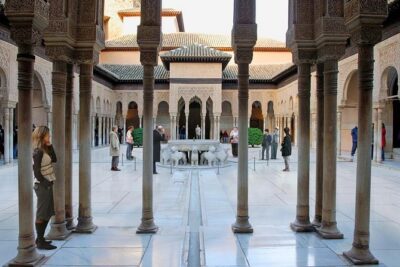
Alhambra Private/Small Group Tour & Nasrid Palaces Skip the Line
Read our review →
Mutianyu Great Wall&Summer Palace Excursion:Group/Private Options
Read our review →
Private Tour of Sintra, Cabo da Roca and Cascais with 2 Palaces
Read our review →
Private 4hrs Venice Tour: Doge’s Palace, Grand Canal & St Mark’s
Read our review →
Knossos Palace Skip-the-Line Ticket & Private Guided Tour
Read our review →

Private Tour Sintra from Lisbon Palaces of Pena and Regaleira
Read our review →
Browse the lists this tour appears in