
Review · PRIVATE PALACE TOURS
National Museum of Palazzo Massimo: 2-Hour Private Tour
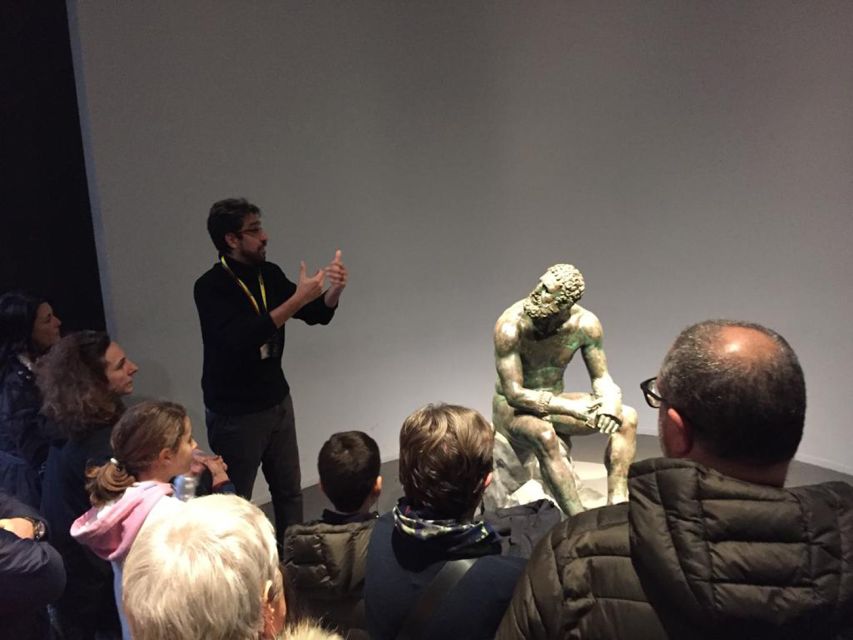
Palazzo Massimo holds some of ancient Rome’s finest art, but its real strength is the way ordinary Roman life comes into focus. A private guide can connect a calendar from Praeneste or Anzio to the way Romans organized time, then explain how statues, frescoes, and tombs reveal their ideas about power, religion, and death. The Boxer at Rest and the frescoes from the Villa of Livia are the major draws.
I like the private format, since two hours can be shaped around your questions instead of a fixed group pace. I also like the focus on meaning rather than simple object-spotting. Guides such as Vincenzo have been praised for lively explanations of Roman characters and daily activities. The main drawback is time: Palazzo Massimo has more to see than any two-hour visit can cover, and the price of $130.28 per person is high if you only want a quick look at the famous works.
Key points to know before you book
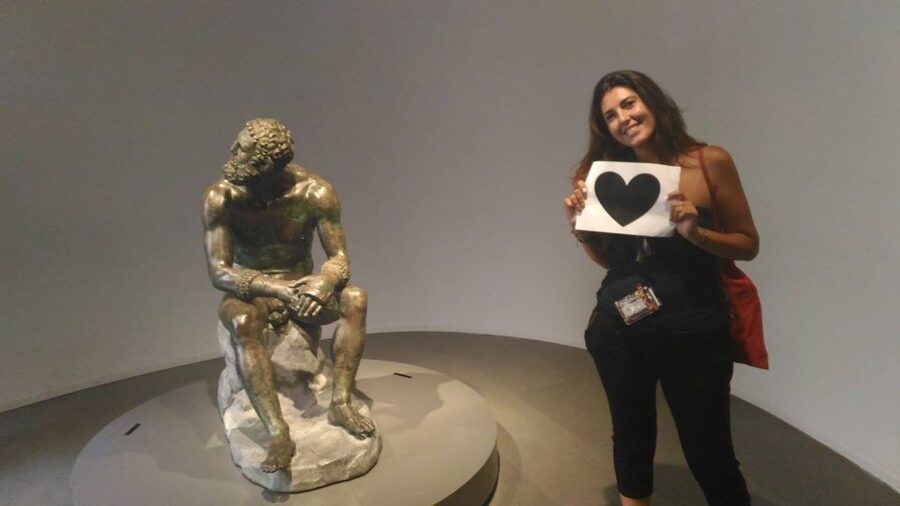
- The Boxer at Rest gives the tour an unforgettable centerpiece: This battered bronze feels human and immediate, not like a distant ideal of a god or emperor.
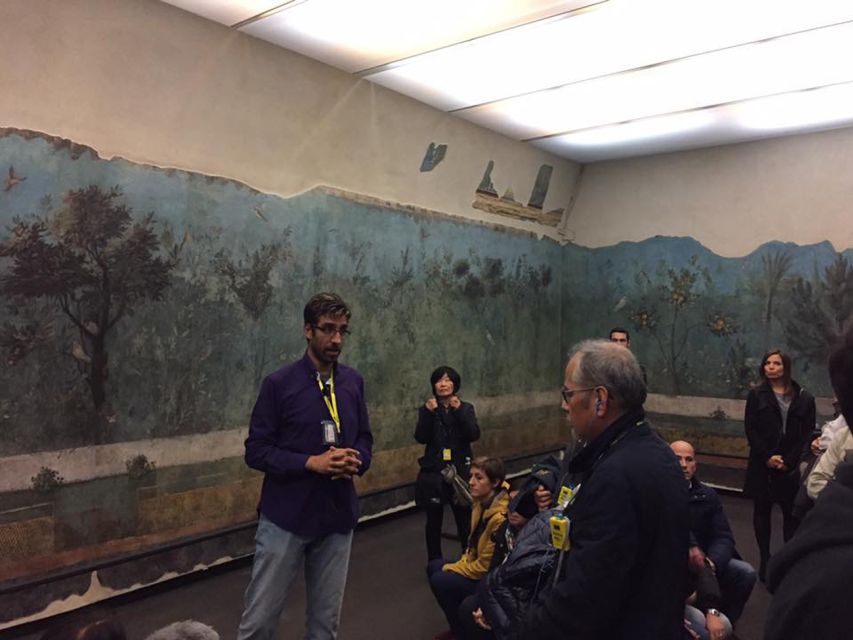
- Villa of Livia frescoes show Roman luxury at home: You’ll see how painted gardens and nature scenes transformed an interior space.
- Roman calendars reveal practical daily life: The displays from Praeneste and Anzio add an unusual look at how Romans measured time.
- The private guide changes the museum experience: English and Italian tours let you ask questions and spend more time where your interest lies.
- The Sarcophagus of Portonaccio brings Roman warfare and burial customs together: Its battle scene is both grand and unsettling.
- Plan for a focused visit, not a complete museum tour: Two hours works well for highlights and context, but not every room.
Why Palazzo Massimo is worth two focused hours
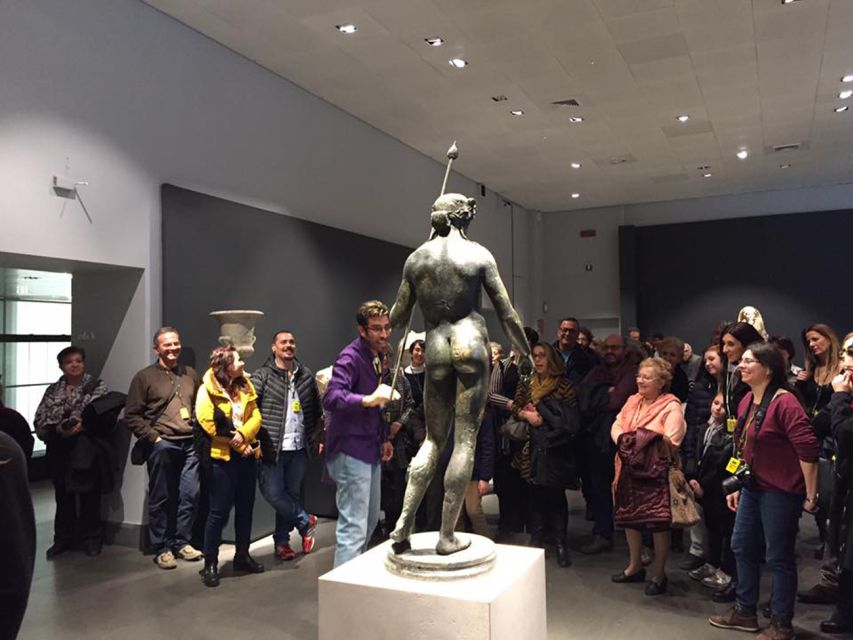
Many people come to Rome looking for the Colosseum, the Forum, and the Pantheon. Those sites show Rome on a huge scale. Palazzo Massimo does something different. It brings you close to the objects that explain how Romans lived, worshipped, decorated their homes, honored their dead, and pictured their heroes.
That change in scale matters. Instead of only seeing ruins, you can look at a calendar, a floor mosaic, a portrait, or a household fresco and ask what it meant to the people who used it. A guide helps make those connections quickly, which is especially useful when your museum time is limited.
The tour lasts two hours and is private, with an English or Italian-speaking guide. You meet in front of the museum entrance 15 minutes before the start. Your guide holds a sign with the tour name, and tickets are handed out at the meeting point. The visit ends back there.
You will not receive hotel pickup or drop-off, so you need to make your own way to the museum. Keep your bags small. Large bags and luggage are not allowed, and the tour takes place rain or shine.
More Private Palace Tours in Italy
- Private Tour – National Museum of Palazzo Massimo
★ 5.0 · 51 reviews - Private Tour – Palazzo Barberini
★ 5.0 · 23 reviews - Colosseum, Roman Forum and Emperors’ Palace Private Guided Tour
★ 5.0 · 14 reviews
Roman calendars from Praeneste and Anzio
The calendar displays may sound less exciting than a famous bronze statue, but they are one of the tour’s most useful stops. A calendar is a record of how a society thinks about work, worship, festivals, public duties, and the passing year.
The examples connected with Praeneste and Anzio give you a chance to see Roman timekeeping as something more than a list of months. Your guide can explain how calendars were tied to civic and religious life, and why the people who controlled public time held real influence.
This is a good moment to ask questions. How did Romans know when a festival should take place? Which dates mattered to public life? How did a calendar affect ordinary people? The tour is designed to address the habits and institutions behind the objects, not simply identify them.
I especially like this part for visitors who already know the famous monuments and want a more grounded look at Roman society. The drawback is that written calendar fragments may need explanation. Without a guide, they can feel dry or difficult to place. With one, they become evidence of how Rome arranged its year and its public world.
The Boxer at Rest and the human side of ancient sculpture
The Boxer at Rest is one of the museum’s major reasons to visit. This bronze statue presents an athlete after effort, not a flawless hero frozen in perfect strength. His pose and physical strain make the work feel unusually direct.
Your guide can point out how Roman and Greek artists portrayed heroes, athletes, gods, and important people in different ways. That makes the statue part of a larger discussion about ideals, identity, and the body in the ancient world.
The piece also gives the tour an emotional center. You are not simply looking at a polished figure. You are looking at a person who appears tired and alert, which makes the ancient world feel closer.
Because the tour is private, you can spend more time here if the statue catches your attention. That is one of the clearest advantages over a large group visit. You can ask about the sculpture’s style, its subject, or the way ancient viewers might have understood it.
Do not expect the guide to spend the entire two hours on this one work. Palazzo Massimo has several important collections, and the tour aims to explain Roman society through a range of objects. Still, the Boxer at Rest is likely to be the moment you remember most clearly.
Villa of Livia frescoes and Roman home decoration
The frescoes from the Villa of Livia offer a different view of Roman life. Instead of public monuments or military scenes, they show how an elite home could be decorated.
The paintings are known for scenes of nature and gardens. They help you picture the Romans’ taste for bringing an idealized outdoor world into an indoor room. The effect is more than decoration. It tells you about wealth, leisure, design, and the way a house could express status.
This stop also helps explain why Roman wall painting matters. A fresco was not a loose picture hung on a wall. It was part of the room itself, shaping the mood and appearance of the space. Your guide can help you notice how the painted setting might have changed the way the room was experienced.
I like the contrast between the Villa of Livia frescoes and the museum’s statues. The sculpture gallery shows individual bodies and faces. The frescoes show the wider setting in which Roman domestic life unfolded.
The practical limitation is that you cannot visit the actual villa as part of this tour. You see the preserved decoration in the museum, where it can be viewed closely and explained. For many people, that is the better place to understand the artwork, but it does not replace visiting an archaeological site.
More Private Palace Tours in Rome
- Doria Pamphilj Palace Gallery and Museum Private Tour with Local Guide
★ 4.5 · 10 reviews - Palazzo Barberini: 2-Hour Private Tour
★ 4.9 · 9 reviews
Marble gods and the Roman habit of borrowing ideas
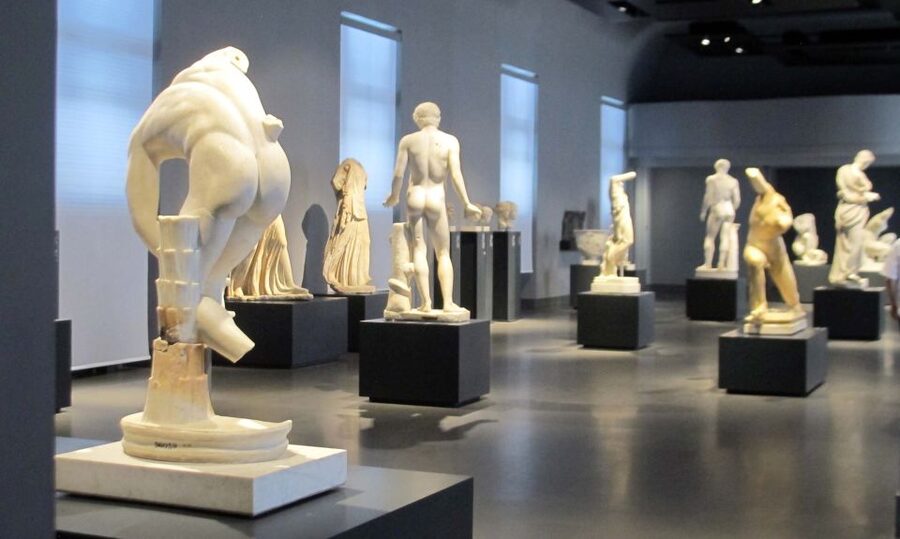
The museum’s marble statues include Roman and Greek gods. This section gives your guide a chance to explain the relationship between Greek artistic models and Roman religious life.
You will see how Romans used familiar divine figures and artistic forms while giving them meaning within their own society. A statue of a god was not just a decorative object. It could reflect religious practice, family identity, public authority, or the status of the person who commissioned it.
This is where a guide can save you from seeing a long row of marble figures as a blur. Ask your guide to compare the gods, their poses, and the details that identify them. A raised hand, an object held in the fingers, clothing, or a particular hairstyle can change the reading of a statue.
The private setting makes this especially useful for families or first-time museum visitors. You can stop the explanation when you need clarification, rather than trying to keep up with a group. It also suits repeat visitors who want to ask more specific questions about Roman religion and art.
The collection may feel formal after the warmth of the Villa of Livia frescoes or the physical force of the Boxer. That is normal. The value here is comparison. You see how Romans presented divine figures differently from athletes, military leaders, or private citizens.
The Sarcophagus of Portonaccio and Roman ideas about death
The Sarcophagus of Portonaccio is one of the tour’s most dramatic stops. Its carved battle scene covers the surface with movement, soldiers, horses, and conflict. It is an impressive object, but it also raises difficult questions about how Romans wanted the dead to be remembered.
A sarcophagus was not only a container for a body. Its decoration could announce status, courage, military service, family pride, or an idealized version of a person’s life. The battle scene connects death with power and achievement, giving your guide a strong opening for explaining Roman funerary customs.
This part of the tour also ties together several themes from the museum. The calendars show public time. The frescoes show domestic life. The gods show religious belief. The sarcophagus shows what happened when a Roman family presented a person to the world after death.
Look closely at the carved action. A guide can help you read the arrangement rather than treating it as a mass of figures. Who appears dominant? How are enemies shown? What does the composition say about the person being honored? Those questions turn a large stone coffin into a statement about Roman identity.
The battle imagery may not suit every child or every visitor. It is also easy to spend too long on the surface details and miss the burial customs behind it. The private format helps because you can ask for either a visual explanation or more social and religious context.
What the guide adds to the museum visit
The strongest reason to book this experience is the guide. The museum contains objects that can reward careful looking, but a short visit without context may leave you with a list of names and little sense of how they fit together.
The guide’s job is to connect objects with Roman habits, traditions, and institutions. That means you should expect explanations of how Romans used calendars, portrayed important figures, decorated their homes, worshipped, and honored the dead.
One guide named Vincenzo has been praised for lively descriptions of key figures and activities in ancient Roman times. That gives you a useful idea of the style to expect from a strong guide: not a string of dates, but stories and comparisons that help you understand the objects.
The official languages are English and Italian. If you book in English, confirm your selected language when checking availability. The tour is for a private group, so you can ask questions without worrying about slowing down strangers.
I would arrive with two or three subjects you care about. You might want to focus on daily life, Roman religion, military identity, or ancient art. A private guide can usually make the visit more useful when you explain your interests early.
Is $130.28 per person good value?
At $130.28 per person, this is not a low-cost museum entry. The value depends on how much you want from Palazzo Massimo and how many people are in your private group.
For one person or a couple, the price is a serious part of the decision. You are paying for the entry ticket, a two-hour private visit, and a guide who can explain the collection. If you would otherwise walk through quickly and miss the meaning of the calendars, frescoes, or sarcophagus, the extra cost may be justified.
The price makes more sense for a small private group that wants a shared experience and direct conversation. It is also a better fit if you have limited time in Rome and want to cover the museum’s main ideas without preparing in advance.
You should skip the tour if you prefer to browse alone, want a low-cost museum visit, or plan to spend half a day studying every room. Two hours is a clear, focused introduction. It is not enough for a slow examination of the entire collection.
Free cancellation up to 24 hours before the activity and the option to reserve now and pay later reduce some planning risk. Still, check the available starting times before building the rest of your day around it.
Who will enjoy this private museum tour?
I would recommend this experience to you if you want ancient Rome explained through art and daily life, not only through famous ruins. It suits first-time visitors who want help getting oriented, as well as repeat visitors who want more context than a standard sightseeing route provides.
It is a particularly good choice for:
- Couples who prefer a conversation with one guide rather than a large group
- Families who need explanations adjusted to different ages
- Art lovers interested in sculpture, frescoes, and mosaics
- History fans who want Roman religion, burial customs, and public institutions explained
- Visitors with only two hours for the museum
- People who enjoy asking questions as they go
It may be less suitable if you have large luggage, want hotel transportation, or dislike guided visits. You need to arrive at the entrance on your own, bring identification for children if required, and leave large bags elsewhere.
Should you book the Palazzo Massimo private tour?
Book it if the idea of seeing the Boxer at Rest, Villa of Livia frescoes, Roman calendars, marble gods, and the Sarcophagus of Portonaccio sounds better with a clear explanation beside you. The private format, English or Italian language choice, and strong focus on ancient Roman society make the two hours productive.
Think twice if the $130.28 price feels steep or if you want a long, unhurried museum session. Palazzo Massimo has more art than this tour can cover.
For most visitors who want a guided introduction to Roman life, I think the tour is worth considering. Go in with a few questions, arrive 15 minutes early, keep your bags small, and let the guide help you connect the objects. That is when this museum becomes much more than a series of beautiful rooms.
FAQ
How long is the National Museum of Palazzo Massimo private tour?
The tour lasts two hours.
What is included in the price?
Entry tickets, a guide, and the private tour are included.
Is hotel pickup included?
No. Hotel pickup and drop-off are not included.
Where does the tour begin?
You meet your guide in front of the entrance to the museum.
How early should I arrive?
You should arrive 15 minutes before the activity starts.
How will I find the guide?
The guide will wait in front of the museum entrance while holding a sign with the tour name.
What languages are available?
The live tour guide is available in English or Italian.
Is this a private group experience?
Yes. The tour is for a private group.
Can I bring luggage or a large bag?
No. Luggage and large bags are not allowed.
Can I cancel for a full refund?
Yes. You can cancel up to 24 hours in advance for a full refund.
More Two-Hour Visits in Rome
- Bangkok: 2 Hours Grand Palace & Wat Pho Private Tour
★ 4.9 · 15 reviews
More Palace Museums in Rome
- Rome: Palazzo Venezia Reserved Entrance with Museum
★ 4.2 · 52 reviews - Palazzo Barberini (Bernini Exhibition Is Not Included)
★ 4.0 · 34 reviews - Venice’s Best: Basilica, Doge’s Palace, Gondola & History Gallery
★ 4.5 · 2,478 reviews - Royal Palace & Prado Museum Skip the Line Guided Tour
★ 4.5 · 1,347 reviews
Newly added in Rome
- Rome: Palazzo Venezia Reserved Entrance with Museum★ 4.2 · 52 reviews
- Rome: Palazzo Altemps Reserved Entrance Ticket★ 4.5 · 49 reviews
- Rome: Opera Concert in Palazzo Doria Pamphilj★ 4.1 · 28 reviews
- Rome: Colonna Palace Guided Tour★ 4.9 · 70 reviews
- Rome: Barberini Palace Guided Tour★ 4.8 · 4 reviews
- Palazzo Barberini: 2-Hour Private Tour★ 4.9 · 9 reviews
- Palazzo Barberini (Bernini Exhibition Is Not Included)★ 4.0 · 34 reviews
- Rome: Dinner and Opera Performance at Palazzo Pamphili★ 4.9 · 14 reviews
Private Palace Tours, compared.
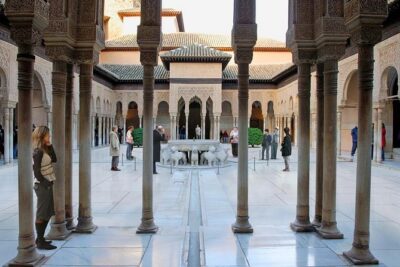
Alhambra Private/Small Group Tour & Nasrid Palaces Skip the Line
Read our review →
Mutianyu Great Wall&Summer Palace Excursion:Group/Private Options
Read our review →
Private Tour of Sintra, Cabo da Roca and Cascais with 2 Palaces
Read our review →
Private 4hrs Venice Tour: Doge’s Palace, Grand Canal & St Mark’s
Read our review →
Knossos Palace Skip-the-Line Ticket & Private Guided Tour
Read our review →

Private Tour Sintra from Lisbon Palaces of Pena and Regaleira
Read our review →
Browse the lists this tour appears in