
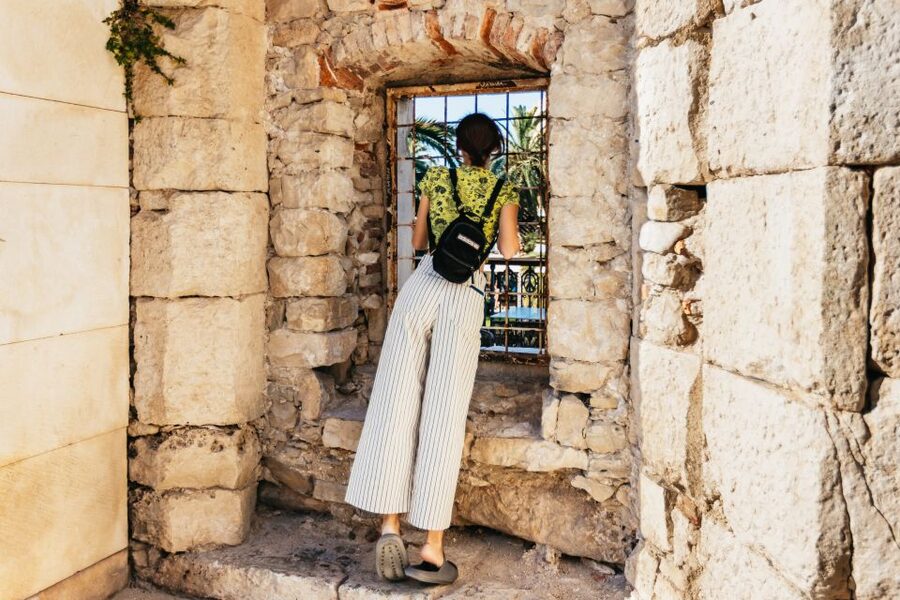
Review · DIOCLETIAN'S PALACE TOURS
Split: Old Town and Diocletian Palace Walking Tour
Split’s Old Town is not a museum behind ropes. It is a living city built into a 1,700-year-old Roman palace. This walking tour begins at the Golden Gate, leads you through the great Peristyle square and Saint Domnius Cathedral, then reaches the Riva waterfront. I love that the route gives you the basic map of Split while explaining why the streets, walls, and homes look the way they do.
I also like the local touch. Guides including Mia, Slavko, Antonia, Ivana, and others bring humor, family stories, restaurant advice, and useful tips for avoiding tourist traps. The main drawback is that the tour stays in the historic core, and some areas are uneven or crowded. It is also not suitable for wheelchair users, and the meeting point can change with the option you book.
Key points at a glance
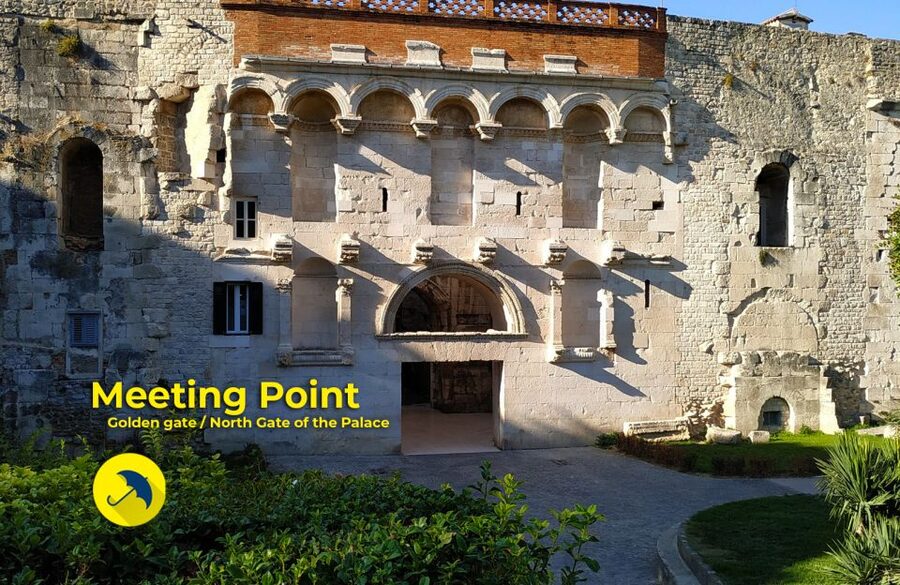
- A Roman palace that became a city: Diocletian’s Palace now forms roughly half of Split’s Old Town, with modern homes, shops, and cafés woven into its ancient structure.
- A strong first-day introduction: The route finishes at the Riva, so you can quickly understand how the Old Town connects with the sea and Marjan Hill.
- Guides with a local connection: Mia, Slavko, Antonia, Ivana, and other guides are praised for clear explanations, humor, and personal stories about Split and Croatia.
- A useful mix of sights and advice: You see major landmarks while collecting suggestions for food, sightseeing, and places to avoid.
- Several tour formats: The core walk lasts about 90 minutes, while selected options can run much longer and may include food, wine, or an added visit to Trogir.
- Good value at $17: For the cost of a casual meal or a few drinks, you get a live guide and a clear introduction to one of Europe’s most unusual historic centers.
Why Diocletian’s Palace is the real star
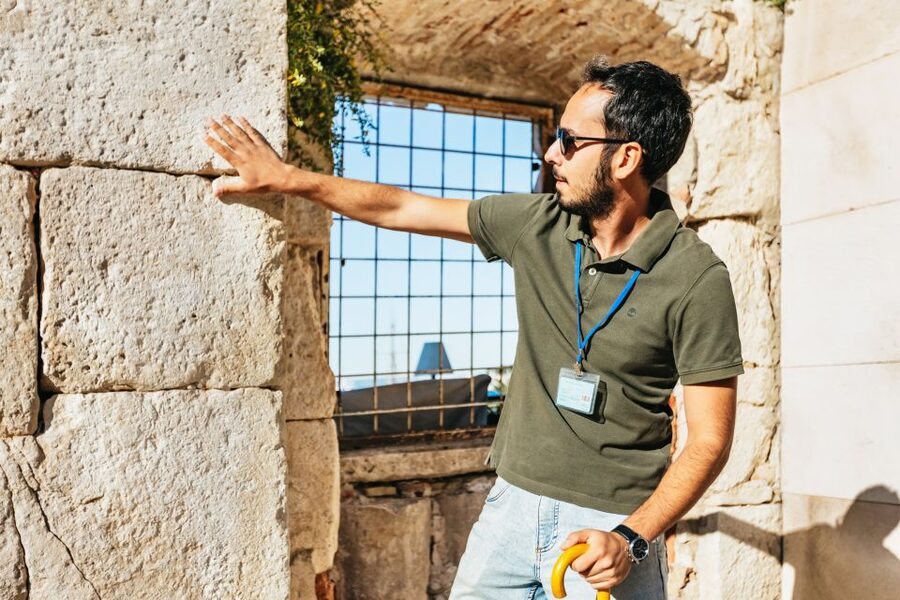
Most old towns have a castle, a church, or a Roman ruin. Split has something stranger and more interesting: a Roman emperor’s retirement palace that became the framework for an entire modern city.
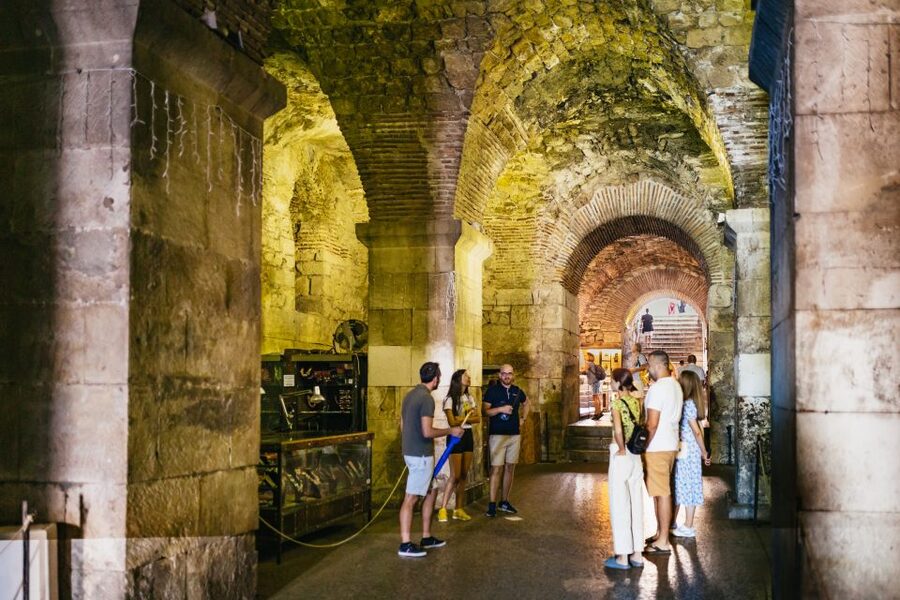
Emperor Diocletian built the palace around 305 CE. The building was not simply a grand residence. It included ceremonial spaces, religious areas, military defenses, storage rooms, and private quarters. Over the centuries, people adapted the abandoned structure rather than clearing it away. That is why you can walk through a Roman gate, turn into a medieval lane, and find a café or apartment inside the same ancient walls.
I find this much easier to understand with a guide. On your own, you may notice thick stone walls and scattered columns but miss the connection between them. A good explanation shows you where the palace once began and how later generations changed it.
The tour meets at the Golden Gate, the largest and most imposing of the palace entrances. This is a sensible starting point because it gives you a clear sense of the old defensive system. From there, you enter the Old Town and begin moving through layers of history rather than simply ticking off monuments.
More Palace Walking Tours in Croatia
- Walking Tour of Split and Diocletian’s Palace
★ 5.0 · 2,588 reviews - Split & Diocletian’s Palace Walking Tour
★ 5.0 · 1,125 reviews - Split: Diocletian Palace & Old Town Guided Walking Tour
★ 4.7 · 882 reviews
The Golden Gate and the first look inside
The Golden Gate is one of the places where Split’s Roman past feels most direct. It was built as a formal entrance to the palace and remains one of the best points for understanding the scale of the original complex.
Your guide sets the Roman story in place before leading you farther into the center. This matters because the palace can feel confusing at first. The Old Town has narrow passages, open squares, and changing levels, and the ancient plan is not always obvious from street level.
The exact meeting point may vary depending on the booking option, so check your confirmation carefully. Hotel pickup is not included. Wear comfortable clothes and shoes that can handle a walking tour through old stone streets.
A guide such as Slavko may add broader Dalmatian history to the Roman story. Mia is also praised for mixing historical detail with dry humor and questions that keep the group involved. The personalities can differ, but the repeated strength of the experience is the ability to make the stones tell a story.
Peristyle square and the palace at its grandest
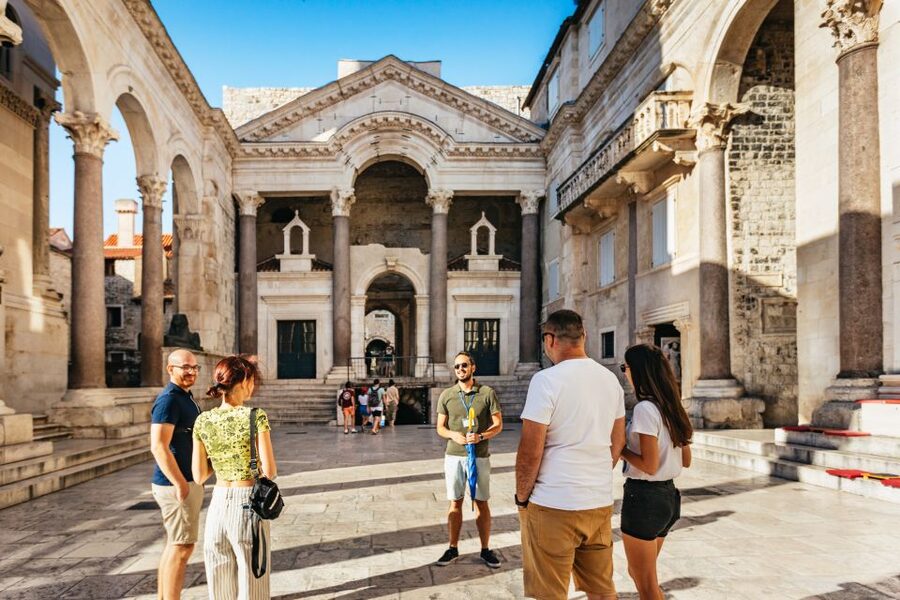
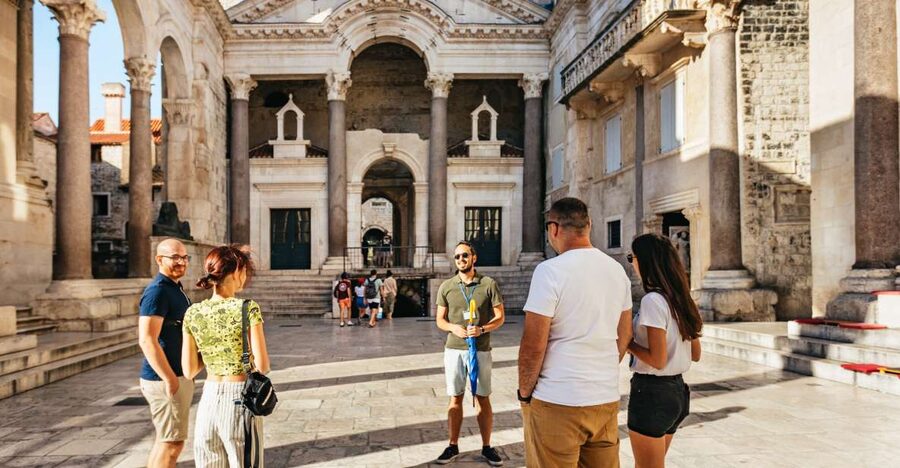
The Peristyle is the visual center of the tour. This open colonnaded square was part of the palace’s ceremonial heart, and it remains one of the most memorable spaces in Split.
Stand here for a moment and look closely. The columns, arches, and surrounding stonework show the Roman desire for order and display. Yet the square is not frozen in the past. People cross it, gather around it, and use the buildings around it as part of daily life.
This is where a guide can add real value. The architecture is impressive, but its purpose is not always clear. Your guide explains how the square connected to the emperor’s apartments and formal areas, helping you picture how visitors would have approached the palace in Roman times.
The tour does not require you to be a Roman history specialist. The explanations are designed for a general audience, and the guides are repeatedly praised for speaking clearly and keeping the balance between facts and stories. If you ask questions, guides such as Frane, Ante, and Antonia have been noted for giving direct, useful answers.
The Peristyle can be busy, especially during popular visiting periods. A small group is easier to hear and easier to keep together than a large crowd. Some bookings may be private, which is worth considering if you want to stop often or ask many questions.
Saint Domnius Cathedral and changing religious life
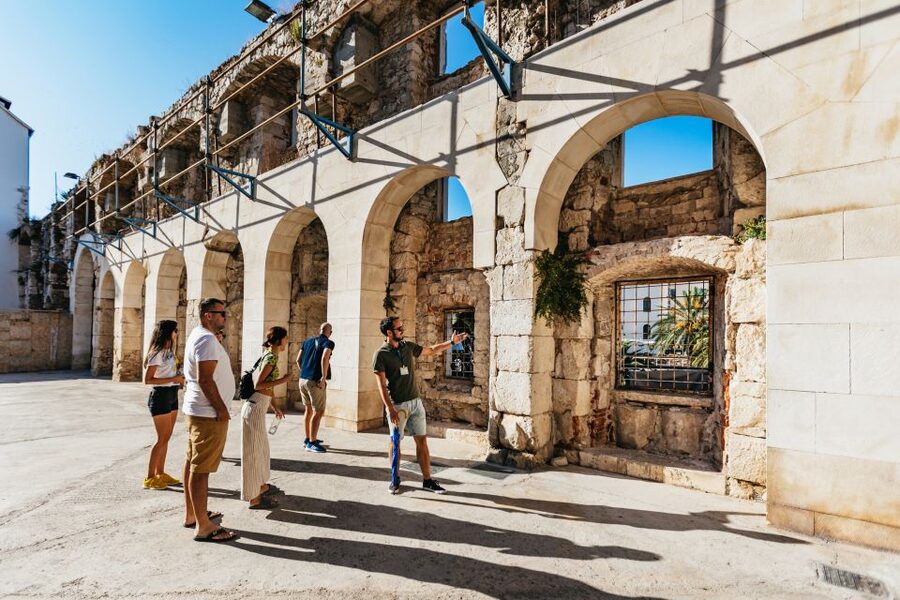
The next major stop is Saint Domnius Cathedral, also called Sveti Duje. The building is especially unusual because it began as Diocletian’s mausoleum and later became a Christian cathedral.
The cathedral is often described as the oldest Catholic cathedral still in use in its original form. That claim needs a little care, since definitions of age and original form can vary, but there is no doubt that the building connects Roman imperial architecture with centuries of Christian worship.
This is one of the tour’s best examples of how Split changed without erasing everything that came before. The same stone structure served very different religious purposes over time. Your guide helps you understand that transition rather than treating the cathedral as an isolated church.
I would pay attention to the details around the entrance and nearby square, where Roman, medieval, and later additions sit close together. The site is compact, so the explanation is more about context than a long interior visit. The supplied details do not promise admission inside every monument, so you should not assume that entrance tickets are included.
The cathedral stop also gives the tour a useful rhythm. After walking through gates and lanes, you pause in a major landmark before continuing toward the story of Split’s people and public life.
More Palace Walking Tours in Split
- Diocletian’s Palace and Old Town SMALL GROUP Walking Tour
★ 5.0 · 502 reviews - SPLIT-PRIVATE Walking Tour of Diocletian’s Palace & Old Town
★ 5.0 · 467 reviews - 90-min Diocletian Palace Walking Tour
★ 5.0 · 323 reviews - Split: 1.5-Hour Walking Tour and Diocletian’s Palace
★ 4.7 · 256 reviews
Gregory of Nin and the human side of Split
In Giardin Park, the tour stops at the statue of Gregory of Nin. Gregory was a medieval bishop associated with the use of the Croatian language in church services, and his statue has become one of Split’s familiar public symbols.
The guide explains the story behind the figure and the local custom connected with touching the statue’s toe for good luck. That small detail helps turn a historical figure into something you can notice in everyday city life.
I like this part because it moves the tour beyond emperors and grand buildings. Split’s history is not only about Roman power. It also involves religious change, language, local identity, and the way residents choose to remember important people.
This is the sort of stop that can disappear if you walk through the Old Town without a guide. You may see the statue, but you might not know why people pause there or why it matters. The explanation gives the object a place in the wider story of Croatia.
The Riva promenade and views toward Marjan Hill
The final section leads you along the Riva promenade, Split’s broad waterfront walkway. Here, the mood changes. The enclosed lanes of the Old Town open toward the Adriatic Sea, with views toward Marjan Hill.
The Riva is not a Roman ruin, but it helps explain modern Split. The city has always depended on its position beside the water, and the promenade remains one of the easiest places to get your bearings. You can see how close the Old Town is to the harbor and why the waterfront is central to local life.
This is also a good place to finish because you can continue your day in several directions. You may want to sit by the water, walk farther along the promenade, or return into the Old Town for lunch. Guides often offer food recommendations at this point, which can be more useful than a generic list because you can ask about your own budget and interests.
A sunset departure can be a smart choice if your schedule allows it. One booking party found the later timing less crowded, and the waterfront light can make the final stretch especially pleasant. Still, availability depends on the date and option you select.
What the guides add to the experience

The guide is the reason to choose this tour rather than simply downloading a map. The route itself is compact, but the meaning of each place is not always visible.
Mia is praised for being funny, clear, and helpful with practical suggestions. Several descriptions also note her ability to adapt when weather caused problems. Slavko is repeatedly singled out for his command of palace architecture, Croatian history, and Dalmatian stories, along with an entertaining presentation style.
Antonia is described as a strong storyteller who combines humor with food and sightseeing recommendations. Ivana is noted for her enthusiasm, local pride, and personal stories. Other guides, including Ante, Frane, Tino, and Martha, are praised for answering questions, finding shade when possible, and keeping the group moving at a comfortable pace.
Guide quality can never be guaranteed by name unless your booking specifically assigns one. Still, the range of positive comments suggests that the company has several strong local guides rather than relying on one standout person.
The available languages are English, Italian, Spanish, German, and French. A live guide is included, and private groups are available. If you prefer a quieter experience or have a group with many questions, the private option may be worth the extra cost.
The $17 price and what you receive
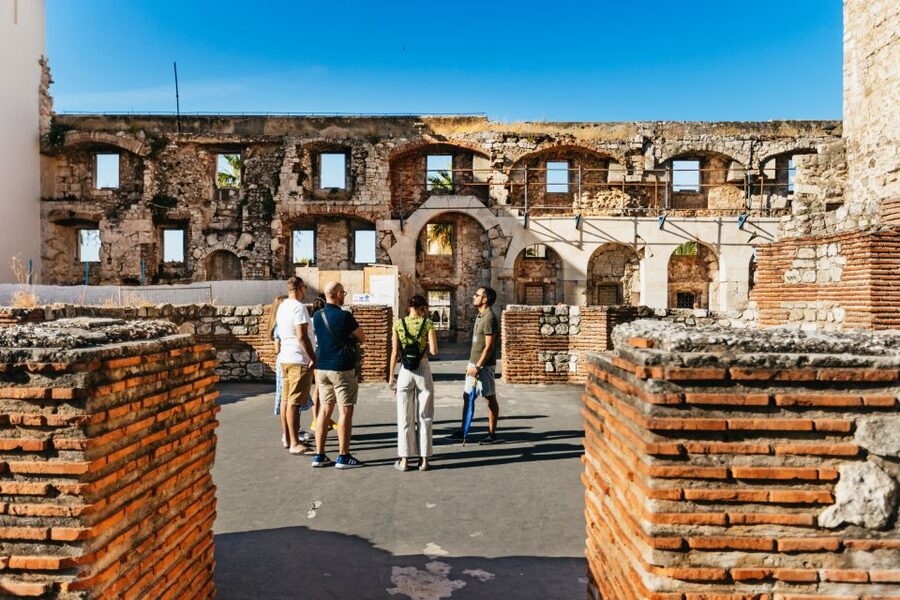
At $17 per person, this is a modestly priced introduction to Split. You receive a local guide and a walking tour covering the main historic sights. For a first visit, I consider that good value because the palace is easy to wander through but surprisingly hard to understand without context.
The value is strongest if you take the tour near the beginning of your stay. You get a working map of the Old Town, learn which buildings matter, and can ask for suggestions about restaurants and additional sights. Afterward, you can return to places that caught your interest instead of spending your first day guessing where to go.
The price does not include hotel pickup. Optional versions may include wine tasting or food tasting, and the longer options can last from 90 minutes up to six hours. Check the exact version before booking, since the meeting point, length, and included extras may differ.
Some options may also include a trip to Trogir. One longer experience paired Split with Trogir, about a 40-minute drive away, giving the day a second historic town with a different character. Do not assume this is part of the basic $17 walk. Treat it as a separate extended choice.
Timing, group size, and physical comfort
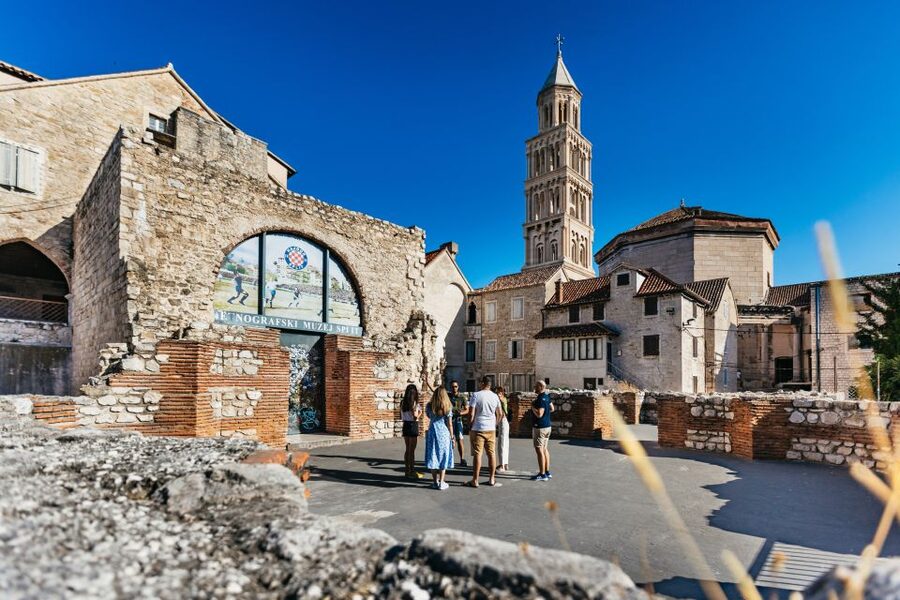
The standard walk lasts about 90 minutes. That is long enough to cover the major points without turning into an exhausting lecture, and one guide described the tour as a good length for gaining an introduction without dragging on.
The advertised duration can reach six hours, which reflects the range of available options rather than the basic route alone. Confirm the start time and duration when you check availability.
Small groups have a practical advantage. You can hear the guide more easily, move through narrow streets with less fuss, and ask questions without holding up a large crowd. Private group bookings are available if you want more control over the pace.
The tour is listed as suitable for all ages, but it is not suitable for wheelchair users. The historic center includes old stone streets and confined areas, so anyone with mobility concerns should ask the provider for current route details before booking.
Weather can affect comfort. Comfortable clothing is the main suggested item, but I would also prepare for sun or rain depending on the forecast. The route includes open areas such as the Peristyle and Riva, with limited shade in some spots.
Who should book this Split walk
I would recommend this tour to first-time visitors, cruise passengers with limited time, and anyone who wants the Old Town explained before exploring it alone. It is also a good fit if you enjoy history but prefer stories and clear context to a long academic lecture.
Families can use it as a starting point because the walk is short in its basic format and appropriate for all ages. The humor and questions used by some guides may also help younger participants stay involved.
It is less suitable if you want a quiet, self-guided stroll with no fixed pace. It is also not the right choice if you need a fully accessible route or want extensive interior visits at every monument. The focus is on the streets, public spaces, architecture, and stories that connect them.
Should you book it?
I would book this tour, especially for your first morning or afternoon in Split. The $17 price is fair, the route covers the essential core, and the guide can save you from seeing Diocletian’s Palace as a pile of attractive but disconnected stones.
Choose the basic 90-minute version if you want a clear introduction before exploring on your own. Consider a longer option only if you specifically want food, wine, Trogir, or a fuller day. Check the exact inclusions, meeting point, and duration, then wear comfortable clothes and arrive ready to walk.
FAQ
Where does the Split walking tour begin?
The tour generally begins at the Golden Gate of Diocletian’s Palace, but the meeting point may vary depending on the option you book.
Where does the tour finish?
The standard route finishes where it began, at the Golden Gate.
How long does the tour last?
Available options range from about 90 minutes to six hours. Check the current schedule and selected option for the exact duration.
What sights are included?
The route includes the Golden Gate, Diocletian’s Palace, the Peristyle, Saint Domnius Cathedral, the statue of Gregory of Nin in Giardin Park, and the Riva promenade.
Is hotel pickup included?
No. Hotel pickup is not included.
Which languages are available?
Live guides are available in English, Italian, Spanish, German, and French.
Is the tour suitable for children?
Yes. The activity is listed as appropriate for all ages.
Is the tour suitable for wheelchair users?
No. The activity is listed as not suitable for wheelchair users.
Are food or wine tastings included?
Food tasting and wine tasting are included only if you select an option that offers them.
Is a private tour available?
Yes. A private group option is available.
Can the tour include Trogir?
Some longer options may include Trogir. The basic Split walking tour does not automatically include it, so check the specific option before booking.
What is the cancellation policy?
You can cancel up to 24 hours in advance for a full refund. You can also reserve now and pay later, depending on the booking conditions.
More Diocletian's Palace Tours in Split
- Split Old Town and Diocletian’s Palace Tour
★ 4.8 · 716 reviews - Split: Game of Thrones Tour with Diocletian’s Palace Cellar
★ 4.8 · 545 reviews - Split: Diocletian’s Palace Virtual Reality Experience
★ 4.4 · 308 reviews - YOUR BEST PRIVATE TOUR – amazing Split and Diocletian’s palace
★ 5.0 · 83 reviews
Newly added in Split
- Jewish Heritage & Diocletian’s Palace Private Split Tour★ 5.0 · 80 reviews
- YOUR BEST PRIVATE TOUR – amazing Split and Diocletian’s palace★ 5.0 · 83 reviews
- Split: 1.5-Hour Walking Tour and Diocletian’s Palace★ 4.7 · 256 reviews
- Split: Diocletian’s Palace Virtual Reality Experience★ 4.4 · 308 reviews
- 90-min Diocletian Palace Walking Tour★ 5.0 · 323 reviews
- Split by Private Electric Rickshaw – Palace & Hidden Gems★ 5.0 · 412 reviews
- SPLIT-PRIVATE Walking Tour of Diocletian’s Palace & Old Town★ 5.0 · 467 reviews
- Diocletian’s Palace and Old Town SMALL GROUP Walking Tour★ 5.0 · 502 reviews
Diocletian's Palace Tours, compared.
Diocletian Palace & Old Town Guided Walking Tour
Read our review →

Game of Thrones Tour with Diocletian’s Palace Cellar
Read our review →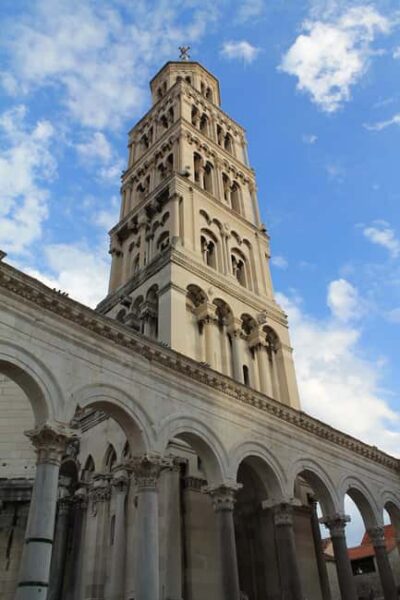
Diocletian’s Palace and Old Town SMALL GROUP Walking Tour
Read our review →

Browse the lists this tour appears in