
Review · ROME PALACE TOURS
Colosseum Underground, Roman Forum & Cesar Palace Special Access
The most unusual part of this Rome tour is the entrance through the Gladiator’s Gate, followed by access to the arena floor and underground chambers beneath the Colosseum. You walk the route once used by fighters and see the backstage spaces where gladiators and wild animals were held before the games.
I like the efficient three-hour plan, which joins the Colosseum, Roman Forum, and Palatine Hill in one visit. I also like the strong emphasis on guides, with Paulina, Selene, Andre, Enrico, Francesca, and others praised for clear explanations, humor, patience, and archaeological knowledge. The main concern is that underground access and start times have not always gone as planned, so check your confirmation carefully and allow no tight connection afterward.
Key points to know before booking
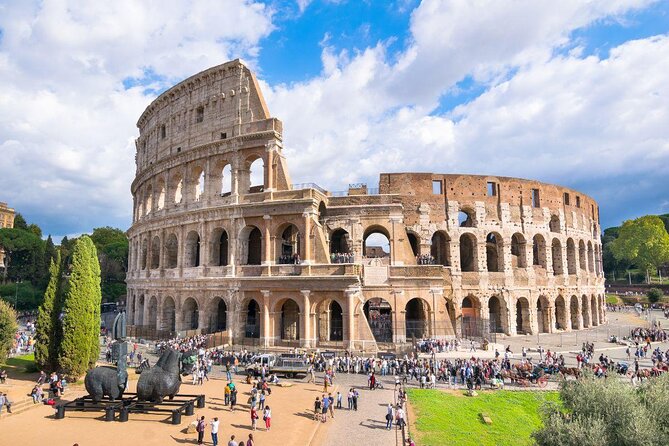
- Gladiator’s Gate and arena floor: Enter through a special access point instead of the general entrance and walk onto the Colosseum’s central stage.
- Underground chambers: See the lower service areas where fighters and animals waited before appearing in the arena.
- Three major sites in three hours: The plan covers the Colosseum, Roman Forum, and Palatine Hill without requiring separate bookings.
- Guides make the difference: Paulina, Selene, Andre, Francesca, Enrico, David, and others have been praised for strong storytelling and archaeological insight.
- Physical effort is real: Expect stairs, uneven ancient paving, outdoor walking, sun, and crowds.
- Small but not tiny group: The maximum group size is 24 people, and the tour is offered in English.
Why the underground changes your view of the Colosseum
The main Colosseum can feel familiar from photographs. The underground is what gives the building its working logic.
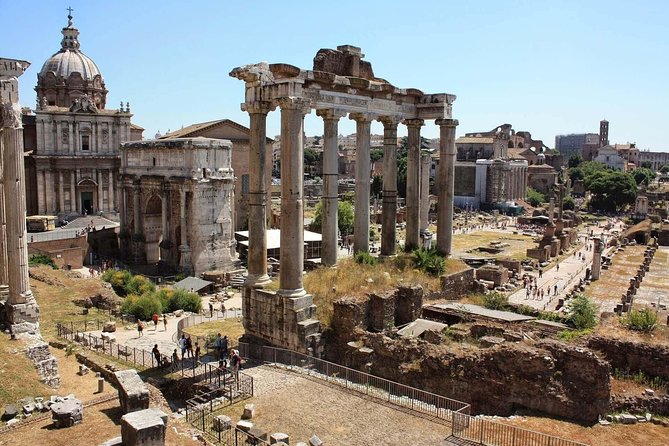
From the arena floor, you look up at the great oval walls and imagine the crowd above. Then you move below the stage into the service areas that supported the spectacle. This was not simply a stone stadium. It was a complicated machine, with rooms and passages used to hold gladiators and animals before they were sent upward into the arena.
That shift from grand public monument to working backstage area is the chief reason to pay more for this tour. A standard visit can show you the seating tiers and the arena from above. This one adds the spaces that made the performances possible.
You should keep your expectations sensible. The underground is not an enormous maze open for unrestricted wandering. Access is controlled, and the exact areas available can depend on site rules and the tour arrangement that day. Still, even a guided look at these lower chambers adds a useful layer to the visit.
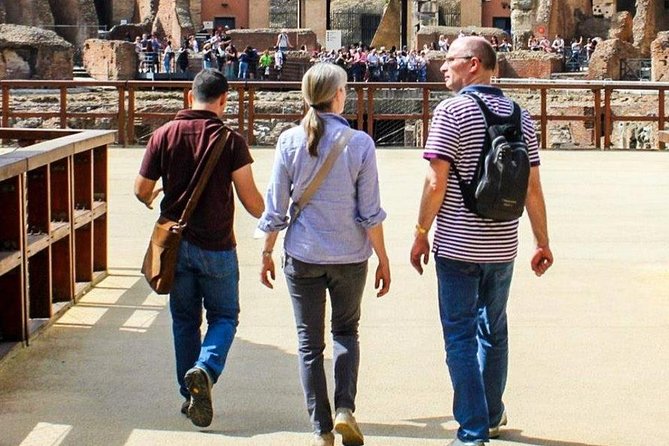
The arena floor is another strong point. Walking across it gives you a better sense of scale than viewing the Colosseum only from the outer aisles. It also creates one of the best spots for photos, though the building and surrounding crowds mean you will not have the place to yourself.
More Palaces to Tour in Italy:
- Venice: Doge’s Palace Reserved Entry Ticket
★ 4.6 · 42,716 reviews - Doge’s Palace & St. Mark’s Basilica with Terrace Access Tour
★ 4.7 · 10,697 reviews - Venice: Doge’s Palace and St Mark’s Basilica Walking Tour
★ 4.4 · 6,291 reviews
Entering at the Arch of Constantine
The meeting point is at the Arch of Constantine, in Piazza del Colosseo, beside the Colosseum. This is a sensible place to start because the arch is itself one of the most visible monuments in the area, but busy crowds can make the first few minutes confusing.
Bring your booking details on your phone and arrive early enough to locate the guide. One practical complaint has involved people waiting near security without knowing where to go. Another involved an incorrect map location and a delayed response from the tour company. Those problems may not affect every departure, but they are good reasons not to arrive at the last minute.
The special entrance is described as the privileged Gladiator’s Gate. It avoids the regular general entrance line, but you should not read that as a promise of instant entry. You still need to pass security, follow Colosseum rules, and stay with the group.
You must provide the full name of every person at booking. Each person needs a valid passport or identity document matching the supplied name for entry to the Colosseum and Roman Forum. Take this seriously. A mismatch can create trouble at the gate, and the experience is non-refundable if you cancel or request a change.
One hour inside the Colosseum
The first hour focuses on the Colosseum itself. Your guide explains how a stone amphitheater of this scale was planned and built nearly two thousand years ago, then connects the structure to the people who used it.
The most useful explanations here are the ones that help you read the building. You learn to distinguish the public face of the amphitheater from its working areas, and you see why the arena floor and underground were vital parts of the design.
The arena visit is also the most photo-friendly portion of the tour. From the floor, you can study the tiers and openings from a lower viewpoint. Your guide may also help with photos, something that has been appreciated by people on previous departures.
After the arena floor, the group heads below. The underground passages were used to keep gladiators and wild beasts before their appearances. This is where the tour moves beyond the familiar postcard view and gives you a physical sense of preparation, confinement, and controlled movement.
Several guides have received especially warm praise for this part. Selene has been singled out for keeping a family engaged while explaining the lower levels. Andre has been praised for patience when a member of the group had a knee injury. An archaeologist guide was also praised for turning the ruins into a clear picture of daily life rather than simply reciting dates.
Guide quality can vary, as it does with any multi-guide operation. Some departures have been described as fascinating and well paced, while one guide was considered lackluster. The strongest guides appear to be the ones who answer questions and connect architecture with human stories.
The Roman Forum, where Rome became a city
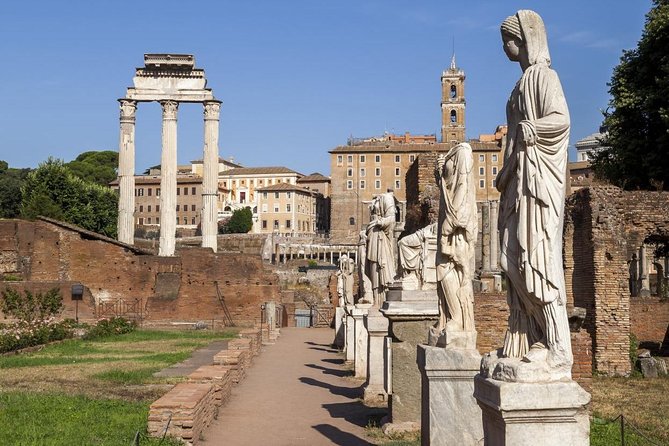
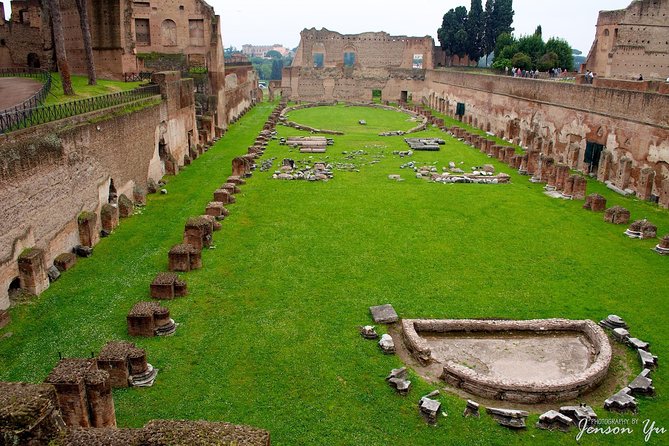
The second hour takes you through the Roman Forum. The Forum is not a single building or a neat museum. It is a broad field of broken columns, foundations, temples, roads, and government buildings spread through the center of ancient Rome.
This is exactly where a guide earns the admission price. Without context, the ruins can look like scattered stones. With a good explanation, you can place the Senate house, temples, tombs, public meeting spaces, and the House of the Vestal Virgins within the life of the ancient city.
The tour includes Julius Caesar’s tomb, among other important remains. That stop helps connect the Forum to recognizable figures, but the larger value is seeing how religion, politics, ceremony, and public business occupied the same compact area.
The Forum is mostly outdoors. Shade is limited in many areas, and the paving can be uneven. Wear shoes that are comfortable on stone and allow time for the group to move at a steady pace. You do not need to be an athlete, but the tour asks more of you than a short museum visit.
The guide’s pace matters here. An hour is enough for a strong overview, not a close study of every ruin. If you want to inspect every inscription or building at length, you may find the schedule brisk. If you want a clear introduction before exploring Rome on your own, the timing works well.
Same city, another grand address:
- Legendary Venice: Doge’s Palace, St Mark’s & VIP Terrace Access
★ 4.5 · 5,033 reviews - Florence: Palazzo Vecchio Entrance Ticket & Audioguide
★ 4.4 · 4,822 reviews - Florence: Entrance Ticket to Pitti Palace
★ 4.5 · 4,528 reviews - Venice: Doge’s Palace and St. Mark’s Basilica Tour
★ 4.5 · 3,734 reviews
Palatine Hill and the so-called Caesar’s Palace
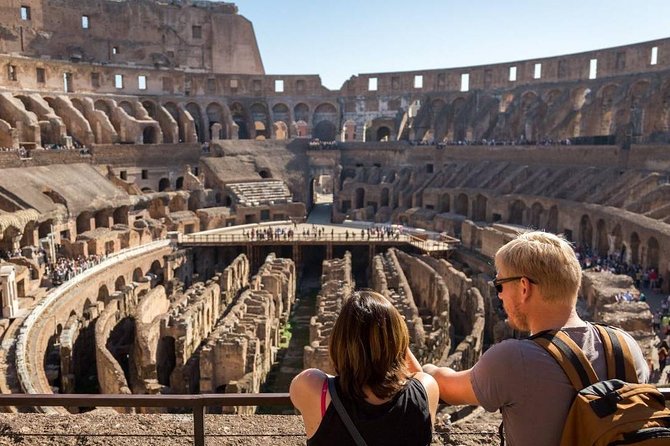
The final hour takes you up Palatine Hill, the area traditionally linked with the founding of Rome nearly 3,000 years ago. The hill also became the home of emperors, which is why the word palace is connected with the Palatine.
The tour presents the hill as a place where layers of Rome sit on top of one another. You see remains from the time of the emperors, structures dating from before the Roman Empire, later Renaissance work, and buildings associated with Benito Mussolini.
That range is useful because Palatine Hill is not just another ruin field. It shows how later generations repeatedly reused and reshaped the city’s most important ground. The views and open spaces also offer a change from the enclosed Colosseum and the crowded Forum paths.
The name Caesar’s Palace can be a little misleading if you expect one complete palace building. Palatine Hill is a large archaeological area with palace remains and other structures. Your guide supplies the links between them, which is why this portion is far better with commentary than on a rushed solo walk.
You finish in the Roman Forum, near the center of the ancient city. From there, you have access to public transportation, shops, restaurants, and many central Rome sights. Ending here is practical, especially if you plan to continue sightseeing instead of returning to the Colosseum.
Three hours, 24 people, and a lot of walking
The advertised duration is about three hours, divided roughly into one hour at each main stop. That makes the tour efficient, but it also means you should not expect a slow, private archaeological lesson.
The maximum group size is 24. That is smaller than a mass sightseeing group, though it is not the same as a private tour. A group this size can spread out on narrow paths, and you may occasionally need to wait while everyone gathers. Choose a place near the guide if hearing every explanation matters to you.
You need a moderate level of fitness. The route includes stairs and uneven surfaces, with much of the visit outside. One guide helped a participant with a knee injury, but you should not count on every difficult section being easy to avoid. If stairs, heat, or long periods of walking are a serious concern, ask before booking.
Summer conditions deserve special attention. Bring water, sunscreen, and a hat. One guide gave personal water to a visitor showing signs of heat exhaustion and moved the group into shade, but prevention is the better plan. There are also reports of rain affecting the visit, and the tour operates in wet weather, so bring suitable protection when the forecast is poor.
Some departures may take place at night or in the evening, based on the available time options. A night visit can mean cooler air and fewer crowds, but do not assume every evening departure includes the same route. The Roman Forum and Palatine Hill are specifically not included in the Underground Night Tour. Confirm the exact version before paying.
Is $144.82 a fair price?
At $144.82 per person, this is not a budget entry ticket. You are paying for more than admission: the underground option, arena access, a guide, and a single plan covering three major archaeological sites.
The value is strongest if you want structure and explanation. The Colosseum’s restricted areas can be difficult to arrange independently, and combining the Forum and Palatine Hill saves you from managing several separate reservations. A strong guide can also prevent the ancient ruins from becoming a tiring sequence of names and stones.
The value is weaker if you prefer to move slowly, take long photo breaks, or read every display at your own pace. You are committing to the group’s route and timing. The non-refundable policy also makes this a booking that deserves care.
One warning matters more than the price. A small number of departures have involved an underground visit being canceled or not provided as expected, while another person had a start time changed two days before the tour. These reports do not prove that the problem is routine, but they mean you should check the final confirmation and any day-of messages. If the underground is the main reason you are booking, confirm that it is included in your specific departure.
Who should book this Rome tour?
I would choose this tour if you want to see the Colosseum’s less familiar areas and prefer a guide to explain what you are looking at. It suits first-time visitors who want the major ancient sites handled in one morning or afternoon.
It is also a good fit for families and mixed-age groups when the guide is engaging. Selene, Paulina, and other guides have been praised for making the material approachable, while several guides have shown patience with questions and slower walkers.
You may want another option if you dislike fixed schedules, have limited mobility, or want a quiet visit. The route is active, exposed to weather, and sometimes crowded. It is also not a good match for anyone who cannot accept the risk of a changed time or an access issue under a strict non-refundable policy.
My call: book it for access, not just entry
I would book this tour when the underground and arena floor are the priority. Those areas give you something beyond a standard Colosseum visit, and the Roman Forum and Palatine Hill make good use of the same outing.
Before booking, confirm the exact departure, check that underground access is listed, enter every name correctly, and plan for sun, stairs, and uneven ground. If the confirmation is clear and you want the ancient center explained by an English-speaking guide, $144.82 can be reasonable for the access and time saved. If you mainly want to wander at your own pace, buy a simpler admission option instead.
FAQ
How long does the tour last?
The tour lasts approximately three hours. The planned schedule gives about one hour to the Colosseum, one hour to the Roman Forum, and one hour to Palatine Hill.
Where does the tour begin?
It begins at the Arch of Constantine in Piazza del Colosseo, Rome.
Where does the tour end?
The tour ends at the Roman Forum in the center of the ancient city. The area has access to public transportation, restaurants, shopping, and many central Rome sights.
Is the tour offered in English?
Yes. The experience is offered in English.
What identification do I need?
Every person must bring a valid passport or identity document matching the full name provided at booking. Full names are required for all people in the reservation.
Is the tour suitable for people with limited mobility?
The tour requires a moderate level of physical fitness and includes walking on uneven surfaces and stairs. You should consider your ability to manage those conditions before booking.
Newly added in Italy
- Anagni: Entrance ticket to the Boniface VIII Palace★ 3.4 · 3 reviews
- Venice: Doge Palace, San Marco Basilica & Rialto Bridge★ 4.7 · 75 reviews
- Turin: Palazzo Madama Museum of Ancient Art Entrance Ticket★ 4.6 · 149 reviews
- Venice Doge’s Palace & St. Mark’s Semi-Private Tour, Max 6 People★ 5.0 · 192 reviews
- Colosseum, Roman Forum and Emperors’ Palace Private Guided Tour★ 5.0 · 14 reviews
- Doria Pamphilj Palace Gallery and Museum Private Tour with Local Guide★ 4.5 · 10 reviews
- Private Tour – National Museum of Palazzo Massimo★ 5.0 · 51 reviews
- Private Tour – Palazzo Barberini★ 5.0 · 23 reviews
Rome Palace Tours, compared.
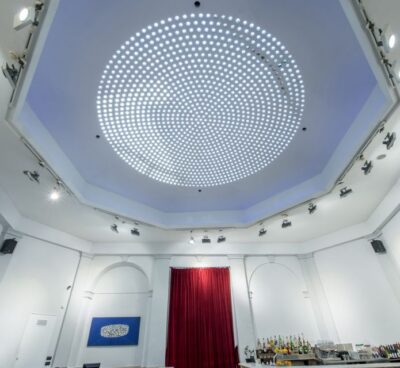
Opera Concert at Palazzo Poli – Fontana di Trevi
Read our review →

The Great Opera Arias Concert at Palazzo Poli – Trevi Fountain
Read our review →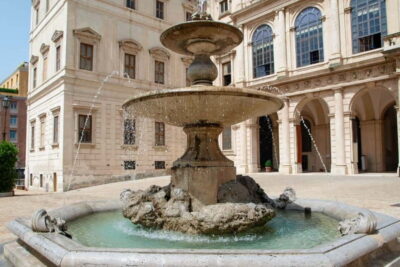
Palazzo Barberini Galleria Corsini Ticket & Audioguide
Read our review →
Vittoriano with Rooftop & Palazzo Venezia Hosted Entry
Read our review →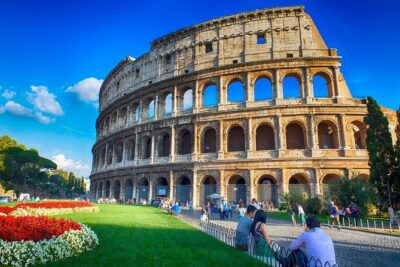
Colosseum Special Access on Arena Floor, Roman Forum and Palaces
Read our review →
Private Tour – National Museum of Palazzo Massimo
Read our review →
Browse the lists this tour appears in