
Review · ROME PALACE TOURS
Rome: Palazzo Barberini Guided Tour
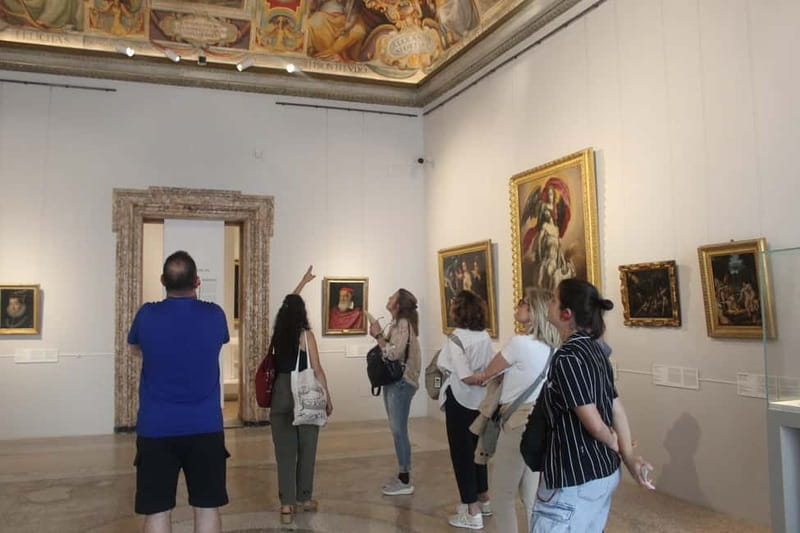
Palazzo Barberini gives you two attractions in one: a Baroque palace designed by Bernini, Borromini, and Maderno, plus a serious collection of Renaissance and Baroque painting. The best moment comes when you enter the Salone Pietro da Cortona and look up at The Triumph of Divine Providence, a ceiling built to glorify the Barberini family.
I like the way the guide connects the palace to its owners, especially through the repeated bee emblem. I also like the practical bonus of admission to Corsini Gallery for 20 days. The main caution is simple: Caravaggio is part of the collection, not the whole show, and the $77 price may feel high if you expect a large Caravaggio exhibition.
Key points to know before you book
- The ceiling is a major highlight: Pietro da Cortona’s The Triumph of Divine Providence fills the palace’s grand salon with Baroque drama.
- Caravaggio is important, but limited: You’ll see Judith Beheading Holofernes, along with works by Raphael and Bernini, but many famous Caravaggio paintings are elsewhere in Rome.
- The building is part of the attraction: Bernini, Borromini, and Maderno all shaped this 17th-century palace.
- The guide adds useful context: Aliscia received particular praise for her clear explanations, warmth, and enthusiasm.
- Your ticket reaches beyond one visit: Entry to Corsini Gallery remains valid for 20 days after the Palazzo Barberini visit.
- Pack lightly: Large backpacks and luggage are not allowed, and the tour is not suited to wheelchair users or people with mobility impairments.
Why Palazzo Barberini belongs on your Rome art list
Rome can make you choose between ancient ruins, churches, museums, and grand palaces. Palazzo Barberini earns its place because it brings several parts of the city’s story together under one roof. You get a powerful family palace, a national art collection, and some of the most theatrical decoration of the 17th century.
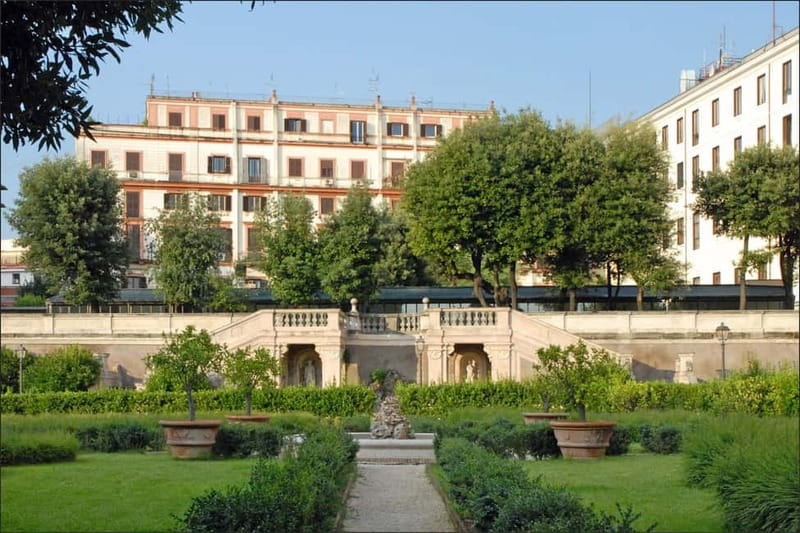
The Galleria Nazionale d’Arte Antica, or National Gallery of Ancient Art, focuses on older Italian painting rather than ancient Roman sculpture. That distinction matters. You are coming here for Renaissance and Baroque art, not for statues from the Colosseum or the Roman Forum.
I find this setting more rewarding than a plain gallery building. The architecture explains the art. The Barberini family commissioned a palace that projected wealth and authority, then filled it with decoration that reinforced that message. The bees appearing around the building were the family emblem, and your guide uses them to explain how power was presented in Baroque Rome.
You should also expect a tour that moves between art appreciation and palace history. That mix suits you if you like understanding why a painting is in a particular room, who paid for the building, and how the architecture affects the way you see the collection.
More Palaces to Tour in Rome:
- Rome: Opera Concert at Palazzo Poli – Fontana di Trevi
★ 4.7 · 1,026 reviews - Rome: Colonna Palace Entry Ticket
★ 4.8 · 609 reviews - The Great Opera Arias Concert at Palazzo Poli – Trevi Fountain
★ 5.0 · 533 reviews
Meeting your guide in the Barberini courtyard
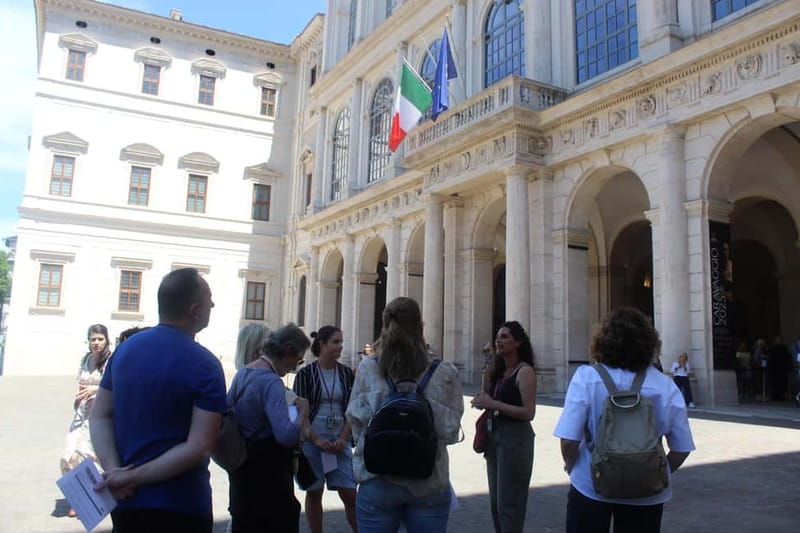
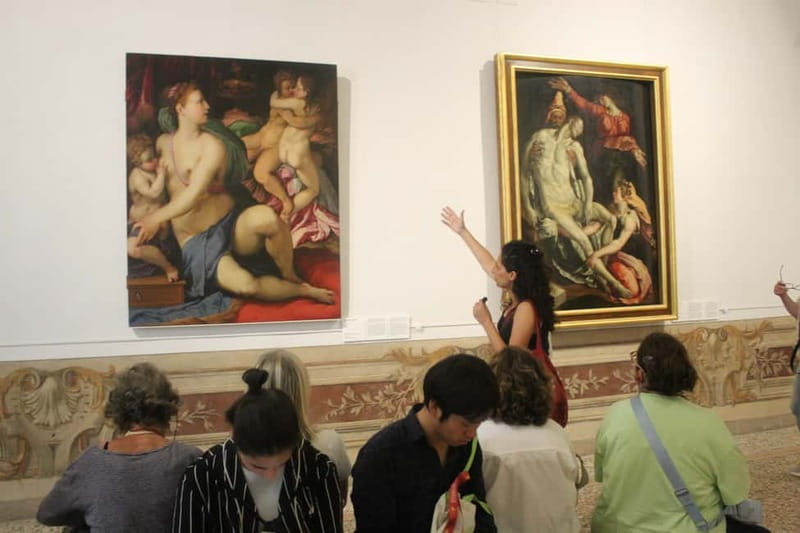
The meeting point is inside the first entrance of the building, in the courtyard. Look for the host holding a light blue flag marked Inside Out Italy. This detail is useful because Palazzo Barberini is a working museum building, and arriving at the wrong doorway can waste precious time before a timed entry.
The experience lasts two hours. It includes an English-speaking live guide and headsets, which should make explanations easier to follow in the large rooms. The meeting service, timed ticket, guide, and equipment are part of the price, so you are not left to sort out museum entry on your own.
The guide may shape your experience more than any single painting. Aliscia, one guide named in the feedback, was praised for her clear explanations, charm, enthusiasm, and careful study of the collection. That is exactly what you want in a museum of this kind, where a good explanation can turn a beautiful room into a readable one.
Still, the tour is not presented as a private visit, and no group size is specified. If you prefer to study paintings in silence for long stretches, the guided format may feel brisk. If you want the main stories and a clear route through the palace, the structure is useful.
Bernini, Borromini, and Maderno shape the palace
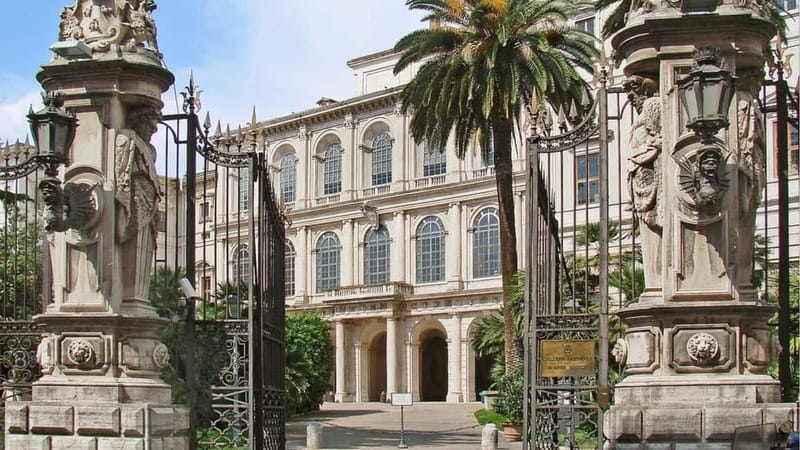
Palazzo Barberini was commissioned by the powerful Barberini family in the 17th century. The palace itself is one of the strongest reasons to book the experience. You are not simply walking into a box-shaped museum. You are entering a building designed to announce status.
Bernini, Borromini, and Maderno all contributed to the palace. Their presence gives the building a useful lesson in Baroque architecture, a period known for movement, theatrical effects, and strong visual control. Your guide can point out how the spaces, staircases, decoration, and scale worked together to impress visitors.
The Barberini bees are a small detail with a large purpose. They appear as a family symbol, turning decoration into political messaging. As you move through the palace, look for how often the emblem returns. It reminds you that this was not only a home or a reception space. It was also a public statement about the family’s influence.
The palace visit also adds a human scale to the paintings. A work by Caravaggio can seem like an isolated masterpiece in a modern gallery. Here, it belongs to a world of patrons, cardinals, family ambition, and carefully staged rooms.
The Galleria Nazionale d’Arte Antica collection
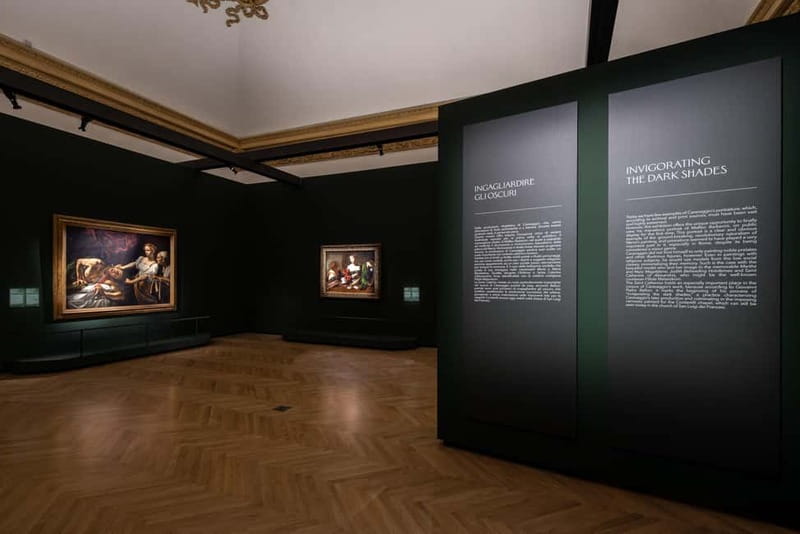
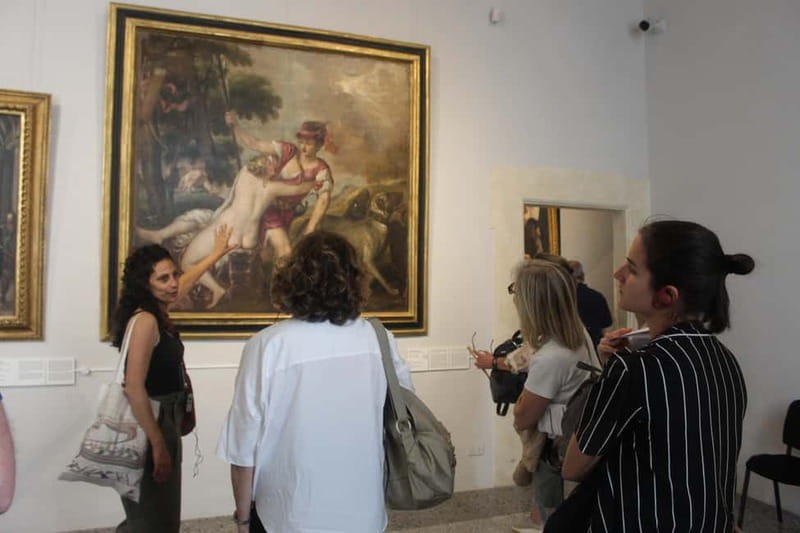
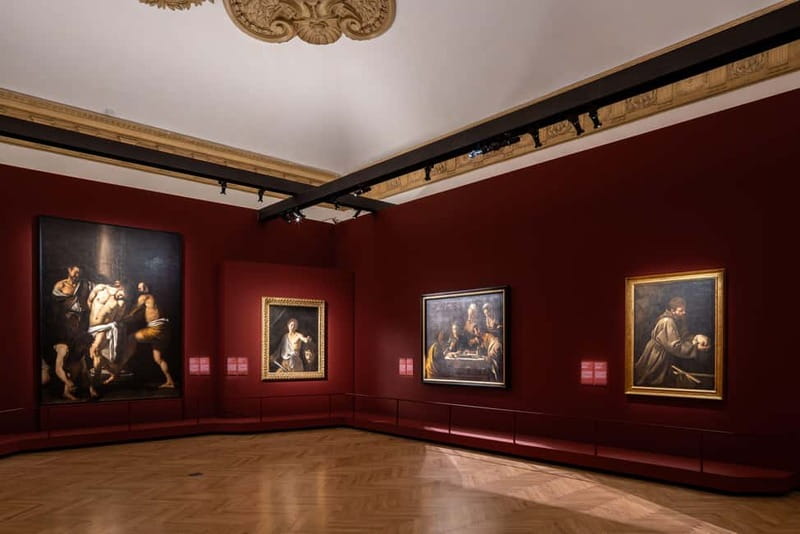
The gallery holds works from the Renaissance and Baroque periods. The collection includes paintings by Raphael, Bernini, and Caravaggio, giving the guide several different artistic styles to compare.
Raphael represents the polished balance many people associate with the High Renaissance. Bernini brings sculpture and architecture into the story, reminding you that Baroque art was never limited to framed paintings. Caravaggio brings a sharper, more physical kind of drama, built around light, shadow, and human action.
You will not see every famous work associated with these artists. That is worth knowing before you arrive. The purpose of the tour is to introduce the collection’s major works and the palace that contains them, not to provide a complete survey of Italian art.
I like that this makes the visit manageable. Two hours is enough time to gain a clear sense of the building and see selected masterpieces without trying to absorb an entire national collection in one exhausting morning.
The guide’s role is especially useful here. In a gallery filled with major names, it is easy to rush from label to label. Headsets help you keep listening while standing at a suitable distance from the art. You can focus on why a work matters instead of only collecting names.
Same city, another grand address:
- Colosseum Underground, Roman Forum & Cesar Palace Special Access
★ 4.5 · 421 reviews - Rome: Palazzo Barberini Galleria Corsini Ticket & Audioguide
★ 3.9 · 322 reviews - Rome: Vittoriano with Rooftop & Palazzo Venezia Hosted Entry
★ 4.2 · 306 reviews - Colosseum Special Access on Arena Floor, Roman Forum and Palaces
★ 4.5 · 260 reviews
Caravaggio’s Judith Beheading Holofernes
Caravaggio is the most prominent draw for many people, and Judith Beheading Holofernes is the painting to watch for. It shows the biblical Judith killing the Assyrian general Holofernes, but Caravaggio presents the scene with startling physical force.
The artist’s use of light and shadow makes the action feel immediate. Instead of softening the violence, he places it in clear view. The contrast between the dark background and the lit figures directs your attention to the faces, hands, and movement of the scene.
A guide can help you notice details you might miss on your own. Look at the expressions, the arrangement of the figures, and the way the light controls the story. Caravaggio’s innovation was not only technical. He changed the emotional temperature of religious painting by making sacred stories feel tense, bodily, and close.
You should keep your expectations measured. Caravaggio’s work is a major part of the visit, but the museum does not contain every famous painting connected with him. Some of his best-known works are in Rome’s churches, where they can be seen in their original religious settings. If your only goal is to see a large Caravaggio display, this tour may disappoint.
If you want one important Caravaggio painting within a broader palace and gallery visit, the balance works much better. The tour gives you context rather than a single-artist exhibition.
The Salone Pietro da Cortona ceiling
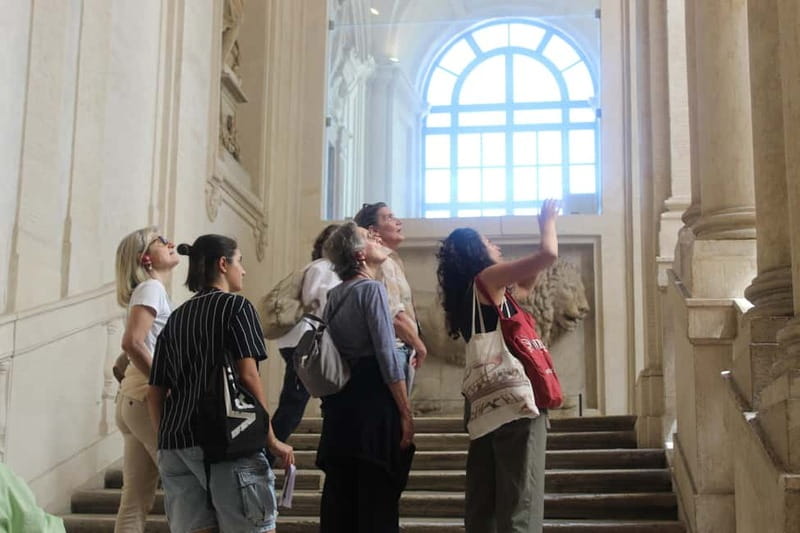
The Salone Pietro da Cortona is the visual high point of the palace. The room’s ceiling is covered by The Triumph of Divine Providence, a huge fresco designed by Pietro da Cortona.
Do not walk through this room while looking only at eye level. Stop in the center and give yourself time to look upward. The scale can be difficult to take in at first. Figures, clouds, allegorical scenes, and architectural effects combine to create the sense that the ceiling is opening into the sky.
The fresco also carries a message about the Barberini family. The decoration was not chosen just because it was pretty. It helped present the family as favored by divine providence and worthy of power. That connection between art and ambition is one of the most useful ideas your guide can explain.
This is where the palace’s architecture and painting meet most clearly. A framed picture asks you to stand in front of it. The ceiling fresco asks the whole room to become part of the artwork. That theatrical quality is classic Baroque Rome.
Even if you are not an art specialist, you can appreciate the effect. The room gives you a strong visual memory of the visit, and it is one reason the tour should not be judged only by the number of Caravaggio paintings on display.
What the $77 price includes
The price is $77 per person. That is a significant amount for a two-hour museum visit, so you should understand what you are paying for.
The standard adult museum admission is listed as €15. The rest of the cost covers the timed booking, assistance at the meeting point, the English-speaking guide, headsets, and related service arrangements. You are paying for interpretation and organization, not simply for a museum ticket.
That can be good value if you want help making sense of the collection. Palazzo Barberini is not as immediately familiar to many people as the Colosseum or Vatican Museums. A guide can keep you from wandering through the rooms without understanding the family, the architecture, or the artistic choices.
The extra Corsini Gallery admission improves the value. Your ticket allows you to visit Corsini Gallery on your own within 20 days of the Palazzo Barberini visit. If you have enough time in Rome to use that second admission, the effective value is better than a single two-hour museum entry.
The value is weaker if you are mainly paying to see Caravaggio. The collection is broader than that, and the visit includes a substantial palace tour. I would book it for the combination of architecture, painting, and explanation, not for a large Caravaggio exhibition.
Using the Corsini Gallery ticket
The Corsini Gallery ticket is a useful bonus, but it is not part of the two-hour guided route described here. You can visit it by yourself within 20 days after the Palazzo Barberini visit.
That gives you flexibility. You do not have to fit two museums into one packed morning, and you can choose a quieter time for Corsini. The extra admission is most useful for anyone planning several days in Rome and interested in Italian painting.
You should keep the ticket information after the first visit and check the practical details at the museum. The supplied information confirms the 20-day validity, but it does not specify a guided visit, transport, or a combined itinerary at Corsini. Think of it as a second museum entry, not a second guided tour.
Practical details that affect the visit
Wear comfortable shoes. The tour lasts two hours, and you will be moving through rooms rather than sitting for most of the experience. The palace’s stairs and layout also make mobility an important consideration.
Large backpacks and luggage are not allowed inside. Pack a small bag if you can, and avoid arriving with a suitcase. Food and drinks are also prohibited in the museum, and flash photography is not permitted.
Bring a camera if you want photographs where they are allowed, but do not use flash. The ceiling is likely to be one of the main subjects you want to remember, although museum rules always control where and how you can take pictures.
The experience is in English only. It is not suitable for wheelchair users or people with mobility impairments, according to the stated conditions. If you need step-free access or special assistance, this is not the safe choice to make without confirming arrangements first.
Free cancellation is available up to 24 hours before the start time, and you can reserve now and pay later. Those terms help if your Rome schedule is still shifting, but you should still choose a start time that leaves room for the rest of your day.
Who will get the most from this tour
I would choose this tour for you if you want a clear introduction to Baroque Rome without spending half a day in a huge museum. It suits people who enjoy architecture as much as painting, and it works well for anyone who wants an English guide to point out the collection’s main ideas.
It is also a good fit if you appreciate the difference between seeing art and understanding it. The Barberini bees, the family’s patronage, Caravaggio’s use of light, and Cortona’s ceiling all connect the rooms into one story.
I would hesitate if you want a long, quiet session with one artist. The guide sets the pace, and two hours limits how long you can linger. I would also think twice if Caravaggio is your only reason for booking, since the collection contains important works by him but is not a dedicated exhibition.
Should you book Palazzo Barberini?
Book it if you want a compact, guided look at one of Rome’s most theatrical palaces, with major Renaissance and Baroque paintings included. The grand ceiling, the Barberini family story, and the mix of architecture with art make this more than a standard gallery stop.
The strongest reasons are the guide’s explanation, the Palazzo’s design by Bernini, Borromini, and Maderno, and the added Corsini Gallery entry. Aliscia’s praised warmth and clear teaching suggest the experience can be especially rewarding when the guide brings the rooms to life.
Skip it if you expect a large Caravaggio exhibition or if $77 feels too high for a two-hour visit. For most art-curious visitors, though, the ticket makes sense when you treat it as a guided palace and gallery experience, not simply as admission to see one famous painter.
FAQ
How long does the Palazzo Barberini guided tour last?
The guided tour lasts two hours.
What language is the tour conducted in?
The live tour guide speaks English.
What artists can I expect to see?
The collection includes works by Caravaggio, Raphael, and Bernini, along with other Renaissance and Baroque artists.
Is Caravaggio the main focus of the entire tour?
Caravaggio is an important part of the visit, including Judith Beheading Holofernes, but the tour also covers the palace, the wider gallery collection, and works by other artists.
What is the Salone Pietro da Cortona?
It is a grand room in Palazzo Barberini with Pietro da Cortona’s large ceiling fresco, The Triumph of Divine Providence.
Can I visit Corsini Gallery with my ticket?
Yes. The ticket allows access to Corsini Gallery for 20 days after the Palazzo Barberini visit.
Where do I meet the guide?
Pass through the gates at the first entrance of the building and meet in the courtyard. Look for a host holding a light blue flag marked Inside Out Italy.
Can I bring a backpack or luggage?
Large backpacks and luggage are not permitted inside the museum. Food and drinks are also not allowed, and flash photography is prohibited.
Is the tour suitable for wheelchair users?
No. The experience is listed as unsuitable for wheelchair users and people with mobility impairments.
Newly added in Rome
- Rome: Opera Concert in Palazzo Doria Pamphilj★ 4.1 · 28 reviews
- Rome: Palazzo Venezia Reserved Entrance with Museum★ 4.2 · 52 reviews
- Rome: Palazzo Altemps Reserved Entrance Ticket★ 4.5 · 49 reviews
- Rome: Colonna Palace Guided Tour★ 4.9 · 70 reviews
- Rome: Barberini Palace Guided Tour★ 4.8 · 4 reviews
- Palazzo Barberini: 2-Hour Private Tour★ 4.9 · 9 reviews
- Palazzo Barberini (Bernini Exhibition Is Not Included)★ 4.0 · 34 reviews
- Rome: Dinner and Opera Performance at Palazzo Pamphili★ 4.9 · 14 reviews
Rome Palace Tours, compared.
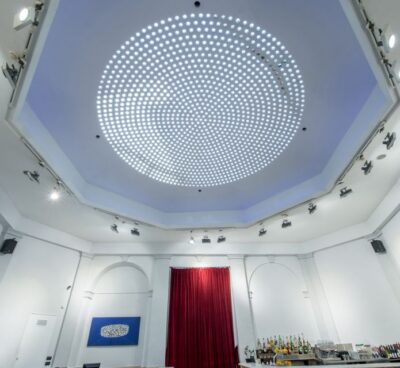
Opera Concert at Palazzo Poli – Fontana di Trevi
Read our review →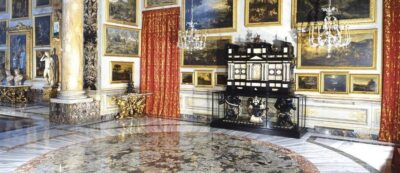
The Great Opera Arias Concert at Palazzo Poli – Trevi Fountain
Read our review →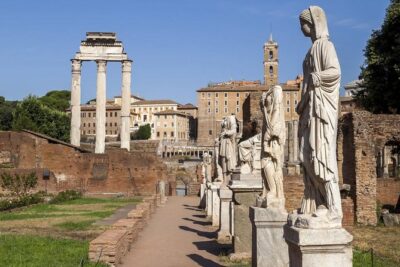
Colosseum Underground, Roman Forum & Cesar Palace Special Access
Read our review →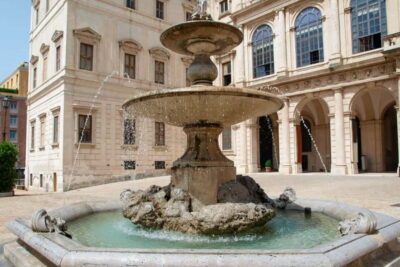
Palazzo Barberini Galleria Corsini Ticket & Audioguide
Read our review →
Vittoriano with Rooftop & Palazzo Venezia Hosted Entry
Read our review →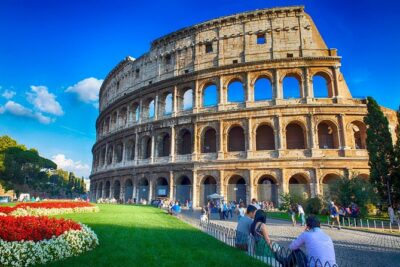
Colosseum Special Access on Arena Floor, Roman Forum and Palaces
Read our review →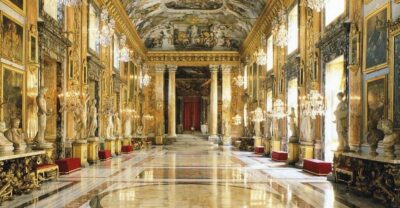
Browse the lists this tour appears in