
Review · PALACE WALKING TOURS
Kyoto Imperial Palace and Nijo Castle Walking Tour
Kyoto’s story comes into focus when you place its shogun’s castle beside the Emperor’s palace, then add a temple and the city’s famous food market. This private, seven-hour walking tour gives you that useful contrast in one day, with a guide to explain not just what you are seeing, but how ordinary people, religious communities, military rulers, and the imperial family shaped Kyoto.
I like the private format, since guides such as Naoko, Chie, and Fuji can answer family questions and adjust explanations to your interests. I also like the mix of sights: Higashi Hongan-ji and Nishiki Market add daily life and faith to the grander palace and castle stops. The tradeoff is clear: this is a long day on foot, and the listed price does not include the Nijo Castle admission or public transportation.
Key points at a glance
- A useful Kyoto comparison: See the former imperial residence and the shogun’s Kyoto castle on the same day.
- Private guiding: Only your group participates, with guides including Naoko, Chie, and Fuji named in past bookings.
- Food and culture together: Nishiki Market gives you time for local snacks, shopping, and restaurant suggestions.
- A serious walking day: About seven hours with several long sightseeing stops and public transport between locations.
- Extra costs to plan for: The tour price is $111.03 per person, plus ¥1,300 for admission and about ¥1,000 for transportation.
- Good for a first Kyoto visit: The route brings together religion, food, political power, and imperial life.
Starting at Kyoto Station at 9:00 a.m.
The meeting point is the central entrance of Hotel Granvia Kyoto, beside Kyoto Station. That is a practical place to begin because it is easy to find and close to public transportation. You return to the same meeting point at the end, which gives the day a clear finish.
The tour starts at 9:00 a.m. and lasts about seven hours. That is enough time to see the four main stops without racing through them, though you should expect a full day rather than a casual stroll. Comfortable shoes matter here. One past participant specifically pointed out the amount of walking, and that is the main physical issue to consider before booking.
Public transportation is part of the day, but the fare is not included. Budget around ¥1,000 per person for transport, in addition to the tour price and Nijo Castle entry. The guide handles the route and timing, which is valuable in Kyoto, where a good sequence can save you both time and confusion.
Because this is a private activity, your group does not have to keep pace with a large crowd. That format is especially useful for families, people who want to ask many questions, or anyone who prefers a guide to explain details at a comfortable speed.
More Palace Walking Tours in Japan
- Tokyo: Imperial Palace and Shogun Historical Walking Tour
★ 5.0 · 2,251 reviews - Tokyo Castle & Imperial PalaceーShogun Walking Tour
★ 4.7 · 1,068 reviews - Tokyo: Imperial Palace Japanese History Walking Tour
★ 4.9 · 987 reviews
Higashi Hongan-ji and Kyoto’s Buddhist life
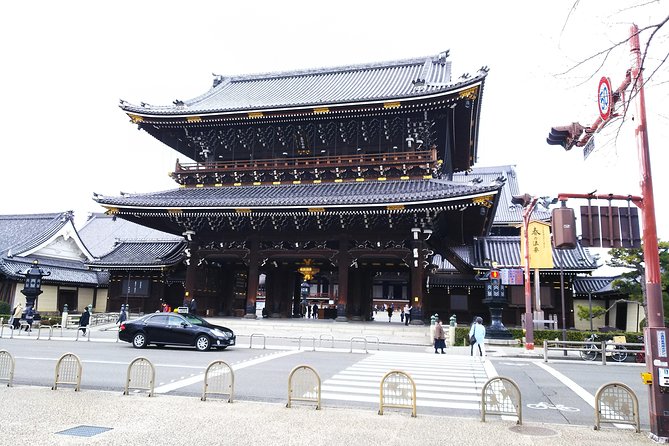
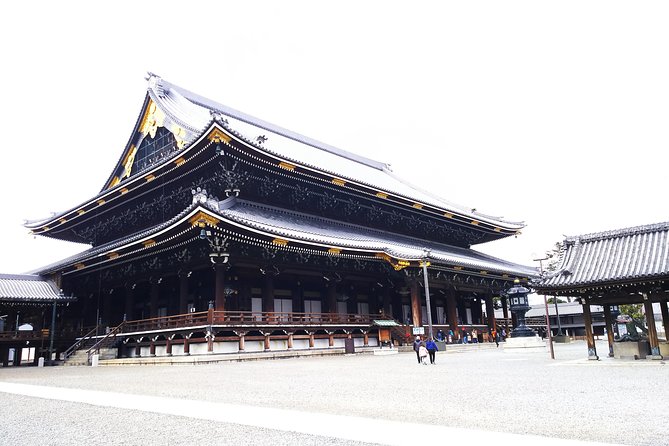
The first stop is Higashi Hongan-ji Temple, with about 30 minutes set aside for the visit. It is a strong opening because it introduces the religious life that shaped Kyoto long before you reach the palace or castle.
The tour places the temple within the story of Japanese Buddhism, including the Shingon Otani tradition and its large following. You are not simply looking at a temple roof and taking a photograph. The guide can help you understand how Buddhism developed into several sects and how religious institutions became part of everyday life in Japan.
Thirty minutes is enough for an introduction, but not enough for a long, quiet temple visit. If you want extensive time for architecture, prayer, or photography, this stop may feel brief. Its real value is as a cultural foundation for the day.
I would pay attention to the difference between a working religious site and a grand political building. That contrast becomes important later. The palace represents imperial authority, while the temple helps you think about the beliefs and communities that shaped ordinary life.
Nishiki Market, Kyoto’s food center
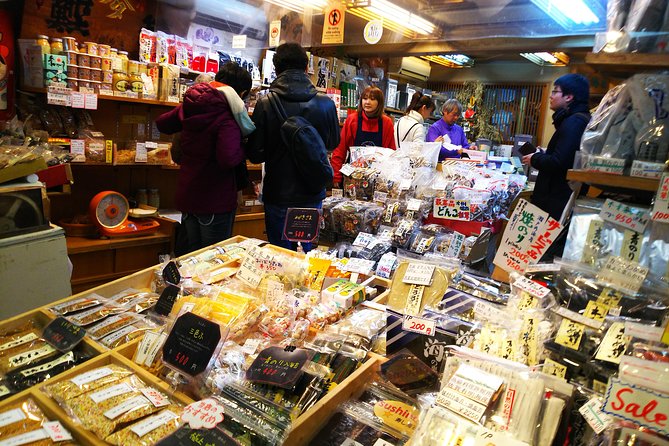
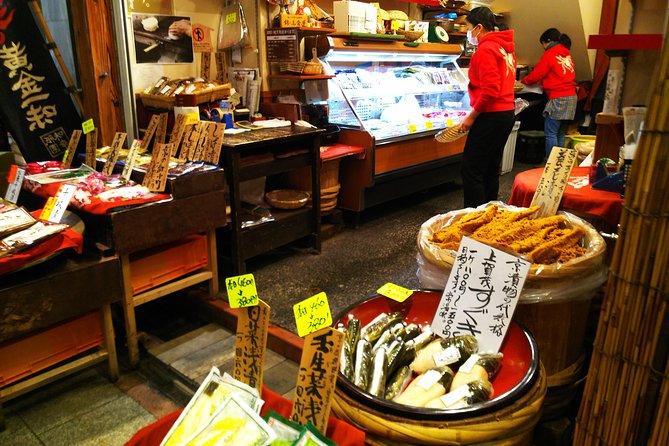
Next comes Nishiki Market, known as the kitchen of Kyoto. The planned visit lasts about 30 minutes, so treat it as a focused taste of the market rather than a long shopping session.
This is where the tour becomes more tactile and personal. You can look at Kyoto food traditions, consider local ingredients, and ask the guide what is worth trying. Fuji, one of the guides named in the feedback, was especially praised for offering food advice at Nishiki Market. A guide’s suggestions can save you from choosing at random when the market presents more options than you can sensibly sample in half an hour.
The market also gives the day a welcome change of pace. Higashi Hongan-ji asks you to think about religion. Nishiki asks you to think about food, commerce, and the routines of city life. Together, these stops give you a broader picture of Kyoto than a palace-only tour would.
The short time limit is the main caution. You may have to choose between browsing, eating, and asking questions. If a particular shop or food catches your attention, you may need to decide quickly. The tour is designed to introduce the market, not give you an entire afternoon there.
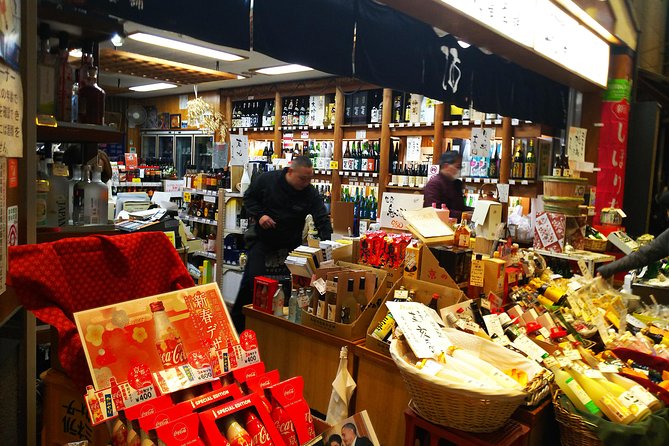
The guide can also recommend a restaurant for later. That practical help came up more than once in the feedback, with one family describing a recommended restaurant as a highlight of the day. You should still expect to pay for your own food.
Nijo Castle and the shogun’s Kyoto residence
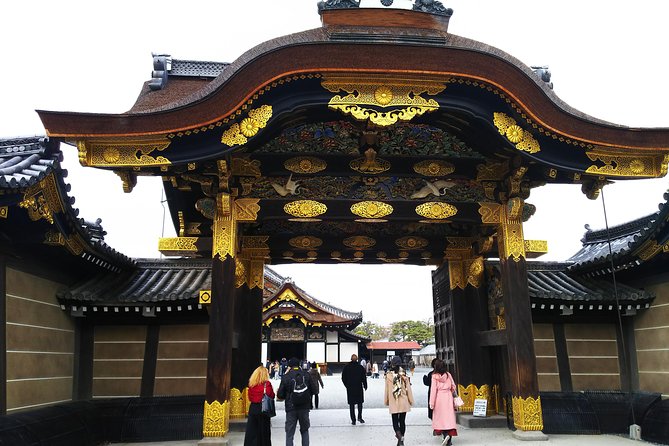
Nijo Castle receives about one hour, and it is likely to be one of the day’s strongest stops. Built in 1603, it served as the Kyoto residence for the shogun when he visited the former capital after moving the seat of government to Edo, now Tokyo.
The castle gives you a direct look at military power in an imperial city. That makes it a useful counterpoint to Kyoto Imperial Palace. The palace represents the Emperor’s household, while Nijo Castle reflects the authority of the shogun and the political system that governed Japan for centuries.
Inside, the castle contains more than 1,000 decorative paintings. You can expect the guide to help you notice the difference between the rooms, artwork, and purpose of the building rather than simply walking you through a series of decorated spaces. The explanation matters because the castle can otherwise become a blur of impressive interiors.
Nijo Castle requires an admission payment of ¥1,300 per person. That fee is separate from the $111.03 tour price, so include it in your budget. The one-hour visit is enough for a solid introduction, though anyone fascinated by the artwork or architecture may wish for longer.
One useful point from the feedback is that Nijo Castle was a favorite stop for at least one participant, especially when compared directly with the palace. That comparison is the heart of the day. You see two centers of power, built for very different people and purposes, within the same city.
More Royal Palace Tours in Japan
- Tokyo: Imperial Palace and Shogun Walking Tour
★ 4.9 · 935 reviews - Imperial Palace East Garden and Edo Castle Walking Tour in Tokyo
★ 5.0 · 510 reviews - Kyoto: Imperial Palace & Nijo Castle Guided Walking Tour
★ 4.7 · 453 reviews - Tokyo: Imperial Palace East Gardens Walking Tour
★ 4.8 · 353 reviews
Kyoto Imperial Palace and the quiet center of the city
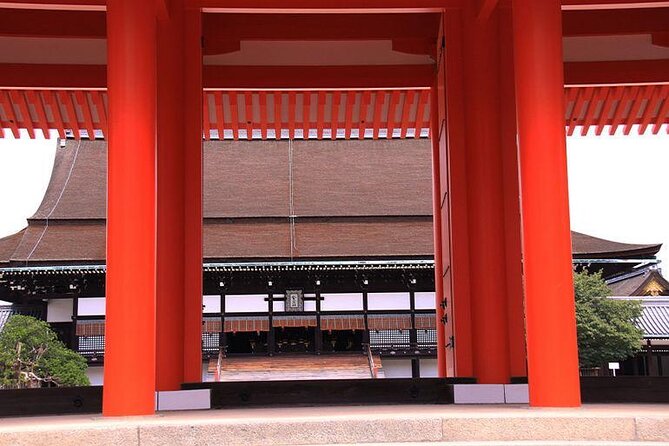
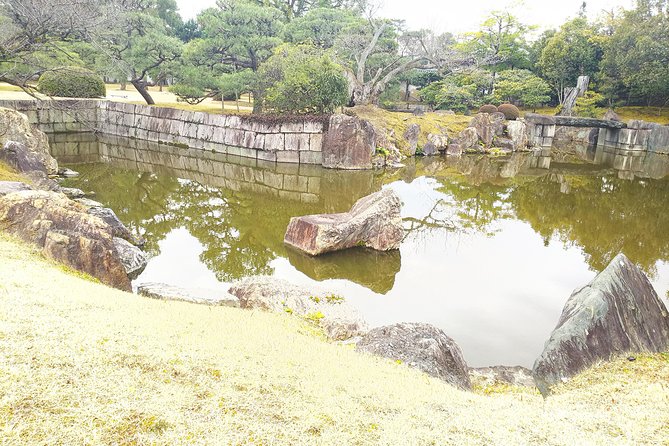
The longest stop is Kyoto Imperial Palace, with about one hour and 15 minutes planned. The palace sits in a large central area and served as the home of the imperial family until the capital moved to Tokyo in 1868. The Emperor and imperial family still use it on certain occasions.
You should set your expectations correctly. This is not a European palace filled with furniture, gilded rooms, and grand displays. The appeal comes from the scale of the grounds, the formal spaces, the architectural details, and the political and cultural role of the site.
That difference is important. If you want lavish interiors, you may find the palace restrained. If you want to understand how Japanese imperial life differs from European court life, the site becomes much more interesting. The guide’s explanation helps you read the simplicity rather than mistake it for a lack of importance.
The longer time allocation allows the palace to serve as more than a quick photo stop. You can compare its calm, formal setting with the more military character of Nijo Castle. The two sites are close enough in historical importance to invite comparison, but different enough to make the contrast memorable.
The palace also helps tie together the morning’s themes. Religion, food, the shogun, and the Emperor are not isolated subjects. They are parts of the same story of Kyoto as Japan’s cultural and political center.
The possible geisha-street portion
The tour overview also describes a stroll through a geisha street. The detailed stop schedule does not assign a separate duration or named location to that part of the day, so I would confirm the exact route with KAMNAVI Tours before booking if this is a major reason you are interested.
That small uncertainty is worth noting. The principal scheduled stops are clearly Higashi Hongan-ji, Nishiki Market, Nijo Castle, and Kyoto Imperial Palace. The geisha-street reference suggests an additional cultural angle, but you should not assume it will receive the same amount of time as the four main locations.
Guides who make the difference
The guide is the main reason to choose this experience over moving between the sights on your own. The named guides include Naoko, Chie, and Fuji, and the feedback consistently gives attention to clear English, useful explanations, friendly conversation, and the ability to answer questions.
Naoko is described as especially good with children, using facts and stories that kept a family interested. That makes the tour a sensible choice for parents who worry that Kyoto’s historical sites may lose younger attention.
Chie is praised for using time well and explaining the difference between the palace and castle. That is exactly the sort of guidance this route needs. Without context, the two sites can seem like formal compounds with similar historical weight. With context, you can see the political divide between imperial tradition and shogunal rule.
Fuji is noted for answering questions, finding answers when needed, and suggesting food at Nishiki Market. Those small services are practical. A guide does not need to turn every stop into a lecture. The best moments may be the short answers that help you understand something you would otherwise walk past.
Guide assignments can change, so you should not book with a guarantee that one specific person will lead your group unless the company confirms it. The important point is the private, question-friendly structure.
What the $111.03 price really buys
At $111.03 per person, the tour is not the cheapest way to see Kyoto’s major sights. You also pay ¥1,300 for Nijo Castle admission and about ¥1,000 for public transportation. Food is not listed as included, and the tour includes the guide fare rather than meals or entrance fees.
The value comes from the seven hours of private guidance and the way the stops fit together. You are paying for someone to connect a temple, food market, castle, and palace into one understandable day. If you have only a short stay in Kyoto, that structure can be worth more than saving money by visiting each place without context.
The value is stronger for families and first-time visitors. You can ask questions as they arise, get help with the route, and receive food suggestions at Nishiki Market. It is also useful if you want a broad introduction before choosing which Kyoto neighborhoods or sights deserve a second visit.
The value is weaker if you already know Kyoto well or prefer unhurried time at one site. The 30-minute temple visit and 30-minute market visit are introductions. Nijo Castle and the palace receive more time, but the day still covers a lot of ground.
Group discounts are available, though the exact saving is not specified. The activity is also offered with a mobile ticket, and confirmation arrives when you book. Free cancellation is available until 24 hours before the start time. Changes or cancellations inside that window are not accepted for a refund, and poor weather can lead to a new date or full refund.
Who should book this Kyoto day?
I would choose this tour if you are visiting Kyoto for the first time, have about one day for a broad historical introduction, or want a private guide rather than a large group. Families can benefit from the flexible explanations, especially if children need the history made more concrete.
It also suits you if you want food, religion, politics, and imperial culture in the same experience. The route does not reduce Kyoto to temples alone. It shows how the city worked as a place of worship, trade, court life, and military authority.
I would hesitate if you dislike walking, want long meals at Nishiki Market, or prefer to linger at one palace or castle for several hours. The schedule is active, the transport fare is extra, and the total cost rises once you add admission and food.
Should you book the Kyoto Imperial Palace and Nijo Castle Walking Tour?
Book it if you want a well-organized first look at Kyoto and value a private guide who can answer questions, explain difficult historical contrasts, and offer food advice. The strongest part is the combination of Nijo Castle and Kyoto Imperial Palace, while Higashi Hongan-ji and Nishiki Market make the day feel connected to everyday Kyoto.
Skip it if you want a slow, self-guided day or if seven hours of walking sounds tiring. For most first-time visitors with limited time, though, the route offers a sensible use of one day, provided you budget for the extra ¥1,300 admission, transport, and your own food.
FAQ
Where does the tour start?
It starts at Hotel Granvia Kyoto, at the JR Kyoto Station central entrance.
What time does the tour begin?
The start time is 9:00 a.m.
How long does the experience last?
The tour lasts approximately seven hours.
Is this a private tour?
Yes. Only your group participates in the activity.
What sites are included?
The scheduled stops are Higashi Hongan-ji Temple, Nishiki Market, Nijo Castle, and Kyoto Imperial Palace. The tour overview also describes a stroll through a geisha street, but no separate time or exact location is provided for that portion.
Are admission fees included?
The guide fare is included, but Nijo Castle admission is not. The stated admission cost is ¥1,300 per person.
Is public transportation included?
No. Public transportation is used during the day, and the stated estimated fare is ¥1,000 per person.
Can I cancel for a refund?
You can cancel at least 24 hours before the local start time for a full refund. Cancellations or changes made less than 24 hours before the start are not accepted for a refund.
Newly added in Japan
- Nijo Castle and Imperial Palace Visit with Guide★ 5.0 · 53 reviews
- Kyoto Imperial Palace & Nijo Castle Guided Walking Tour – 3 Hours★ 4.5 · 106 reviews
- Tokyo walking tour around Imperial Palace and Tokyo Station★ 5.0 · 3 reviews
- Tokyo: Pvt. Tour – Edo Castle & Imperial Palace East Gardens★ 4.8 · 63 reviews
- Tokyo: Imperial Palace, the history of Japan (ENGLISH GUIDE)★ 5.0 · 77 reviews
- Tokyo: Imperial Palace with Nostalgic Alley Kagurazaka tour★ 4.3 · 8 reviews
- Tokyo: Edo Castle Ruins & Imperial Palace East Garden Tour★ 4.4 · 13 reviews
- Tokyo: Edo Castle and Imperial Palace Guided Walking Tour★ 5.0 · 6 reviews
Palace Walking Tours, compared.
Doge’s Palace and St Mark’s Basilica Walking Tour
Read our review →
Grand Palace and Wat Phra Kaew Guided Walking Tour
Read our review →
Imperial Palace and Shogun Historical Walking Tour
Read our review →
Madrid Old Town & Royal Palace Walking Tour Skip the Line Ticket
Read our review →
Knossos: Knossos Palace Skip-the-Line Guided Walking Tour
Read our review →
Tokyo Castle & Imperial PalaceーShogun Walking Tour
Read our review →Browse the lists this tour appears in