
Review · ROYAL PALACE TOURS
Kyoto: Nijo Castle and Kyoto Imperial Palace Guided Tour
Nijo Castle and Kyoto Imperial Palace tell two sides of old Kyoto: shogun power at one, imperial tradition at the other. This three-hour walk links them with history, architecture, politics, gardens, and a pleasant stretch through the city.
I like the small group, limited to nine people, and the chance to ask real questions instead of trailing behind a large flag. I also like the guides’ range. Goku, Kayo, Nene, and Taku have all earned strong praise for clear explanations, humor, patience, and helpful advice after the tour. The main caution is simple: at the Imperial Palace, you may see the outsides of some buildings rather than enter their grand interiors.
Key points at a glance
- Two different centers of power: Compare the shogun’s military authority at Nijo Castle with the emperor’s ceremonial world at Kyoto Imperial Palace.
- A useful 20-minute city walk: The route between the sites turns travel time into a discussion of Japanese and Western culture, politics, and Kyoto life.
- Small group of up to nine: You get a better chance to hear the guide and ask questions than on a large coach tour.
- Strong guide roster: Goku, Kayo, Nene, and Taku receive especially warm praise for history, architecture, local tips, and friendly service.
- Gardens change with the seasons: The Imperial Palace grounds are particularly appealing in spring, when cherry blossoms add color to the formal setting.
- Mostly outdoors: Bring a camera, wear sensible walking clothes, and remember that shorts are not allowed.
Two Kyoto power centers in one morning
This tour works because it puts Kyoto’s political story in physical form. At Nijo Castle, you see the authority of Tokugawa Ieyasu and the shogunate. At Kyoto Imperial Palace, you encounter the former home of Japan’s emperors and the refined traditions tied to the imperial court.
I find that contrast more useful than visiting either site alone. A castle can otherwise seem like a collection of rooms and gardens. A palace can feel elegant but distant. Together, they help you understand who held power, how that power was displayed, and how military rule and imperial tradition existed side by side.
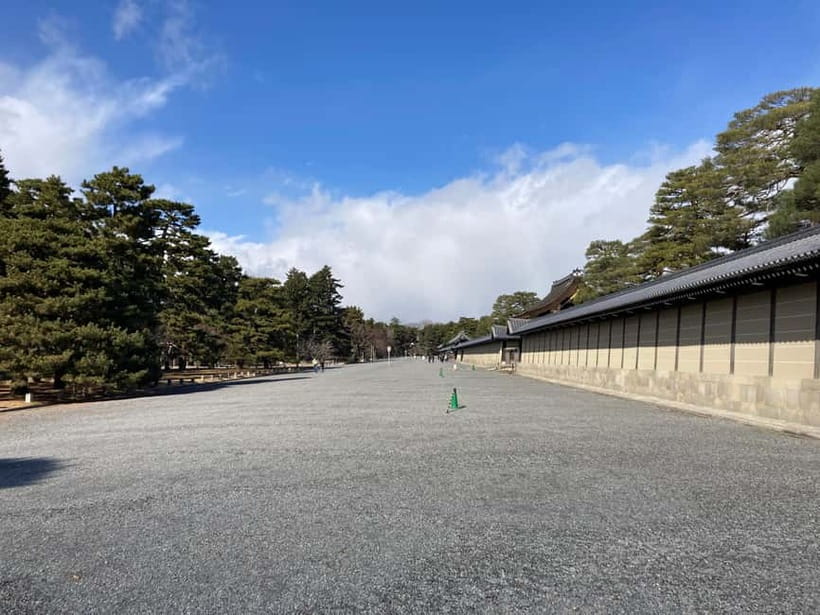
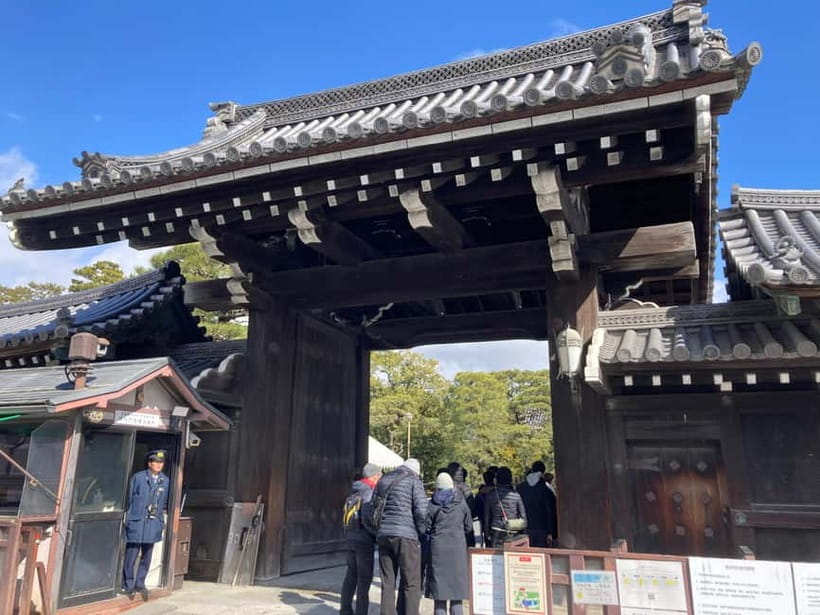
The tour begins at the Nakadachiuri Gate of Kyoto Imperial Palace. You receive advance information about what your guide will look like and wear, which matters at a large site with several gates and open spaces. From there, the route takes you through the palace grounds before continuing toward Nijo Castle.
The walking connection is part of the point. One account describes roughly 20 minutes between the Imperial Palace and Nijo Castle, with the guide using the time to discuss Japanese and Western culture. This is not a tour where every minute disappears inside a monument. You also get a look at Kyoto streets, traditional townhouses, and a spot associated with cherry blossoms.
More Royal Palace Tours in Japan
- Tokyo: Imperial Palace and Shogun Historical Walking Tour
★ 5.0 · 2,251 reviews - Tokyo: Imperial Palace Japanese History Walking Tour
★ 4.9 · 987 reviews - Tokyo: Imperial Palace and Shogun Walking Tour
★ 4.9 · 935 reviews
Kyoto Imperial Palace, ceremony in an open garden setting
The Imperial Palace is the gentler half of the experience. Its architecture reflects courtly taste rather than the defensive mood of a military stronghold. The grounds and gardens were arranged to show seasonal beauty, so the appeal changes with the calendar.
In spring, the gardens can be especially rewarding. Cherry blossoms add a soft contrast to the palace buildings and broad paths. Other seasons bring their own color and atmosphere, though the supplied details do not specify a particular planting schedule, so I would treat the garden as a year-round visit with a spring bonus rather than book only for one promised view.
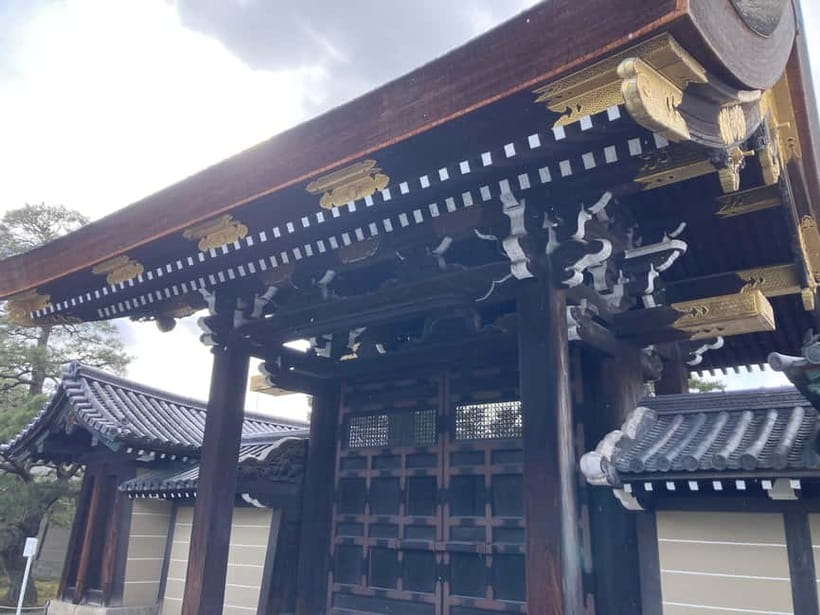
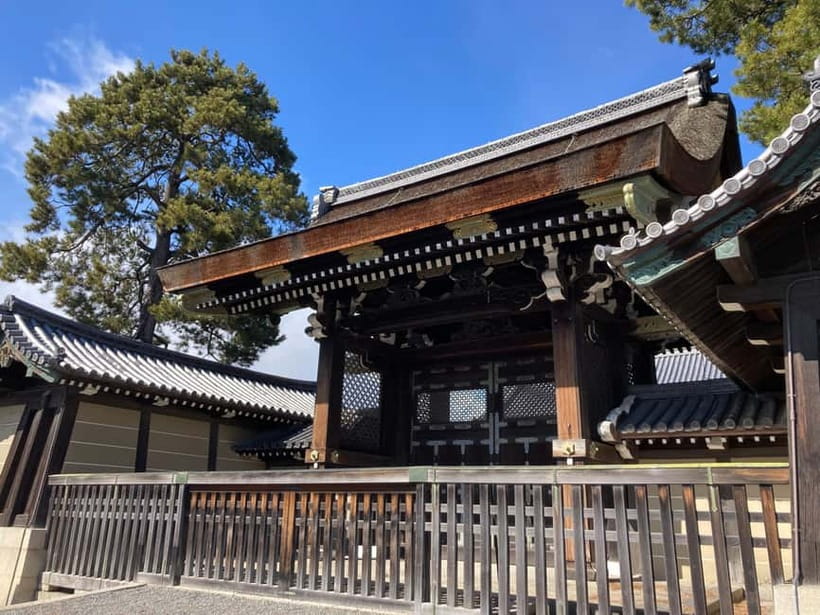
Your guide explains the role of the palace, the political climate of the period, and the design choices that shaped the site. That context is valuable because the palace’s visual language is restrained. You may notice broad roofs, careful proportions, formal entrances, and a quiet sense of ceremony, but those features mean more when someone explains how imperial life differed from shogunal rule.
There is an important limitation. One guest found the Imperial Palace portion less satisfying because some buildings could be viewed only from the exterior. You should set your expectations accordingly. This is not a guaranteed tour of every interior room. If you want a full indoor palace experience, check the current access rules before booking and regard the gardens and exterior architecture as central parts of the visit.
The outdoor setting also affects comfort. The tour is mostly outside, and the three-hour length gives you a steady amount of walking and standing. Bring a camera and cash, as advised, and plan for the weather. The activity lists shorts as not allowed, so choose longer, comfortable clothing.
Walking from the palace to Nijo Castle
The route between the two main sites gives the tour a more local feel. You are not simply moved from ticket entrance to ticket entrance. You walk through Kyoto and get a chance to notice traditional townhouses, ordinary streets, and a cherry-blossom location that may be easy to miss when sightseeing alone.
I particularly value this middle section because it lets the guide connect grand history with the modern city. The discussion can move from emperors and shoguns to cultural differences between Japan and the West. It also gives you time to ask the questions that often come up after seeing the palace.
The walk is described as about 20 minutes, but you should still wear comfortable shoes. The activity is sold as a walking tour, not as a vehicle-based sightseeing trip. One review refers to comfortable transportation, but the stated format and route emphasize walking, so I would prepare for the walk rather than count on a ride.
This section may feel less dramatic than the castle or palace. That is normal. Its value is in the change of pace and the guide’s commentary. If you prefer a packed schedule of interiors and major monuments, you may find the street portion modest. If you like seeing how historic Kyoto fits into the present city, it adds useful texture.
Nijo Castle and the shogun’s message
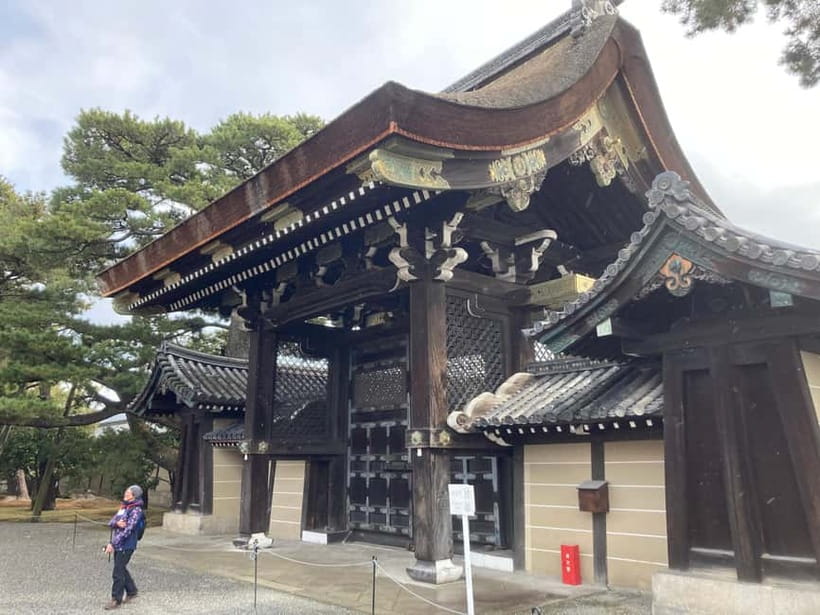
Nijo Castle is the tour’s strongest stop for political theater. Built by Tokugawa Ieyasu, it expresses the authority of the shogunate through scale, decoration, controlled movement, and lavish detail. The castle was not simply a defensive structure. It also communicated who held power.
The included admission covers Nijo Castle, Ninomaru Palace, and the Art Gallery. That is a meaningful part of the price because you are not paying for a guide who only walks you around the outside. You have access to the central attractions that give the site its historical weight.
Inside Ninomaru Palace, the guide helps you read the building as a political setting. Architectural style, room arrangement, artwork, and decoration all played a role in showing rank and control. You may notice details that would otherwise pass by as attractive surfaces. The guide’s job here is to connect art and design to the political climate of the time.
The castle also supplies a useful counterpoint to the Imperial Palace. The palace suggests continuity, ceremony, and court culture. Nijo Castle feels more direct in its message: this is where military authority made itself visible. I like having that comparison explained on site, where the difference is not just an abstract history lesson.
Several guides have been praised for handling Nijo Castle especially well. Taku has been credited with putting effort into explaining its history and with helping a solo visitor take photos. Goku has been praised for answering detailed questions about shoguns and emperors, while Kayo has been appreciated for combining general Japanese history with specific information about Kyoto’s sites.
Same city, another grand address:
- Tokyo Castle & Imperial PalaceーShogun Walking Tour
★ 4.7 · 1,068 reviews - Kyoto: Nijo-jo Castle and Ninomaru Palace Guided Tour
★ 4.7 · 1,020 reviews - Tokyo Castle & Imperial PalaceーShogun Walking Tour
★ 5.0 · 724 reviews - Imperial Palace East Garden and Edo Castle Walking Tour in Tokyo
★ 5.0 · 510 reviews
Why the guide matters more than usual
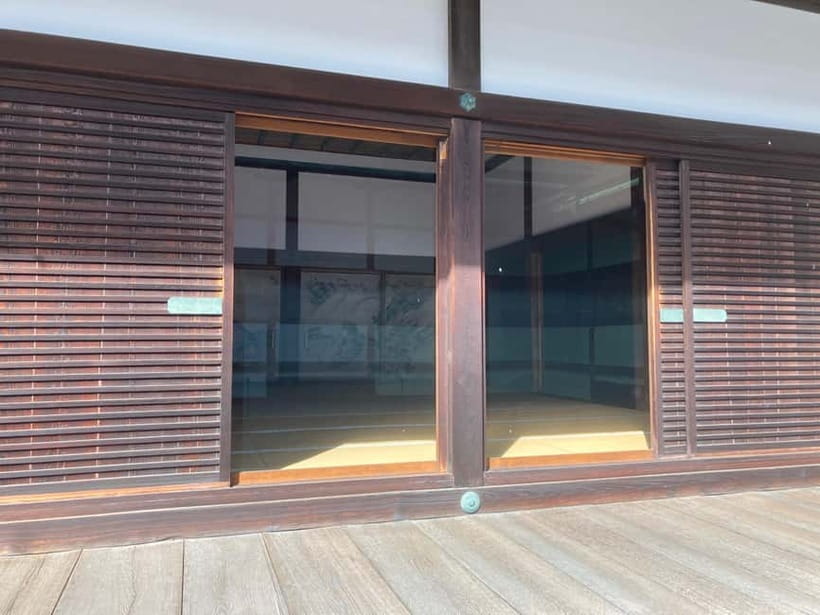
The monuments are worthwhile on their own, but the quality of the experience depends heavily on the guide. A three-hour visit covering two major sites can easily become a string of names and dates. The strongest guides turn it into a story about competing institutions, social order, architecture, and daily life.
The guide team includes English, French, Spanish, Japanese, Portuguese, and Russian options. The supplied experience information does not guarantee that every language is available at every departure, so check the selected time when booking.
Goku receives especially strong praise for his English, energy, patience, and command of Japanese history. One visitor with a serious interest in the subject appreciated his ability to answer detailed questions. Another family found that he adjusted the tour to suit parents interested in history and teenage sons who wanted an enjoyable, less formal experience.
Kayo has been praised for humor and for making three hours pass quickly. She has also been described as able to explain history, architecture, art, and politics without losing the group. Nene is repeatedly described as kind, clear, and accommodating, including during a last-minute guide change caused by illness.
Taku is another good name to look for. He has been praised for local suggestions, careful answers, and an easy manner. One solo visitor received restaurant recommendations for the area near the hotel, which shows the practical value of asking your guide for help beyond the official route.
I would not book based on a single guide name alone, since assignments can change. Still, the pattern is encouraging: the best part of this tour is not a theatrical performance or a novelty stop. It is the guide’s ability to make political history understandable and respond to your interests.
Small-group value at $63
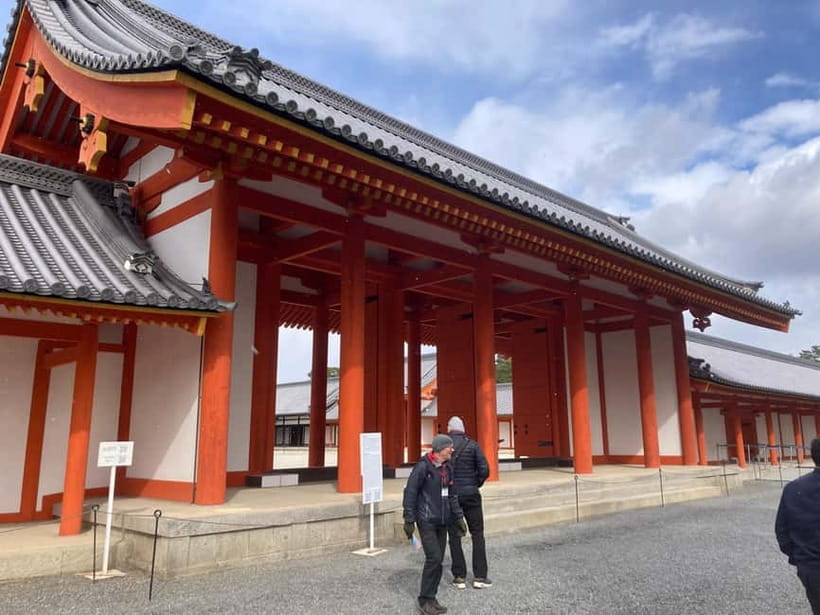
At $63 per person, this is not the cheapest way to see Kyoto. You are paying for a professional guide, admission to Nijo Castle, Ninomaru Palace, and the Art Gallery, and a small-group format that limits attendance to nine people.
I consider that fair value if you want interpretation. The two sites are important but can be difficult to read without context. A self-guided visit costs less in guiding fees, yet it also leaves you to connect the shogun, emperor, architecture, gardens, and political changes on your own.
The group size is a real advantage. With nine or fewer people, you should have a better chance of hearing explanations, asking follow-up questions, and getting help with photos. The format can also accommodate mixed interests. One family specifically appreciated a guide who balanced serious history with time for photographs and younger participants.
The value is weaker if you prefer to move alone or spend long periods photographing gardens. Three hours gives you a guided overview, not unlimited time at each building. The route also includes a city walk, so anyone seeking only indoor monument visits may feel that the schedule is spread out.
Free cancellation up to 24 hours before the start and a reserve-now, pay-later option reduce the risk of fitting this into a changing Kyoto schedule. Check available starting times before committing, since the activity lasts three hours and the listed price is per person.
Who will enjoy this tour most?
I would recommend it to a first-time Kyoto visitor who wants a clear introduction to the city’s political and cultural past. It is also a good fit for anyone who enjoys architecture but wants more than attractive photographs.
History-minded visitors will get the most from the explanations of shoguns, emperors, politics, and cultural exchange. Families can benefit from the small group and flexible conversation, especially if the guide is able to adjust the detail level. Solo visitors gain a second set of hands for photographs and someone to ask about food and the rest of Kyoto.
The tour is less suitable if you want a slow, private visit or guaranteed access to palace interiors. It is also not suitable for pregnant women according to the activity information. Since the tour is mostly outdoors, you should be comfortable walking and standing for much of the three hours.
The palace and castle are not presented as isolated attractions. The tour asks you to compare them, walk between them, and use the streets as part of the lesson. That makes it a better choice for understanding Kyoto than for collecting quick snapshots.
Practical details before you reserve
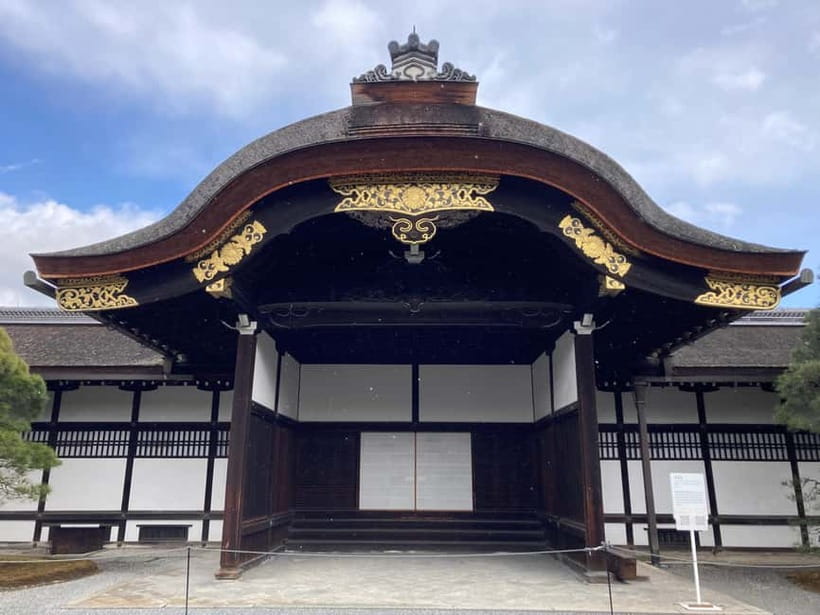
Meet at the Nakadachiuri Gate of Kyoto Imperial Palace. The operator sends information in advance so you can identify the guide by appearance and clothing.
Admission tickets include Nijo Castle, Ninomaru Palace, and the Art Gallery. The walking experience and professional guide are included as well. Bring a camera and cash, and do not wear shorts.
Allow the full three hours. The Imperial Palace grounds, street walk, and Nijo Castle visit create a steady itinerary, with outdoor time throughout. Comfortable shoes are a sensible choice even though they are not specifically listed as required.
The overall rating is 4.6 from 98 reviews, with repeated praise for Goku, Kayo, Nene, and Taku. The one clear concern is the limited interior access at the Imperial Palace, so read the experience as an architectural and garden visit there, followed by a fuller castle visit at Nijo.
Should you book it?
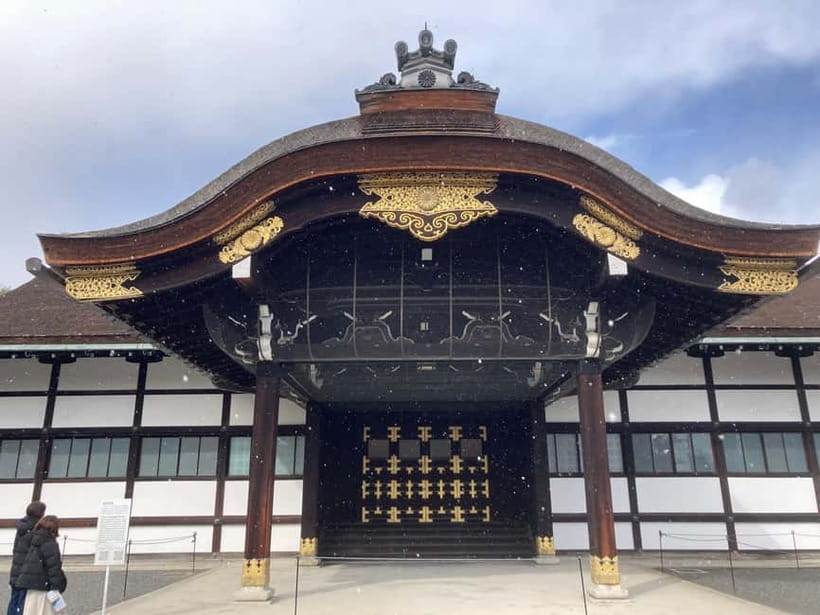
Book this tour if you want Kyoto’s major historic sites explained as parts of one political story. The strongest reasons are the small group, the included Nijo Castle admissions, and guides who can move from dates and architecture to practical local advice.
Skip it if you want a private pace, extensive palace interiors, or a day built around photography alone. For most first-time visitors, though, $63 is reasonable for three hours of guided context at two major sites, especially if you are fortunate enough to have Goku, Kayo, Nene, or Taku leading the walk.
FAQ
Where does the tour meet?
The meeting point is the Nakadachiuri Gate of Kyoto Imperial Palace. You will receive advance information describing what the guide will look like and wear.
How long does the tour last?
The tour lasts three hours. Starting times vary, so check availability when choosing your date.
How many people are in the group?
The tour is a small-group experience limited to nine participants.
Which languages are available?
Live guides may be available in English, French, Spanish, Japanese, Portuguese, and Russian. Check the language and departure option for your chosen booking.
What admissions are included?
Admission tickets to Nijo Castle, Ninomaru Palace, and the Art Gallery are included, along with the professional guide and walking tour.
Can I cancel the booking?
You can cancel up to 24 hours in advance for a full refund. The reserve-now, pay-later option allows you to hold a place without paying immediately.
Newly added in Japan
- Kyoto Imperial Palace and Nijo Castle Walking Tour★ 5.0 · 10 reviews
- Nijo Castle and Imperial Palace Visit with Guide★ 5.0 · 53 reviews
- Kyoto Imperial Palace & Nijo Castle Guided Walking Tour – 3 Hours★ 4.5 · 106 reviews
- Tokyo walking tour around Imperial Palace and Tokyo Station★ 5.0 · 3 reviews
- Tokyo: Imperial Palace, the history of Japan (ENGLISH GUIDE)★ 5.0 · 77 reviews
- Tokyo: Imperial Palace with Nostalgic Alley Kagurazaka tour★ 4.3 · 8 reviews
- Tokyo: Pvt. Tour – Edo Castle & Imperial Palace East Gardens★ 4.8 · 63 reviews
- Tokyo: Edo Castle Ruins & Imperial Palace East Garden Tour★ 4.4 · 13 reviews
Royal Palace Tours, compared.


Royal Palace Expert Guided Tour with Skip-the-Line
Read our review →
Dubai To Abu Dhabi: Grand Mosque, Royal Palace & Etihad Towers
Read our review →

Abu Dhabi Day-Trip Grand Mosque, Royal Palace & Lunch
Read our review →

Louvre Entry & Etihad Tower/Royal Palace Options
Read our review →Browse the lists this tour appears in