
Review · JAPAN PALACE TOURS
Kyoto: Nijo-jo Castle and Ninomaru Palace Guided Tour
Nijo Castle’s most memorable feature is not a battlefield or a towering keep. It is Ninomaru Palace, a finely decorated residence where the shogun conducted business, received visitors, and displayed power through architecture. This one-hour tour helps you read the rooms, paintings, carvings, and even the famous nightingale floors instead of simply walking past them.
I like the focused route, which covers the castle’s key sights without eating half your day. I also like the chance to enter parts of the palace area normally closed to ordinary visitors. The main drawback is that the $16 tour price does not include castle admission, and you must pay that extra fee in cash on site.
- Ninomaru Palace: Walk through the shogun’s former residence and office, with each room explained in its political and ceremonial context.
- Restricted areas: The guided visit can include two sections not open to general visitors, giving you a closer look at private quarters and palace features.
- English guidance: Guides including Ai, Kaoru, Miki, Ayu, and Don have been praised for clear explanations, warmth, and humor.
- Compact one-hour route: See the East Main Gate, Karamon Gate, Ninomaru Palace, and Ninomaru Garden before exploring more on your own.
- Family value: One child aged 12 or under can join free with each paying adult, though children do not receive an earphone unless an adult ticket is purchased.
- Plan for the weather: The palace has no air conditioning, and visitors cannot bring water inside or take photographs in the palace rooms.
Why Nijo Castle Makes More Sense With a Guide
Nijo Castle was built in 1603 as Kyoto’s residence for Tokugawa Ieyasu, the first shogun of the Edo Period. That date matters because the castle was designed not only for defense, but also for government, ceremony, and control.
The Tokugawa shoguns ruled Japan from Edo, now Tokyo, but Kyoto remained the imperial capital. Nijo Castle gave the shogun a formal base in the emperor’s city. You are looking at a political headquarters as much as a fortified compound.
That distinction is easy to miss on a self-guided visit. You can admire the gold details and broad gardens, but the rooms do not explain themselves. A guide points out how the building managed rank, movement, and appearances. You learn which rooms were used for formal meetings, which were reserved for higher-status visitors, and how artwork sent messages about power and authority.
The guides also add useful human detail. Explanations may touch on daily life in the palace, preparation for a shogun’s dinner, the risk of poisoning, samurai customs, court politics, and the changing relationship between the shogunate and the emperor. The strongest guides, including Kaoru, Miki, Ai, and Don, are described as lively and easy to understand rather than stiffly academic.
At $16 per person, the tour is a modest add-on to a major Kyoto sight. Its value depends on your style. If you enjoy historical buildings but often feel unsure what you are looking at, the guide is money well spent. If you prefer silence and slow solo wandering, you may find the fixed one-hour route less appealing.
From the East Main Gate to the Castle Interior
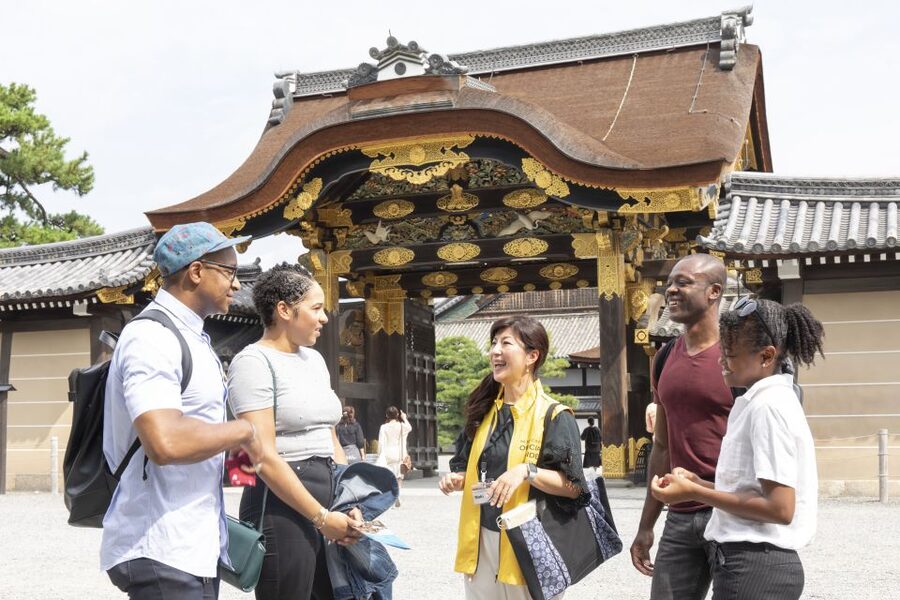
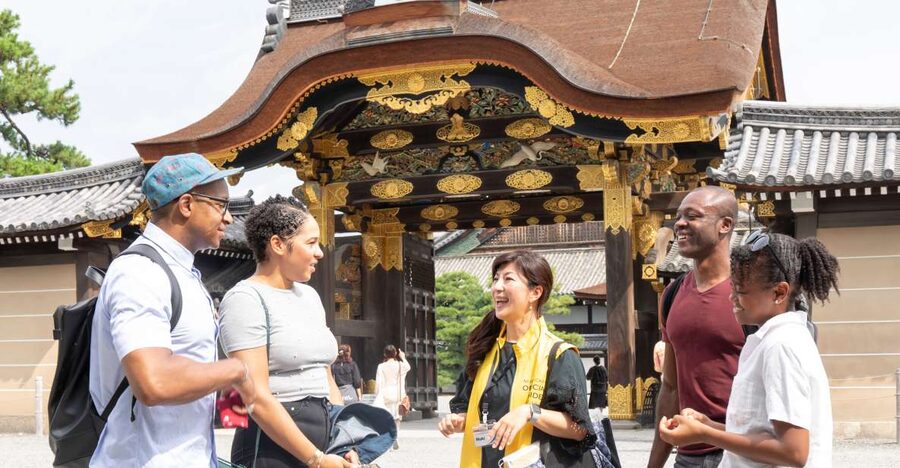
The meeting point is the ticket booth and reception area by the East Main Gate. Enter through the East Main Gate, then go to the reception area beside the General Reception desk, on the left after entering. This is worth handling early, since the tour does not wait for late arrivals.
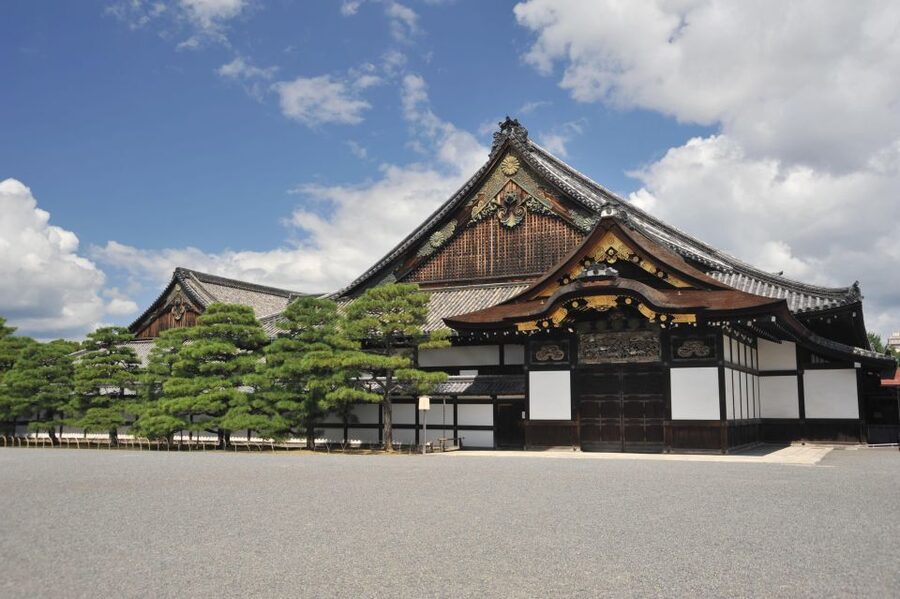
The route begins with the Higashi Ote-mon, or East Main Gate. This is your first reminder that Nijo Castle was carefully staged. Gates controlled access, shaped the arrival of important people, and separated public movement from more restricted areas.
You will need to pay the castle admission fee separately in cash on site. The tour booking itself is not your entrance ticket. Build in enough time to enter, pay, and reach the reception point before the guide starts.
The tour lasts 60 minutes. That is long enough for a useful explanation of the central sights, but not long enough to cover every path, garden corner, and historic building. I see this as a strength if you have a busy Kyoto schedule. You get the essential interpretation first, then you can stay inside the grounds and explore independently.
More Palaces to Tour in the world:
- Venice: Doge’s Palace Reserved Entry Ticket
★ 4.6 · 42,716 reviews - Paris: Versailles Palace and Gardens Full Access Ticket
★ 4.6 · 41,579 reviews - Granada: Alhambra & Nasrid Palaces Tour with Tickets
★ 4.7 · 19,801 reviews
Karamon Gate and the Language of Status
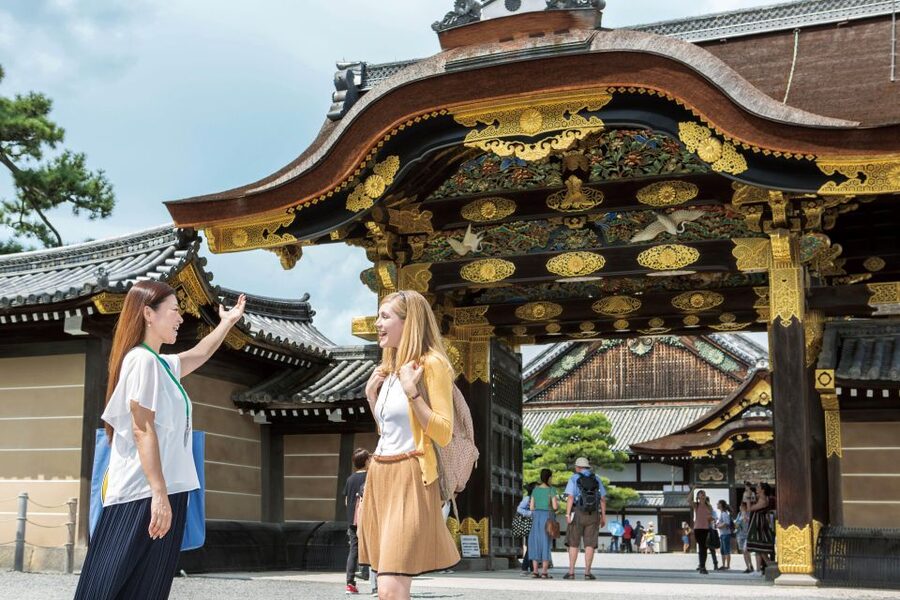
The Karamon Gate marks the entrance to the Ninomaru area. Its decorative style is more formal and showy than the outer defenses, making it a fitting threshold for the shogun’s residence.
This is where a guide earns the fee quickly. Rather than treating the gate as a photo stop, your guide can explain how its carvings and ornament fit the power structure of the castle. Details such as dragons, animals, flowers, and other symbolic designs are not random decoration. They helped create the right impression for anyone approaching the palace.
One especially useful thread is the way Japanese art and symbolism appear in places connected to government. You may hear about murals, animals, seasonal motifs, and the meaning of particular images. A few explanations also connect castle imagery with modern Japanese popular culture, including possible inspiration for familiar dragon and monster designs. Treat those points as entertaining connections, not the main reason to visit, but they can make the artwork easier to remember.
The gate itself is quick to see. The real reward comes from understanding what it was meant to communicate: dignity, hierarchy, and the presence of a powerful ruler.
Ninomaru Palace, Room by Room
Ninomaru Palace is the heart of the tour. This former residence and office of the shogun remains intact, giving you an unusually direct look at how authority was presented in the Edo Period.
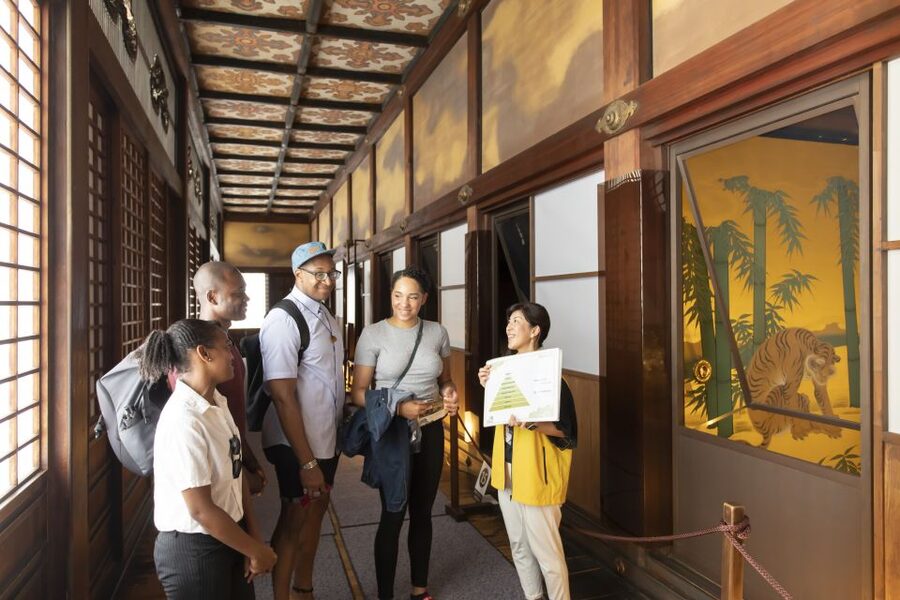
You move through a sequence of rooms with different purposes and levels of importance. The guide explains where the shogun met officials, how visitors approached him, and how the layout reflected rank. You might otherwise see a series of beautiful rooms. With context, the palace becomes a carefully managed political theater.
The murals deserve close attention. Large painted panels show animals, plants, and landscapes chosen to create a particular mood and reinforce status. Guides point out details that are easy to miss, including animals whose appearance carries symbolic meaning and paintings that helped define the function of each room.
The palace also gives you a feel for daily routine. Explanations can include meal preparation, staff roles, formal greetings, and the practical concerns of protecting the shogun. The story of poisoning risks, for example, helps explain why food and service were matters of serious security.
One distinctive feature is the nightingale floor. Its boards make a chirping sound as people walk across them, helping alert residents to movement inside the palace. It is a small engineering detail with a very practical purpose. It also gives the visit a pleasant sense of discovery, since the floor connects palace design with everyday security.
Photography is not allowed inside the palace, and you cannot bring water into the interior. There is no air conditioning, so the rooms can feel hot in Kyoto’s summer, especially during a heat wave. Wear light clothing, drink before entering, and keep your water for the garden portion afterward.
The Extra Access That Changes the Visit
The tour includes access to areas normally unavailable to the general public. The exact spaces can vary, but the experience may include two additional sections connected with the shogun’s private quarters.
This is an important distinction from simply hiring an audio guide. You are not only receiving information. You may also see parts of the complex that independent visitors cannot enter. That added access is one of the clearest reasons to book the guided option.
Do not expect an enormous secret wing or a separate castle hidden behind a door. The appeal is subtler. Restricted rooms help you understand how public ceremony and private life were separated within the palace. They also let you see further details of the building’s design and use.
Access is subject to the castle’s operating conditions, so treat it as a special benefit rather than a guarantee of a particular room. The supplied tour details specifically promote access to a normally unavailable part of the castle, and multiple guide accounts describe entry into closed-off spaces.
Same city, another grand address:
- Sintra: Pena Palace and Park Entrance Ticket
★ 4.2 · 17,410 reviews - Granada: Alhambra and Nasrid Palaces Entry Ticket
★ 4.6 · 15,130 reviews - Madrid: Royal Palace Fast-Access Admission Ticket
★ 4.6 · 13,856 reviews - Doge’s Palace & St. Mark’s Basilica with Terrace Access Tour
★ 4.7 · 10,697 reviews
Ninomaru Garden After the Palace
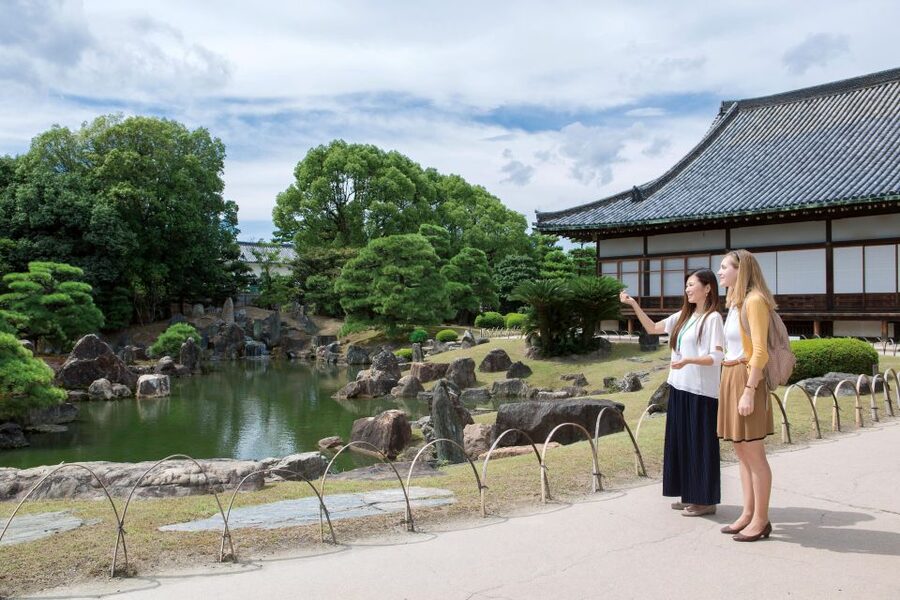
The final listed stop is Ninomaru Garden, which encircles the palace area with ponds, stones, trees, and carefully arranged views. After the enclosed rooms, the garden gives you room to breathe and a different way to read the castle.
The garden was not merely a pleasant backyard. In a formal residence, the arrangement of paths and views helped shape how people experienced the compound. Your guide can connect the garden to the palace’s ceremonial setting, though the one-hour schedule means the explanation will remain focused rather than exhaustive.
I like the way this part of the route balances the palace interior. Inside, you are watching for paintings, room functions, and social rank. Outside, you can slow down and take in the relationship between the buildings and their setting.
Once the guided hour ends, you can continue wandering through the grounds at your own pace. That combination works well: the guide gives you the essential framework, while your unscheduled time lets you return to a favorite gate, garden view, or exterior detail.
The Guides Make the Difference
The quality of a one-hour tour rests heavily on the person leading it. Here, the guide names that appear repeatedly include Kaoru, Miki, Ai, Ayu, Don, Ayu, Kiku, and others. The strongest common traits are clear English, good pacing, warmth, and the ability to answer questions without losing the group.
Kaoru is described as funny, expressive, and good at explaining samurai customs. Miki is praised for energy, detailed answers, and keeping the group engaged in very hot weather. Ai is noted for careful explanations and a friendly manner, while Don brings an educational but light touch to the historical story.
You may also have a guide who takes photos for you, especially helpful if you are visiting alone. Groups can be small, though the castle itself can become crowded. A calm guide who keeps everyone together matters when the palace corridors fill with other visitors.
The tour is conducted only in English. You should feel comfortable listening to spoken historical explanation for an hour. The supplied information also notes that earphones are provided only to paid participants, which may help you hear the guide in crowded areas.
Timing, Heat, and Practical Limits
An hour sounds short, but Nijo Castle is large enough that you could spend far longer there. The tour is best viewed as an introduction, not a complete castle visit.
Arrive well before the start time. You must enter at the East Main Gate, pay the separate admission fee, and report to the reception area. Missing the start means you cannot join later, so a rushed arrival is a poor gamble in Kyoto.
Weather affects comfort. Summer visitors have completed the tour in temperatures above 95 degrees Fahrenheit, but the palace itself has no air conditioning. Bring water for the outdoor sections, drink before entering, and consider visiting earlier in the day if your schedule allows. The tour can operate in light drizzle, so a little rain does not necessarily spoil the experience.
Ninomaru Palace closes on every Tuesday in July, August, December, and January, as well as from December 26 through January 3. Check the available date carefully before paying. Free cancellation is available up to 24 hours before the tour for a full refund.
Families get a useful break: each paying participant can bring one child aged 0 to 12 free of charge. The child must stay with an adult. If you bring more than one child, each additional child needs an adult ticket. Children who need an earphone must also have an adult ticket.
Who Should Book This One-Hour Tour?
I would choose this tour if you want the history to make sense while you are looking at it. It is especially useful for first-time visitors to Nijo Castle, people interested in Japanese political history, and anyone who likes architecture but does not read Japanese historical labels with ease.
It also suits a short Kyoto itinerary. The route covers the main gate, Karamon Gate, Ninomaru Palace, and Ninomaru Garden in one hour, leaving time for other sights. Afterward, you can continue through the castle grounds without a guide.
Families may find the child policy helpful, though the heat and no-water rule inside the palace require planning. Solo visitors can also benefit from the structure and the possibility of help with photographs.
I would be less eager to recommend it to someone who wants a quiet, unhurried stroll. The group must follow the guide’s pace, and the palace can be crowded. You also pay admission separately, so the final cost is higher than the tour price alone suggests.
Should You Book It?
Yes, if you want more than attractive gates and decorated rooms. The English guidance, historical context, and restricted access give this compact tour real value, particularly at $16 before admission.
Book it early enough to arrive at the East Main Gate with time to spare, carry cash for the castle entrance, and prepare for heat if you visit in summer. If you have only one hour for Nijo Castle, this is a smart way to spend it. If you have half a day and prefer exploring alone, enter independently and use the tour only if understanding the shogun’s palace matters more to you than complete freedom.
FAQ
Is castle admission included in the $16 tour price?
No. Nijo Castle admission is separate and must be paid in cash on site.
How long does the guided tour last?
The guided portion lasts 60 minutes. You can continue exploring the castle grounds independently afterward.
What language is the tour conducted in?
The tour is conducted only in English and includes a live English-speaking guide.
Where should I meet the guide?
Enter through Nijo Castle’s East Main Gate and go to the reception area beside the General Reception desk, on the left after entering. The meeting point is at the Nijo Castle Tour Ticket Booth area.
Can children join the tour for free?
Each paying participant may bring one child aged 0 to 12 free of charge. The child must be accompanied by an adult. Each additional child requires an adult ticket.
Can I take photographs or bring water inside Ninomaru Palace?
Photography is not allowed inside the palace, and water cannot be brought inside. The palace also has no air conditioning, so plan for warm conditions in summer.
Newly added in the world
- Avignon: Around The Palace Tour★ 4.5 · 13 reviews
- Ayutthaya Full-Day Tour with Bang Pa In (Summer Palace)★ 5.0 · 2 reviews
- Bali: Gate Of Heaven and Water Palace Tirta Gangga Package★ 4.7 · 3 reviews
- Aranjuez: Royal Palace Guided Tour★ 4.5 · 93 reviews
- Asia Continent & Topkapı Palace & Harem. Guided, Small group★ 4.9 · 3 reviews
- Kornik Castle and Rogalin Palace Half-Day Private Tour★ 5.0 · 2 reviews
- Antananarivo: Guided Tour and sunset in queen’s palace★ 3.9 · 13 reviews
- Royal Palace of Aranjuez Small-Group Tour with Entry Ticket★ 5.0 · 2 reviews
Japan Palace Tours, compared.

Imperial Palace and Shogun Historical Walking Tour
Read our review →
Tokyo Castle & Imperial PalaceーShogun Walking Tour
Read our review →

Tokyo Castle & Imperial PalaceーShogun Walking Tour
Read our review →
Imperial Palace East Garden and Edo Castle Walking Tour in Tokyo
Read our review →
Imperial Palace & Nijo Castle Guided Walking Tour
Read our review →
Browse the lists this tour appears in