
Review · ROYAL PALACE TOURS
Nijo Castle and Imperial Palace Visit with Guide
Nijo Castle and Kyoto Imperial Palace tell two sides of Japan’s political story. One was built by the Tokugawa shoguns, the military rulers of the Edo period. The other was the home of the emperors in Kyoto. The most useful part of this tour is the link between them, made clear by a guide who explains how power shifted from the shogun to the emperor.
I like the small-group format, which gives you room to ask questions instead of trailing behind a large crowd. I also like that the tour includes both admission fees and the public transport between sites, so you can focus on the buildings and gardens rather than sorting out Kyoto logistics.
The main consideration is pace. You spend about an hour at each major site, then move on, so this is an introduction rather than a slow, detailed visit. Bring comfortable shoes, and remember that the tour ends at the Imperial Palace rather than back at Nijo Castle.
Key points to know before booking
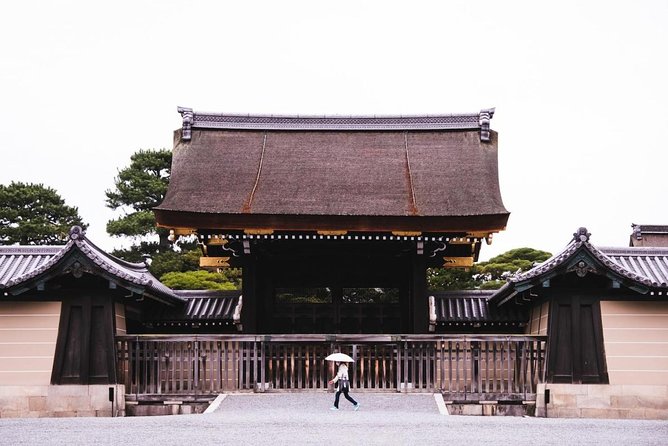
- Two seats of power in one tour: See the Tokugawa shogun’s castle and the emperor’s Kyoto residence in a single outing.
- Guides bring the symbols to life: Mia, Mie, Choko, and other listed guides explain architecture, politics, family lines, and court customs.
- About 2.5 hours door to door: Plan for one hour at each site, plus the transfer by public transport.
- Morning or afternoon departure: Choose the time that works best with the rest of your Kyoto plans.
- Entry and transit are included: You do not need to buy the site tickets or pay separately for the ride between stops.
- The endpoint changes your plans: You begin at Nijo Castle and finish in Kyoto Gyoen National Garden, in front of the Imperial Palace.
Why these two sites belong together
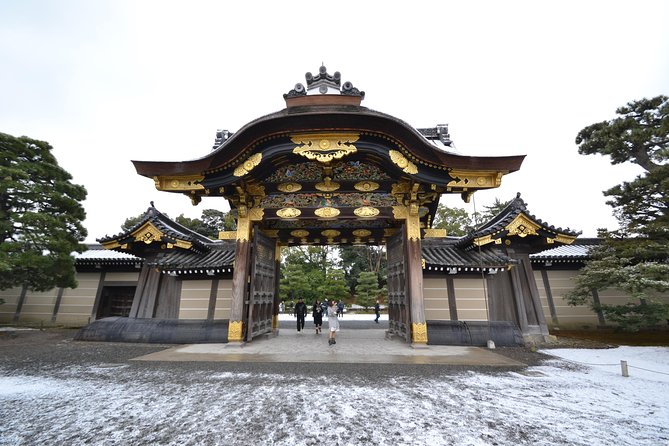
Kyoto can sometimes feel like a collection of separate temples, gardens, and historic buildings. This outing gives you a clear political thread. Nijo Castle represents the shogunate, the military government that controlled Japan for centuries. Kyoto Imperial Palace represents the emperor and the court.
That contrast makes the visit more than a tour of attractive rooms. You can see how different forms of authority were expressed through space, ceremony, and design. The guides focus on the Edo period, the Tokugawa shoguns, and the eventual transfer of power to Emperor Meiji.
I especially like this pairing for first-time visitors who know the word shogun but want to understand what it meant in practice. The guide can point out where meetings took place, explain who held power, and connect the buildings to the political changes that shaped modern Japan.
The tour is advertised as private for you and your party, while the operating information also describes a small group of fewer than eight and gives a maximum capacity of 11. Group size can therefore vary. If you want the most personal experience, ask about the group arrangement when booking.
More Royal Palace Tours in Japan
- Tokyo: Imperial Palace and Shogun Historical Walking Tour
★ 5.0 · 2,251 reviews - Tokyo: Imperial Palace Japanese History Walking Tour
★ 4.9 · 987 reviews - Tokyo: Imperial Palace and Shogun Walking Tour
★ 4.9 · 935 reviews
Starting at Nijo Castle
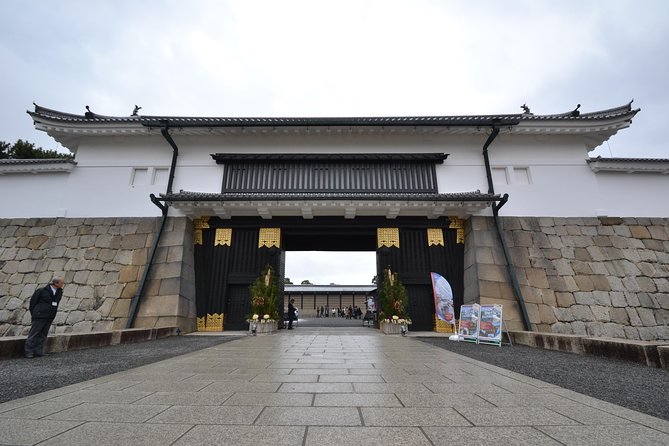
You meet the guide in front of Nijo Castle’s large white main gate at 541 Nijojocho, Nakagyo Ward. This is a straightforward meeting place, but arrive with enough time to find the gate and settle in before the scheduled start.
The first guided portion lasts about one hour, with admission included. The castle is the strongest stop for understanding the Tokugawa shogunate because it was built as a statement of shogun authority in Kyoto, the emperor’s ancient capital.
Inside, you can expect the guide to explain the castle’s rooms, the way official meetings worked, and the symbolism built into the interiors and grounds. One of the most useful details from the tour feedback is that guides do not simply name the buildings. They explain the why behind them, including the place of shogun meetings and the signs of rank and power.
The interior of Nijo Castle is an important part of this experience. Some sightseeing stops in Kyoto are mainly garden visits, but here you get to see the castle buildings as well as the grounds. That gives the first hour more substance, especially if you are curious about how the shogun’s government functioned.
Guide Mia receives particularly strong praise for mixing political history with lighter personal stories and humor. She has also used visual aids to explain difficult points, which can help when several names, titles, and changes of government begin to blur together. Guides identified as Mie, Choko, and Mike are also praised for clear English and strong command of the subject.
The one-hour limit is both useful and limiting. It keeps the tour moving and lets you see the second major site, but you will not have unlimited time to linger over every room or garden view. If Nijo Castle is your main reason for visiting Kyoto, you may want a separate, slower visit.
The transfer by public transportation
After Nijo Castle, you travel with the guide to Kyoto Imperial Palace by public transportation. The cost is included, and the guide handles the transfer as part of the outing.
This is a small but valuable feature. Kyoto’s transit system is manageable, but moving between two major sites can still take planning, especially when you are trying to match train or subway routes with timed admissions. Having the guide lead the way means you can continue asking questions instead of checking directions.
The transfer also creates a natural pause between the two parts of the story. At Nijo Castle, the focus is the shogun and military government. On the way to the palace, the guide can help connect that story to the imperial family and the later return of political authority to the emperor.
Public transport is included only during the tour. Food, drinks, and hotel pickup or drop-off are not included, so plan to reach the starting point on your own and arrange your onward travel from Kyoto Gyoen National Garden.
Seeing Kyoto Imperial Palace in one hour
The second guided stop lasts about one hour at Kyoto Imperial Palace. Entry is included, and the tour ends in front of the palace within Kyoto Gyoen National Garden.
The palace provides the other half of the story. Here, the guide focuses on the imperial family, court life, succession, and the role of the emperor. Several guides are praised for explaining the family line and the change in power from the Tokugawa government to Emperor Meiji.
This stop is especially useful if you want more than a pretty walk through palace grounds. The buildings and open spaces make more sense when you understand who used them and how ceremonial authority differed from the shogun’s practical control of government.
You should expect walking across a substantial historic site, with explanations along the way rather than a single indoor presentation. Comfortable shoes are a smart choice. The experience requires good weather, and the operator may offer another date or a full refund if poor weather forces cancellation.
One practical warning is important: the Imperial Palace portion can be affected by closures or events. A past visitor arrived to find the palace closed for an event, although the Nijo Castle tour still went ahead. This is not presented as the normal arrangement, but it is worth recognizing that access to major official sites can change.
Same city, another grand address:
- Tokyo Castle & Imperial PalaceーShogun Walking Tour
★ 4.7 · 1,068 reviews - Kyoto: Nijo-jo Castle and Ninomaru Palace Guided Tour
★ 4.7 · 1,020 reviews - Tokyo Castle & Imperial PalaceーShogun Walking Tour
★ 5.0 · 724 reviews - Imperial Palace East Garden and Edo Castle Walking Tour in Tokyo
★ 5.0 · 510 reviews
The guides are the main reason to choose this tour
The buildings are worth seeing on their own, but the guide determines how much you take away. The strongest praise centers on guides who are warm, funny, and able to explain complex history without turning the outing into a lecture.
Mia is the name most often associated with especially strong experiences. She is described as animated, personable, and well informed about the Tokugawa period, the shogun’s meetings, imperial succession, and the transfer of power to Emperor Meiji. She also answered detailed questions and offered restaurant suggestions, including a Kobe beef recommendation that one couple particularly enjoyed.
Mie is praised for clear English, visual aids, and a good balance between useful facts and time for questions. Choko is described as friendly and able to answer questions about both Japanese history and the sites themselves. Mike is also praised for explaining shogun and imperial history.
The spelling of guide names varies in the available information, so do not assume that Mia will be your assigned guide. The broader point is that the experience depends heavily on the individual guide’s presentation. The feedback is consistently positive about the guiding style, but a tour is still a live experience, and the exact guide and group size may vary.
I would choose this format over an audio guide if you enjoy asking questions. You can stop to clarify unfamiliar terms, ask about architecture or politics, and request more detail when a particular story catches your interest.
Price, timing, and overall value
At $79.18 per person, this is not the cheapest way to walk around Kyoto. It is also not simply an admission ticket. The price includes entry to both sites, public transport between them, and an English-speaking guide for roughly two and a half hours.
The value depends on what you want from the visit. If you are happy reading signs and finding your own way, you can save money by visiting independently. If the difference between a shogun and an emperor still feels vague, the guide may be worth the extra cost because the two locations become part of one understandable story.
The small-group setup also improves the value. A guide can respond to your questions and point out details you might walk past alone. One booking even turned out to be a private experience because no other participants arrived, though you should not count on that happening.
Morning and afternoon choices make the tour easy to fit into a Kyoto schedule. You can place it before another central Kyoto activity or use it as a focused history lesson in the middle of the day. Since the tour ends at the palace rather than the castle, check your plans afterward before booking.
There is a group discount option, but the exact discount is not specified here. If you are traveling with several people, check the final price carefully. The per-person rate may become more appealing for a family or small party that wants a guide without arranging a fully custom private tour.
Who will get the most from this experience
I would recommend this tour to you if:
- You want a clear introduction to the shogun era and imperial history.
- You prefer explanations from a person rather than signs or an app.
- You are visiting Kyoto for the first time and want two major historic sites handled in one outing.
- You enjoy asking questions about politics, culture, architecture, or Japanese society.
- You want entry fees and the inter-site transfer bundled into one price.
- You can manage a couple of hours of walking and a fairly brisk schedule.
It may be less suitable if you want to photograph every corner at your own pace or spend a full morning at Nijo Castle alone. The one-hour limit at each site keeps the experience efficient, but it does not allow a slow, deeply detailed inspection.
Most travelers can participate, and service animals are allowed. The tour is near public transportation, but there is no hotel pickup or drop-off. Bring water for your own use, since food and drinks are not included, and wear comfortable shoes.
A few practical details that matter
Meet at Nijo Castle, not at the Imperial Palace. The exact starting address is 541 Nijojocho, Nakagyo Ward, Kyoto 604-8301. The tour ends at Kyoto Gyoen National Garden, 3 Kyotogyoen, Kamigyo Ward, Kyoto 602-0881, in front of the Imperial Palace.
You receive confirmation within 48 hours of booking, subject to availability. The tour has free cancellation if you cancel at least 24 hours before the local start time. Changes or cancellations made later are not accepted for a refund.
The experience requires good weather. If the operator cancels because of poor weather, you can choose another date or receive a full refund.
Should you book Nijo Castle and Imperial Palace Visit with Guide?
Book it if you want the political story behind Kyoto’s famous buildings, not just a quick look at them. The pairing is smart, the included transit removes a small logistical nuisance, and the guides are praised for making the shogun era, imperial family, and symbols of power easy to follow.
I would be especially happy recommending it to first-time Kyoto visitors, families, and anyone who has watched a samurai drama and wants the real setting explained. Just keep your expectations realistic: this is a brisk two-and-a-half-hour introduction, not an exhaustive examination of both sites. If that pace suits you, $79.18 is a fair price for admission, transport, and a guide who can turn two impressive places into one coherent lesson.
FAQ
How long does the tour last?
The experience lasts approximately two hours and 30 minutes. You spend about one hour at Nijo Castle, one hour at Kyoto Imperial Palace, and the remaining time transferring between them by public transportation.
Where does the tour begin?
The tour begins in front of the large white main gate of Nijo Castle at 541 Nijojocho, Nakagyo Ward, Kyoto 604-8301, Japan.
Where does the tour end?
The tour ends in front of Kyoto Imperial Palace in Kyoto Gyoen National Garden at 3 Kyotogyoen, Kamigyo Ward, Kyoto 602-0881, Japan.
Are admission fees included?
Yes. Entrance fees for Nijo Castle and Kyoto Imperial Palace are included in the tour price.
Is public transportation included?
Yes. Public transportation between Nijo Castle and Kyoto Imperial Palace is included. Hotel pickup and drop-off are not included.
Is this a private tour?
The experience is described as private for you and your party, while the operating details also describe a small group of fewer than eight and a maximum of 11 participants. Group size may therefore vary.
Can I cancel for a refund?
You can cancel for a full refund up to 24 hours before the local start time. Cancellations or changes made less than 24 hours before the start are not refunded. If poor weather causes the operator to cancel, you can receive a full refund or choose another date.
Newly added in Japan
- Kyoto Imperial Palace and Nijo Castle Walking Tour★ 5.0 · 10 reviews
- Kyoto Imperial Palace & Nijo Castle Guided Walking Tour – 3 Hours★ 4.5 · 106 reviews
- Tokyo walking tour around Imperial Palace and Tokyo Station★ 5.0 · 3 reviews
- Tokyo: Imperial Palace, the history of Japan (ENGLISH GUIDE)★ 5.0 · 77 reviews
- Tokyo: Imperial Palace with Nostalgic Alley Kagurazaka tour★ 4.3 · 8 reviews
- Tokyo: Pvt. Tour – Edo Castle & Imperial Palace East Gardens★ 4.8 · 63 reviews
- Tokyo: Edo Castle Ruins & Imperial Palace East Garden Tour★ 4.4 · 13 reviews
- Tokyo: Edo Castle and Imperial Palace Guided Walking Tour★ 5.0 · 6 reviews
Royal Palace Tours, compared.


Royal Palace Expert Guided Tour with Skip-the-Line
Read our review →
Dubai To Abu Dhabi: Grand Mosque, Royal Palace & Etihad Towers
Read our review →

Abu Dhabi Day-Trip Grand Mosque, Royal Palace & Lunch
Read our review →

Louvre Entry & Etihad Tower/Royal Palace Options
Read our review →Browse the lists this tour appears in