
Review · ROYAL PALACE TOURS
Kyoto: Discover Every Bit of Kyoto Imperial Palace
Kyoto Imperial Palace is not just a collection of old buildings. It was the working home of Japan’s imperial family until the capital moved to Tokyo in 1869, and its broad courtyards and formal halls still show how ceremony shaped court life. The most rewarding part is seeing Shishinden, the grand hall used for major imperial events, then comparing it with the quieter spaces connected to everyday life.
I like this experience for two clear reasons. First, an English-speaking guide can explain why each hall mattered instead of leaving you to guess from the architecture. Second, the inner garden and traditional buildings offer a calm break from Kyoto’s busier sightseeing spots. The main caution is value: admission to the palace is free, so you are paying $38 mainly for the guide, and the quality of interpretation can vary.
Key points to know before booking
- Shishinden is the star attraction: See the majestic hall where emperors held important ceremonies and learn why its design carries such weight.
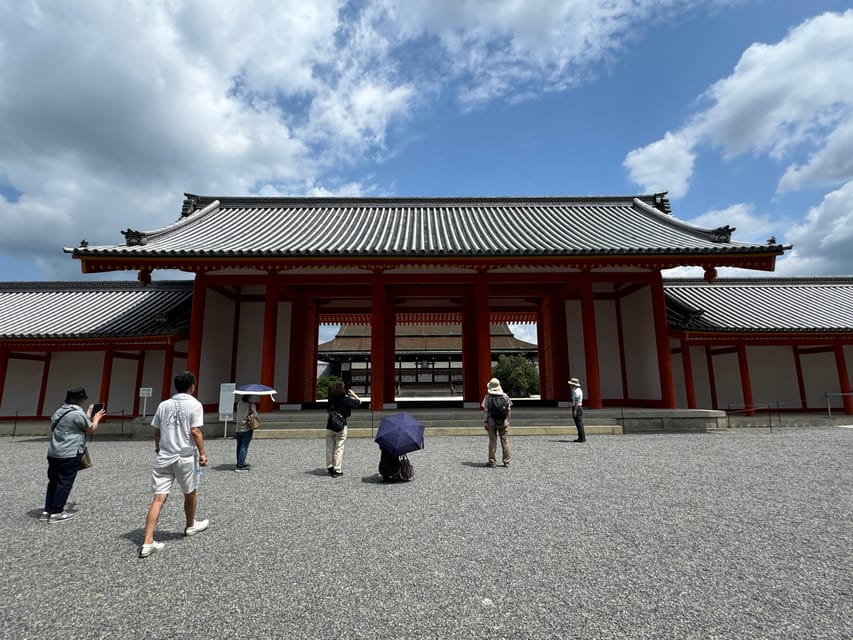
- The tour begins at Hamaguri Gate: Meet in front of Hamagurigomon, where your guide will hold a yellow DeepExperience sign.
- You pay for explanation, not admission: Entry to Kyoto Imperial Palace is free, while the $38 price covers the guided experience.
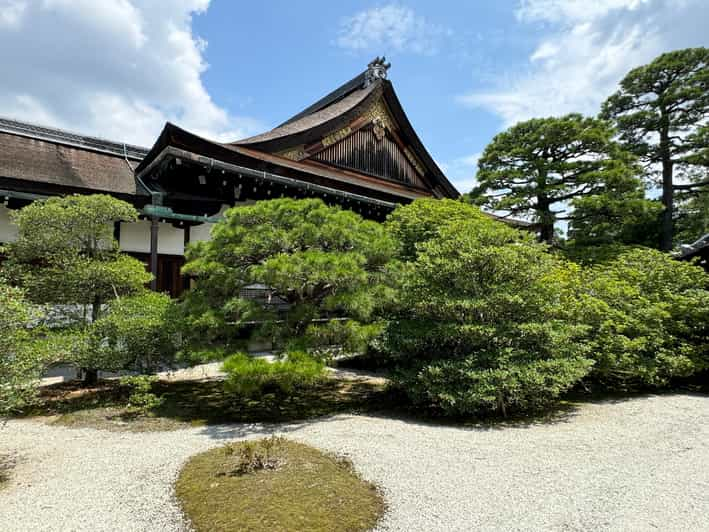
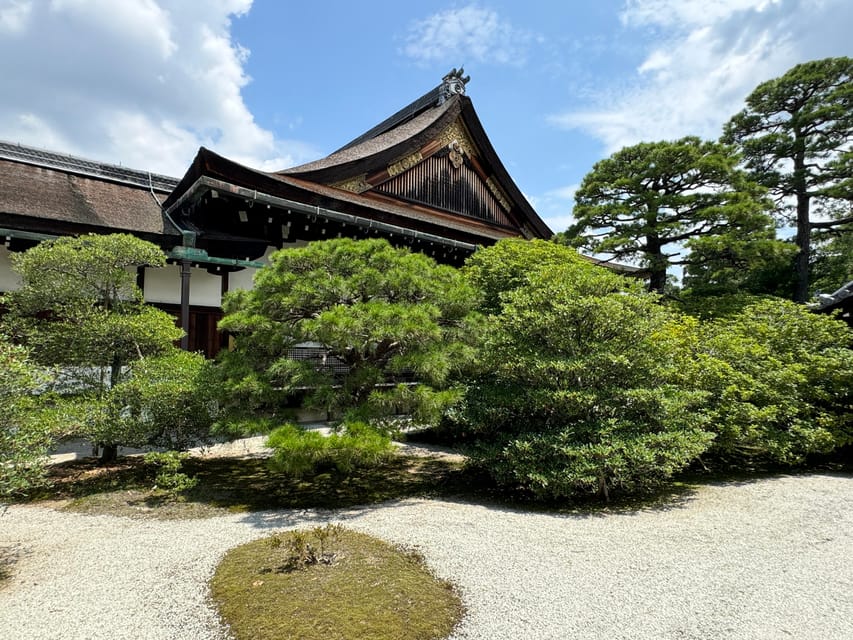
- The gardens add welcome quiet: Carefully planted grounds and the interior garden bring a softer, more personal side of the palace visit.
- Guide quality matters: Yoshi has received particular praise for explaining Japanese history and spotting small details, though one poor experience shows that the guide can make or break the tour.
- Check the stated length: The activity is advertised as one hour, while the detailed visit schedule says about 1.5 hours, so confirm the exact start and finish time.
Why Kyoto Imperial Palace deserves a place in your day
Kyoto Imperial Palace gives you a direct look at Japan’s imperial past in the former capital. The imperial family lived here before Tokyo became the national capital in 1869, so the site connects Kyoto’s political importance with the customs of the court.
You are not simply walking through a scenic park. The palace complex was arranged around rank, ritual, privacy, and official business. Some buildings were designed for grand public ceremonies. Others served the emperor’s household or supported the daily work of the court.
That distinction makes a guide useful. Japanese palace architecture can look restrained at first glance. A knowledgeable guide, though this word is banned? Need remove. “A good guide can point out…” A good guide can point out why one hall feels formal and another feels more private, and can explain what the buildings reveal about imperial life.
The setting also helps. Kyoto Gyoen National Garden surrounds the palace, giving you open space and a slower pace before and after the visit. You get a mix of formal architecture, garden scenery, and historical context without needing a full-day commitment.
More Royal Palace Tours in Japan
- Tokyo: Imperial Palace and Shogun Historical Walking Tour
★ 5.0 · 2,251 reviews - Tokyo: Imperial Palace Japanese History Walking Tour
★ 4.9 · 987 reviews - Tokyo: Imperial Palace and Shogun Walking Tour
★ 4.9 · 935 reviews
Meeting at Hamaguri Gate
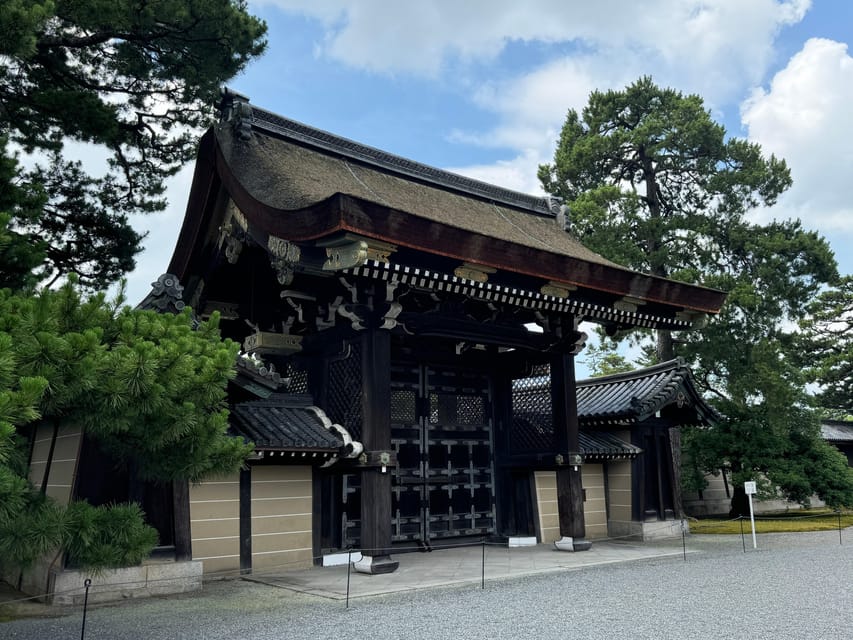
Your visit starts at Hamaguri Gomon Gate, also called Hamagurigomon. You meet in front of the gate, where the guide waits with a yellow sign marked DeepExperience.
This meeting point is specific, but Kyoto has several large gates, gardens, and palace approaches. Give yourself enough time to locate Hamaguri Gate rather than arriving at the last minute. The supplied meeting instructions point you to the map for the exact position, so check it before leaving for the tour.
The gate makes a fitting starting point. It introduces the scale and formality of the palace grounds before you reach the principal buildings. It also gives you a clear place to regroup at the end, since the tour returns to Hamaguri Gate.
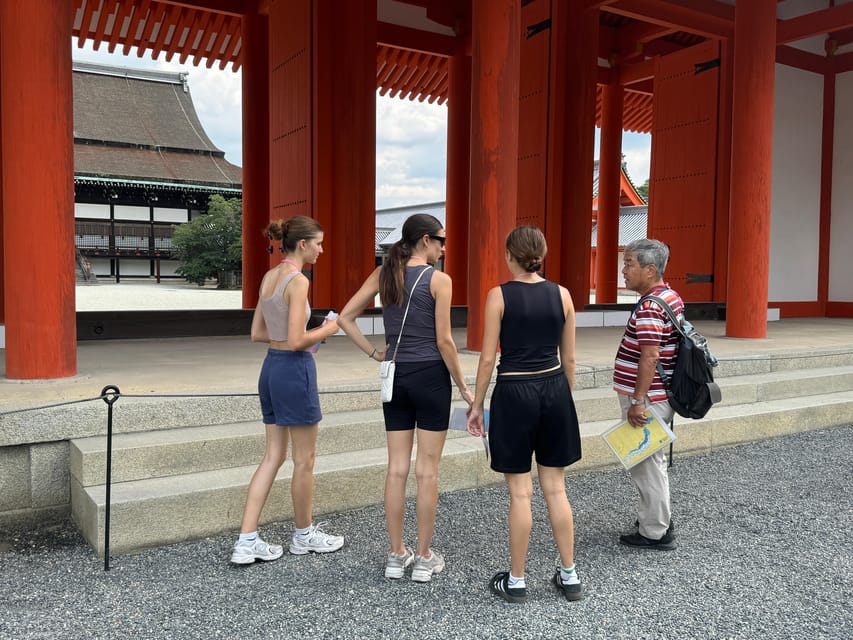
The experience is offered as a private visit or in a small group. That matters here. Imperial architecture often rewards questions, and a smaller setting should make it easier to ask about court customs, ceremonies, or details you do not understand.
Shishinden and the grand ceremonial spaces
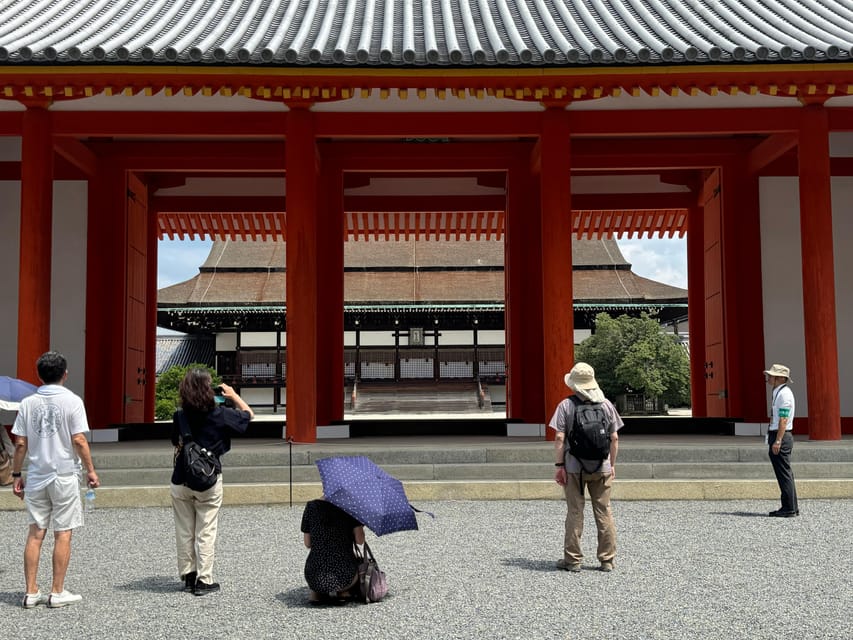
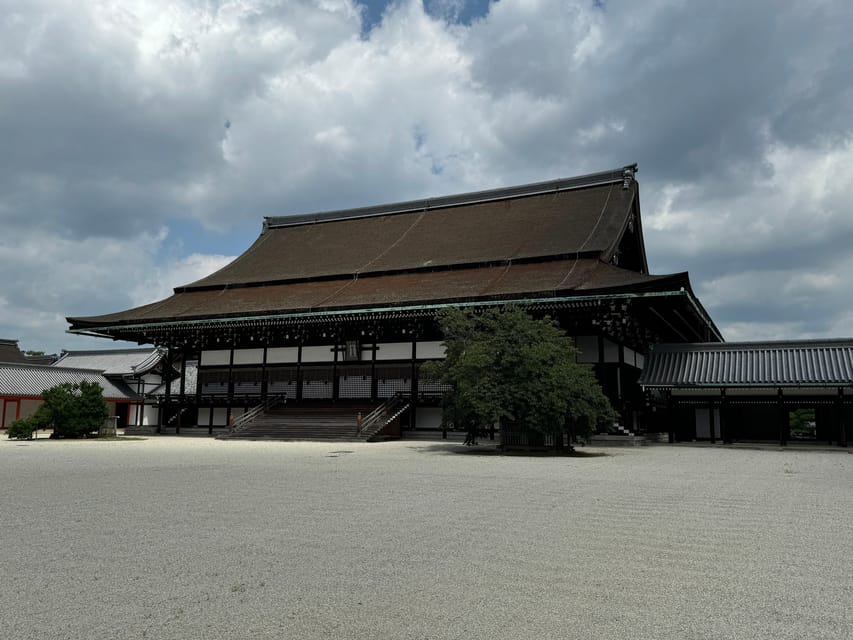
The central highlight is Shishinden, the main hall used for important imperial ceremonies. Its role is more significant than its appearance alone might suggest. This was a place built for public ritual and imperial authority, not ordinary domestic life.
Your guide can help you read the building as a ceremonial setting. Pay attention to the scale, the ordered layout, and the careful separation between formal functions and private spaces. The point is not just to admire the roofline or timber construction. It is to understand how the building supported a system of rank and tradition.
The palace includes other halls and structures used for official functions. Each one adds another piece to the story. Some spaces were intended for formal meetings and major events, while others were connected to the emperor’s household.
I would give Shishinden your full attention, even if you are already familiar with Japanese architecture. The hall is the clearest expression of the palace’s public face. It helps explain why the imperial court needed such a carefully ordered complex.
The buildings are also valuable for visitors who want more than a temple or shrine visit. Kyoto has many religious sites, but the palace shows a different side of Japanese culture. Here, ritual is tied to government, family, status, and the duties of the imperial household.
The emperor’s residence and the quieter side of court life
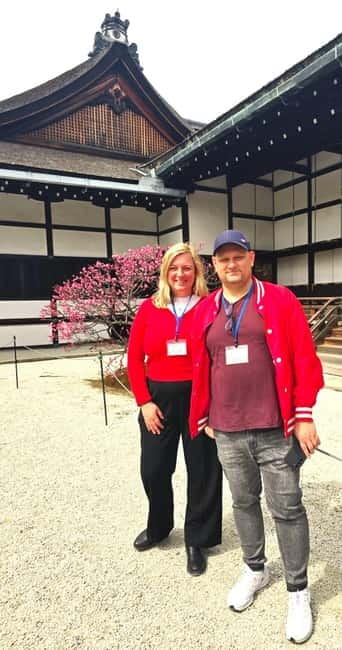
After the ceremonial halls, the tour turns toward spaces linked with the emperor’s personal residence. This is where the visit becomes less about spectacle and more about daily court life.
The contrast is useful. Grand halls can feel remote, designed for events that involved ceremony and public attention. A personal residence suggests routines, privacy, and the human side of the imperial family. Your guide can connect these spaces to the way the court operated from day to day.
Do not expect a modern palace tour filled with rooms open for long browsing. The value comes from the arrangement of the complex and the explanation of what each part was used for. You are learning how official and personal life fit together within the same imperial setting.
This section may be especially worthwhile if you are interested in Japanese customs and social structure. The palace helps you see that imperial life was not only about major ceremonies. It also depended on habits, rules, and spaces that supported everyday responsibilities.
Same city, another grand address:
- Tokyo Castle & Imperial PalaceーShogun Walking Tour
★ 4.7 · 1,068 reviews - Kyoto: Nijo-jo Castle and Ninomaru Palace Guided Tour
★ 4.7 · 1,020 reviews - Tokyo Castle & Imperial PalaceーShogun Walking Tour
★ 5.0 · 724 reviews - Imperial Palace East Garden and Edo Castle Walking Tour in Tokyo
★ 5.0 · 510 reviews
Gardens that soften the formal architecture
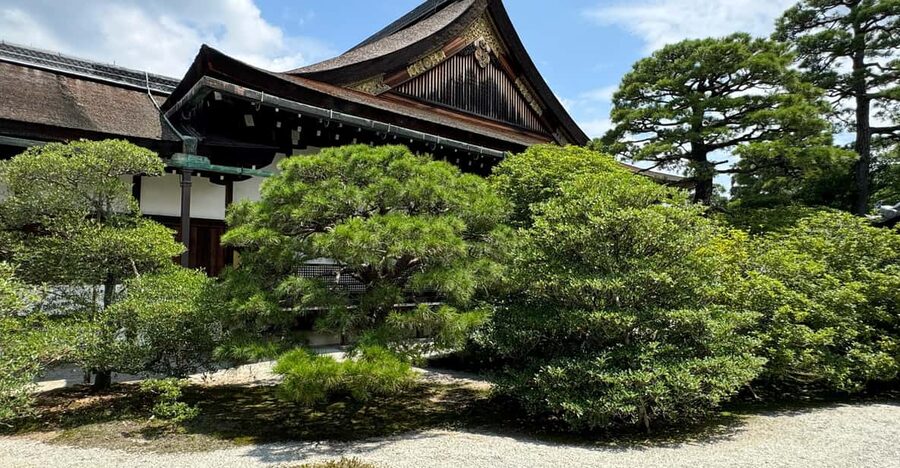
The palace grounds include carefully planted gardens, and the interior garden is one of the most memorable parts of the visit. One detailed account describes it as jaw-droppingly beautiful, which is strong praise, but it points to a real strength of the experience: the gardens give the tour a change of mood.
The ceremonial halls ask you to look upward and outward at architecture, scale, and official purpose. The gardens slow you down. You can notice paths, plantings, open views, and the relationship between buildings and nature.
I like this balance. A full hour or so of halls and historical explanation could feel dense, especially if you are visiting several cultural sites in the same day. The gardens offer visual rest without taking you away from the central story.
The grounds are also a good place to take photographs, although the tour’s main purpose is interpretation rather than a photo session. One guide was described as taking pictures for the group, but you should not book this expecting a dedicated photography service. Your guide may help with photos, but that is not the core offering.
What the guide adds, and where the risk lies
The $38 price makes sense only if you want context. Admission to Kyoto Imperial Palace is free, so the fee is not paying for access to a ticketed attraction. It pays for an English-speaking guide, the structure of the visit, and the chance to ask questions.
At its best, the guide turns an elegant but quiet complex into a readable historical place. Yoshi, in particular, has been praised for explaining Japanese history and pointing out interesting details within the palace grounds. That kind of attention can make a short tour feel much more useful.
The experience is not guaranteed to be equally strong with every guide. One poor account describes a guide who offered little information and mostly walked alongside the group while taking some pictures. That is a serious weakness for a tour whose main product is explanation.
Another visitor found the booking unnecessary and felt the accessible areas could be seen without a guide. That criticism is fair. If you are comfortable reading signs, studying architecture on your own, and doing your own research, you may prefer a free self-guided visit.
I would book this tour if you want help making sense of imperial customs and ceremonial spaces. I would skip it if you only want to stroll through the grounds and take photographs. The difference between those two expectations is the difference between good value and poor value.
Is one hour enough for the palace?
The activity information gives a one-hour duration, while the detailed schedule describes a 1.5-hour guided visit. That discrepancy is worth checking before you book, especially if you are fitting the palace between a meal, train journey, or another timed attraction.
Either way, this is a short visit rather than a full-day program. You will focus on Kyoto Imperial Palace itself, beginning and ending at Hamaguri Gate. There is no listed transportation between attractions, and no other stop is included.
A short format can be a plus. You get a focused look at the palace without committing half a day. It works well for an itinerary that already includes temples, shrines, or museums.
The limit is that you may not have time for long pauses or extended discussion at every building. If you like to linger, ask many questions, or take a lot of photographs, the longer interpretation may feel tight. Ask the provider to confirm the expected duration and starting time when you check availability.
Who will get the most from this visit?
This experience suits first-time visitors who want a plain explanation of Japan’s imperial family and the role of the Kyoto court. It is also a good fit if you have seen many temples and shrines and want a different part of Kyoto’s past.
You will likely appreciate it if you enjoy:
- Japanese political and court history, especially the period before the capital moved to Tokyo
- Traditional architecture, with an interest in how buildings were used rather than only how they look
- Gardens and quiet public spaces, especially as a break from busier sightseeing
- Small-group discussion, where you can ask about ceremonies, residences, and customs
- A short cultural stop, rather than a long guided day
Families and mixed-interest groups may also find the guide helpful because the palace can be hard to interpret at a glance. Still, younger children who need constant activity may find the formal halls and historical explanation slow.
Independent visitors should think carefully about the fee. Since entry is free, you can visit the grounds without paying for a guide. The $38 cost is easiest to justify when you want an English explanation and the chance to ask questions.
Practical details that affect the value
The listed price is $38 per person. Entry to Kyoto Imperial Palace is included at no charge, so the cost is essentially for the guide and organized visit. That is reasonable for a private or small-group explanation, but it is not a bargain if the guide gives little historical context.
The tour is conducted in English. You should expect a live guide rather than an audio recording or printed route. That gives you the benefit of questions, but it also means the quality depends heavily on the individual guide.
Free cancellation is available up to 24 hours before the activity for a full refund. You can also reserve now and pay later, which helps if your Kyoto schedule is still changing. These terms are useful, but they do not change the central booking decision: are you paying for information you would otherwise miss?
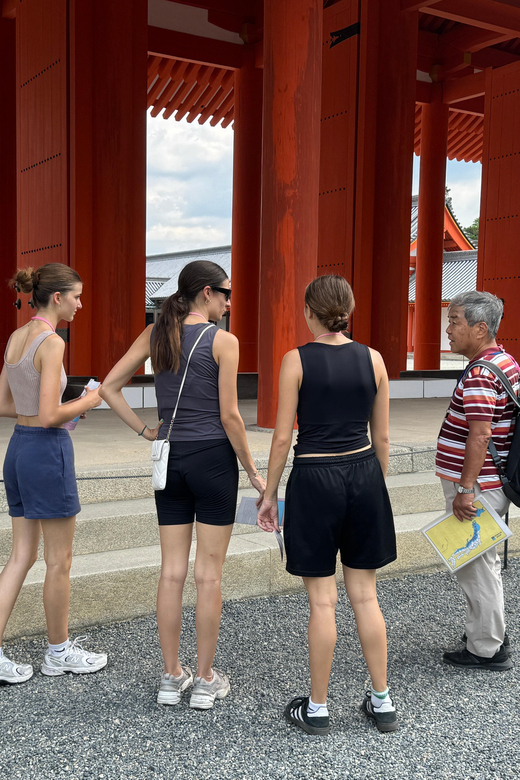
Look for the yellow DeepExperience sign at Hamaguri Gate. Because the meeting point is outside the palace complex, a little planning will help you arrive calm and ready rather than searching around the garden.
My call on Kyoto Imperial Palace
I would book this tour if you want the palace explained in clear English, prefer a small group or private format, and care about the difference between ceremonial halls, official spaces, and the emperor’s residence. The gardens and Shishinden give the visit strong visual appeal, while a good guide adds the cultural detail that free entry alone does not provide.
I would not book it solely for access. You can enter the palace without paying admission, and some people will be perfectly happy exploring on their own. The guide is the whole reason to spend $38.
If you choose it, confirm the duration and keep your expectations focused on history, architecture, and court life. Try to request or select a guide with the kind of historical command shown by Yoshi, since the tour’s value depends far more on interpretation than on the buildings themselves.
FAQ
Where does the Kyoto Imperial Palace tour begin?
The meeting point is in front of Hamaguri Gate, also called Hamagurigomon, at Kyoto Imperial Palace. The guide will hold a yellow sign marked DeepExperience.
Where does the tour finish?
The tour returns to Hamaguri Gate, the same place where it begins.
How much does the tour cost?
The listed price is $38 per person.
Is entry to Kyoto Imperial Palace included?
Yes. Entry to Kyoto Imperial Palace is included at no charge. The $38 price is for the guided experience.
How long does the tour last?
The activity is described as lasting one hour, while the detailed visit schedule gives the guided palace visit as 1.5 hours. Check the available starting time and confirm the expected length before booking.
Is the tour conducted in English?
Yes. The live tour guide language is English.
Is this a private tour or a group tour?
Private and small-group options are available.
Can I cancel for a refund?
Yes. You can cancel up to 24 hours in advance for a full refund.
Can I reserve now and pay later?
Yes. The activity allows you to reserve your place and pay later.
Newly added in Japan
- Kyoto Imperial Palace and Nijo Castle Walking Tour★ 5.0 · 10 reviews
- Nijo Castle and Imperial Palace Visit with Guide★ 5.0 · 53 reviews
- Kyoto Imperial Palace & Nijo Castle Guided Walking Tour – 3 Hours★ 4.5 · 106 reviews
- Tokyo walking tour around Imperial Palace and Tokyo Station★ 5.0 · 3 reviews
- Tokyo: Imperial Palace, the history of Japan (ENGLISH GUIDE)★ 5.0 · 77 reviews
- Tokyo: Imperial Palace with Nostalgic Alley Kagurazaka tour★ 4.3 · 8 reviews
- Tokyo: Pvt. Tour – Edo Castle & Imperial Palace East Gardens★ 4.8 · 63 reviews
- Tokyo: Edo Castle Ruins & Imperial Palace East Garden Tour★ 4.4 · 13 reviews
Royal Palace Tours, compared.

Royal Palace Expert Guided Tour with Skip-the-Line
Read our review →
Dubai To Abu Dhabi: Grand Mosque, Royal Palace & Etihad Towers
Read our review →

Abu Dhabi Day-Trip Grand Mosque, Royal Palace & Lunch
Read our review →

Louvre Entry & Etihad Tower/Royal Palace Options
Read our review →Browse the lists this tour appears in