
Review · PALACE WALKING TOURS
Tokyo: Edo Castle and Imperial Palace Guided Walking Tour
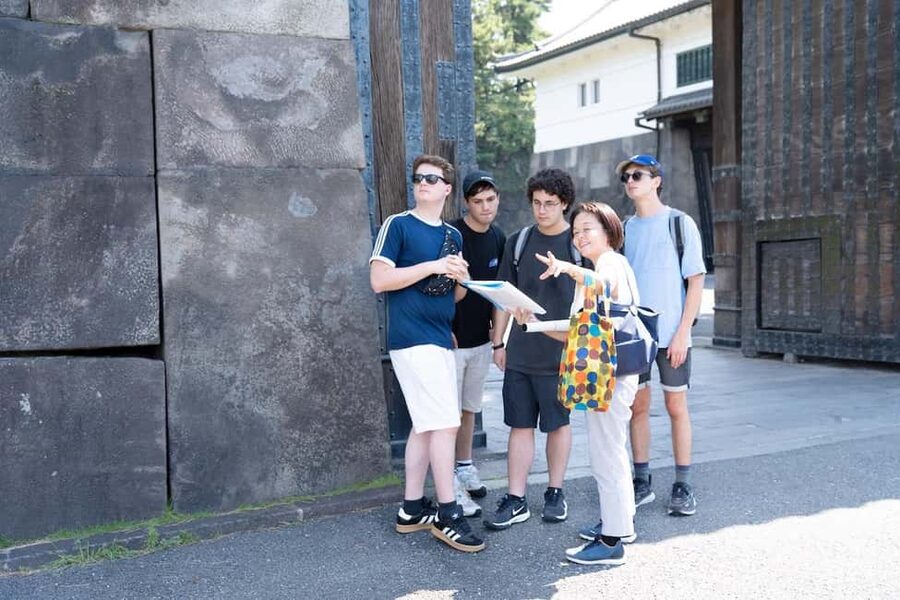
Tokyo’s Imperial Palace is more than a handsome royal compound. Beneath its lawns and guarded gates sits Edo Castle, the former seat of the Tokugawa shoguns and the political center of Japan for 260 years. This walking tour helps you read the place through its stone walls, moats, gates, and vanished buildings.
I like the old map of Edo, which gives you a useful picture of the city before modern Tokyo took shape. I also like the small group size, limited to eight people, since that leaves room for questions. The main consideration is simple: you will walk for 150 minutes, so comfortable shoes matter, and the route is more about interpretation and surviving structures than grand interiors.
Key details that shape the experience
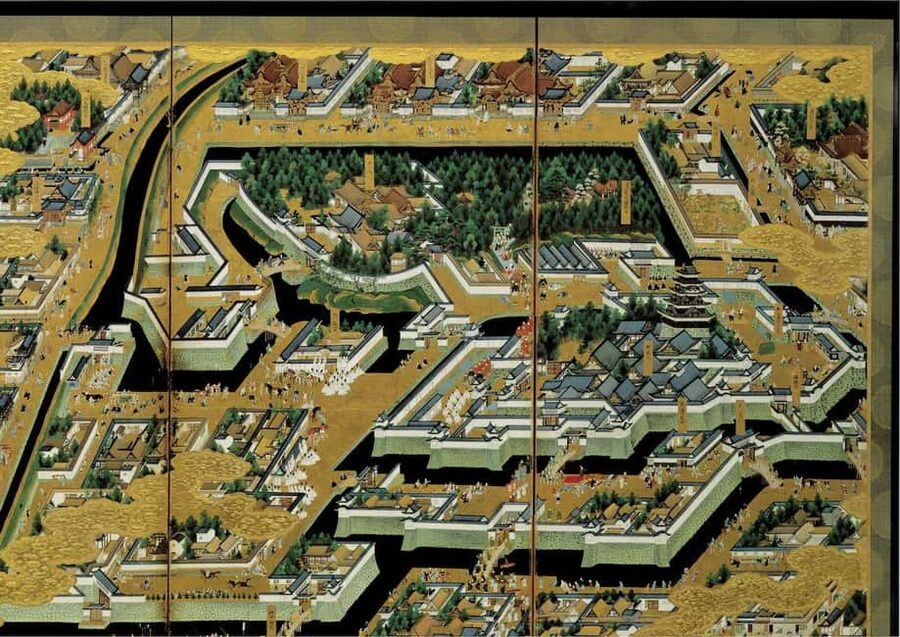
- A 1650s map turns the castle grounds into a story, helping you picture Edo as the center of shogun government.
- The route links major gates and guard posts, including Sakurada-mon, Kikyo-mon, Ote-mon, Hyakunin Bansho, and Hirakawa Gate.
- The former Honmaru, or main compound, gets 30 minutes, the longest stop on the walk.
- Stonework is part of the lesson, with attention to different wall-building styles and the work assigned to feudal lords.
- The Imperial Palace is part of a living institution, not only an archaeological site, since it remains the Emperor’s residence.
- The tour costs $3.22 per person, an unusually low price for a guided two-and-a-half-hour walk, though meals and transport to the meeting point are not included.
Start at Tokyo Station’s Marunouchi South Gate
Your meeting point is the ground floor of Tokyo Station’s Marunouchi South Exit, beside the distinctive historic yellow-colored dome. The coordinates provided are 35.68048457383692, 139.76571024138642.
This is a sensible place to begin. Tokyo Station is easy to identify, but it is large, so give yourself time to reach the correct exit. You do not want to begin a history lesson while still trying to find the station doors.
From the station, the group walks about five minutes to the Mitsubishi Ichigokan Museum. The guided stop here lasts about 10 minutes. The museum is not the main subject of the tour, but its position helps connect modern Marunouchi with the older castle district nearby.
You will spend much of the tour outdoors. Bring weather-appropriate clothing, and use shoes that can handle a long urban walk. The activity is listed as wheelchair accessible, which is useful information when planning, but the route still involves several outdoor sites and walking between them.
More Palace Walking Tours in Japan
- Tokyo: Imperial Palace and Shogun Historical Walking Tour
★ 5.0 · 2,251 reviews - Tokyo Castle & Imperial PalaceーShogun Walking Tour
★ 4.7 · 1,068 reviews - Tokyo: Imperial Palace Japanese History Walking Tour
★ 4.9 · 987 reviews
Sakurada-mon and the outer defenses
After roughly seven minutes on foot, you reach Sakurada-mon Gate. The guide spends about 10 minutes here, giving you time to look at the gate as part of the castle’s defensive system rather than as an isolated photo stop.
This is where the tour’s method becomes clear. Instead of rushing from landmark to landmark, the guide uses gates, walls, and water defenses to explain how the castle worked. The broad subject is Tokugawa government, but the physical evidence keeps the talk grounded.
The route then moves through several shorter stops. A five-minute guided pause at a location in Chiyoda is followed by the Sakashita Gate security post, another five-minute stop. You will also see Kikyo-mon Gate, where the guide explains another part of the castle’s access system.
These visits are brief, but they add up. A castle is easier to understand when you see how movement was controlled, which routes were watched, and how visitors approached the inner areas.
Yagura, Ote-mon, and the language of stone
Sakurada Tatsumi Yagura gets about six minutes. A yagura is a fortified turret, and this stop gives you another chance to see how defensive structures fitted into the castle walls.
At Ote-mon Gate, the guide pauses for five minutes before continuing to the Ote-San’no Gate ruins. These locations help mark the transition from the outer parts of the castle toward more restricted areas.
The stone walls deserve your attention here. The walk includes explanations of different masonry methods, including cut stone fitting and stones set with more visible variation. One especially useful point is that major feudal lords were involved in the castle’s construction, and their work could show subtle differences in style.
That detail turns an ordinary wall into evidence. You are not just looking at gray blocks. You are looking for changes in workmanship and asking who built each section, how it was fitted, and why the castle required such a large effort.
Hyakunin Bansho and the people behind the walls
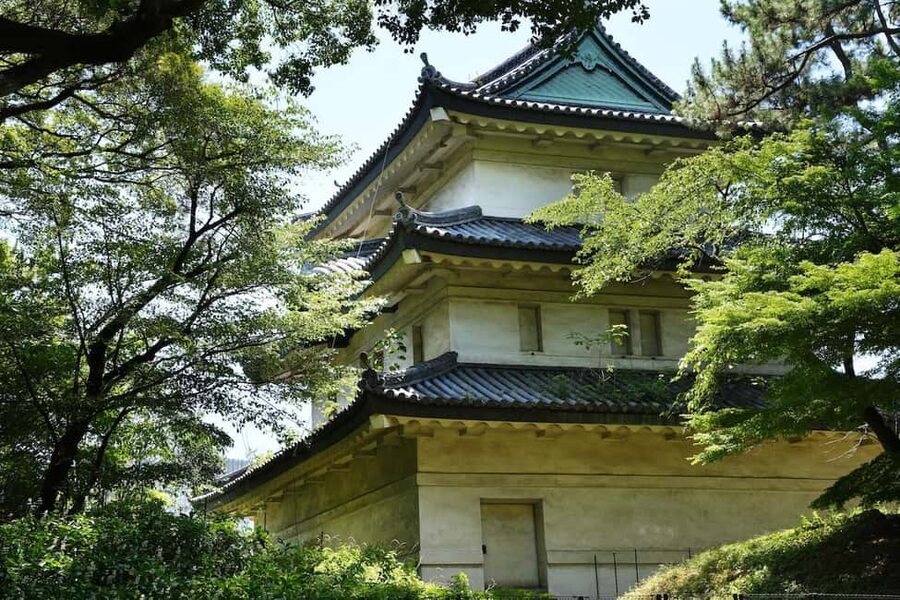
The Hyakunin Bansho Guardhouse receives about seven minutes. Its name points to a guardhouse associated with a large body of guards, and it provides a human scale for the castle.
The castle was a government center, a residence, and a controlled working world. The guide’s purpose is to help you think about the people who lived and worked here, not only the most famous rulers.
This is one of the tour’s better features. A palace or castle can become a string of dates and names. Short stops at guardhouses and gates make the system more understandable. You begin to picture the practical side of power: entrances, watch points, rules, and layers of access.
The tour also covers the Tokugawa Shogunate and the Meiji Restoration. That gives you a clear before-and-after frame. Edo Castle was the center of the shogunate for 260 years. After the Meiji Restoration, it became the Imperial Palace, linking the site’s military and political past with its present role.
More Royal Palace Tours in Japan
- Tokyo: Imperial Palace and Shogun Walking Tour
★ 4.9 · 935 reviews - Imperial Palace East Garden and Edo Castle Walking Tour in Tokyo
★ 5.0 · 510 reviews - Tokyo: Imperial Palace East Gardens Walking Tour
★ 4.8 · 353 reviews - Tokyo: Imperial Palace, Sensō-ji Temple, & Tokyo Tower Tour
★ 4.5 · 339 reviews
Honmaru, the heart of Edo Castle
The longest stop comes at the site of Edo Castle’s Honmaru, or main hall. The guide spends about 30 minutes here, so this is the main classroom of the walk.
There is no promise of a grand surviving palace interior. Instead, you use the open site, walls, and the map of Edo in the 1650s to reconstruct what once occupied this ground. That makes the guide important. Without context, a large open area can feel like an empty patch of grass. With the right explanation, it becomes the former center of shogun authority.
A particularly interesting subject is the Meireki Great Fire. After the fire, work continued on the castle’s stone base for a new keep, but the decision was made to put resources into rebuilding Edo rather than rebuilding the keep itself. That choice says a great deal about priorities. The city’s recovery mattered more than restoring a symbolic tower.
You may also hear about the political side of the Ooku, the women’s quarters connected with the shogun’s household. The subject is more than palace gossip. It shows that private spaces could have political meaning in a ruling household.
The guide also discusses the Fujomon, a gate associated with disposal and restricted movement, and the Obikuruwa area. These less glamorous details are valuable because they show that castle life involved rules, service, labor, and unpleasant necessities as well as ceremony.
If you enjoy old buildings mainly for intact rooms and decorative interiors, this stop may feel sparse. If you like reconstructing lost places from clues, it is likely to be the most rewarding part of the walk.
Kita-Hanebashi and the final stretch
After Honmaru, the route continues to Kita-Hanebashi Gate, with a five-minute explanation. You then walk about five minutes to Takebashi, where the guide pauses again.
The route is not one long lecture. It alternates between walking and short explanations, with the longer Honmaru stop giving the central story more room. That rhythm helps, though you should still expect a steady amount of outdoor time.
The final major stop is Hirakawa Bridge, reached after another five-minute walk. The guided explanation lasts about seven minutes, and the tour finishes at Hirakawa Gate.
Ending here gives the walk a clear sense of movement across the castle grounds. You begin at Tokyo Station, pass through the outer defenses and inner castle sites, then finish at another historic access point. Check your onward plans before you start, since the activity ends at Hirakawa Gate rather than returning to the station.
What the guide adds
The English-speaking guide is the main reason to choose this experience over a self-guided stroll. The route includes many short stops, and the physical remains do not always explain themselves. A guide can connect a gate to the castle’s security system, a wall to feudal construction, and an open site to the vanished main hall.
The strongest material is the kind that rewards questions. You can ask about Tokugawa government, the Meiji Restoration, the castle’s residents, stonework, or the decisions made after the great fire.
The group is limited to eight people. That is small enough for a more personal walk and makes it easier to hear at each stop. It also gives you a better chance to ask about details that interest you, rather than being carried along in a large crowd.
A small gift is included. It is not the reason to book, but it is a pleasant extra at this price.
Is $3.22 good value?
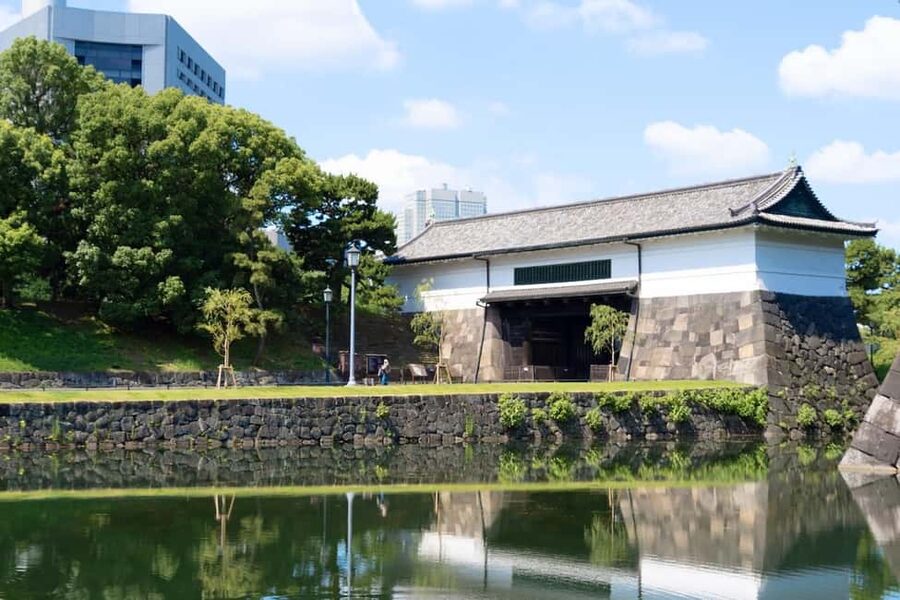
At $3.22 per person, the price is remarkably low for 150 minutes with an English-speaking guide. Even if you treat the walk as a short orientation to the Imperial Palace area, you are getting a great deal of explanation for very little money.
The value depends on what you want. You are paying for a guided outdoor history walk, not for meals, transportation to Tokyo Station, or access to palace rooms. The main reward is understanding the site.
The price also makes this easy to add to a Tokyo schedule. You do not need to commit to a full-day excursion, and the route covers a part of the city that many people see only from the outside.
The tradeoff is that the low cost should not lead you to expect elaborate production or a large collection of indoor attractions. The experience rests on the guide, the map, and the surviving castle fabric.
Who should book this walk?
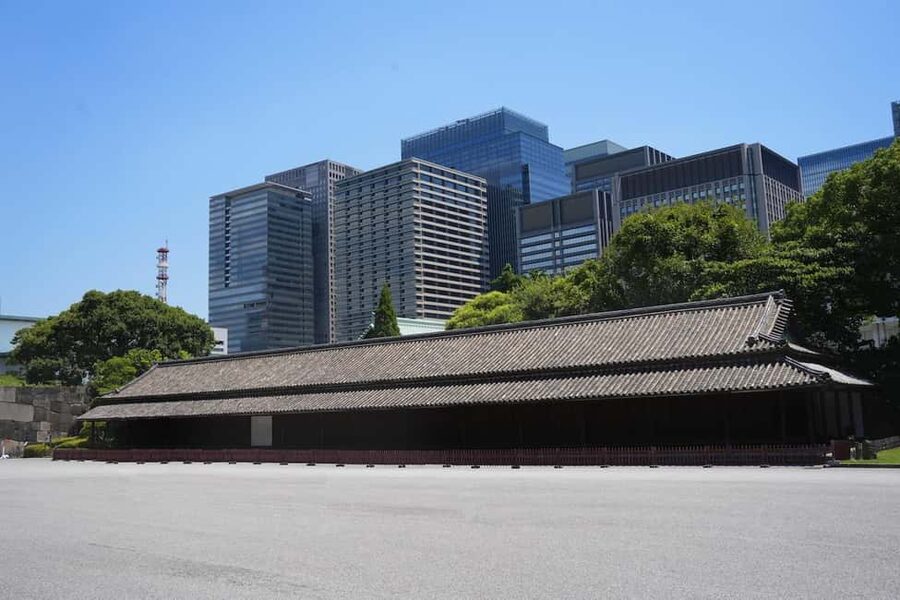
I would choose this tour if you want historical context but do not want a formal museum visit. It suits you especially well if you enjoy military architecture, Japanese political history, urban development, or the small clues found in old walls and gates.
It is also a good match for first-time visitors who want to understand why the Imperial Palace occupies such an important place in Tokyo. The tour gives you a framework for the Tokugawa period and the Meiji Restoration without requiring a full day of study.
Families with older children may find the gate and guardhouse sequence easier to follow than a long indoor lecture. Couples and solo visitors who like asking questions should benefit from the group limit of eight.
You may want to skip it if you strongly prefer indoor attractions, cannot walk for two and a half hours, or want to see the Imperial Palace’s private rooms. The route focuses on exterior sites, surviving defenses, and historical explanation.
Practical advice before you go
Meet at the Marunouchi South Exit, not simply somewhere around Tokyo Station. Look for the historic yellow dome and start from the ground floor.
Wear comfortable shoes. The route includes repeated walks of four to seven minutes and several outdoor stops, so poor footwear can quickly spoil an otherwise inexpensive experience.
No meals or drinks are included. Have water with you if needed, and plan food separately before or after the walk.
You can cancel up to 24 hours in advance for a full refund, and the reserve-now, pay-later option lets you hold a place without paying immediately. Starting times vary, so check availability when choosing a date.
Should you book it?
Book this walk if you want the Imperial Palace to make sense, not just look impressive from behind a gate. The map of 1650s Edo, the explanations of Tokugawa rule, the Meireki fire, the Ooku, and the castle’s varied stonework give the grounds a human and political dimension.
At $3.22, the value is hard to argue with. Just set the right expectations: this is a walking lesson among moats, walls, gates, ruins, and open castle sites. It is not a tour of furnished palace rooms. For a small group, an English guide, and two and a half hours of focused history, it is a smart choice for curious visitors who are ready to walk.
FAQ
Where does the tour meet?
It meets at the ground floor of the Marunouchi South Exit of Tokyo Station, identifiable by its historic yellow-colored dome.
How long does the tour last?
The walking tour lasts 150 minutes, or two and a half hours.
What language is the tour conducted in?
The tour is conducted in English by a live English-speaking guide.
Where does the tour finish?
The tour finishes at Hirakawa Gate, written in the provided information as 平川門.
Is transportation included?
Transportation to the starting point is not included. Meals and drinks are also not included.
Can I cancel for a full refund?
Yes. You can cancel up to 24 hours in advance for a full refund.
More Royal Palace Tours in Tokyo
- Tokyo: Edo Castle & East Garden of the Imperial Palace Tour
★ 4.7 · 112 reviews - Tokyo: Imperial Palace, the history of Japan (ENGLISH GUIDE)
★ 5.0 · 77 reviews - Tokyo: Pvt. Tour – Edo Castle & Imperial Palace East Gardens
★ 4.8 · 63 reviews - Tokyo: Imperial Palace East Gardens and Tokyo Station Tour
★ 5.0 · 16 reviews
More Palace Walking Tours in Tokyo
- Tokyo Castle & Imperial PalaceーShogun Walking Tour
★ 5.0 · 724 reviews - Tokyo Castle, Imperial Palace, Shogun & Garden Walking Tour
★ 5.0 · 211 reviews - Tokyo walking tour around Imperial Palace and Tokyo Station
★ 5.0 · 3 reviews - Venice: Doge’s Palace and St Mark’s Basilica Walking Tour
★ 4.4 · 6,291 reviews
Newly added in Tokyo
- Tokyo walking tour around Imperial Palace and Tokyo Station★ 5.0 · 3 reviews
- Tokyo: Imperial Palace, the history of Japan (ENGLISH GUIDE)★ 5.0 · 77 reviews
- Tokyo: Imperial Palace with Nostalgic Alley Kagurazaka tour★ 4.3 · 8 reviews
- Tokyo: Pvt. Tour – Edo Castle & Imperial Palace East Gardens★ 4.8 · 63 reviews
- Tokyo: Edo Castle Ruins & Imperial Palace East Garden Tour★ 4.4 · 13 reviews
- Tokyo: Imperial Palace East Gardens and Tokyo Station Tour★ 5.0 · 16 reviews
- Imperial Palace Tour: Discover Samurai History with a Guide★ 5.0 · 12 reviews
- Full Tokyo: Meiji Shrine, Imperial Palace, Asakusa & Skytree★ 4.7 · 16 reviews
Palace Walking Tours, compared.
Doge’s Palace and St Mark’s Basilica Walking Tour
Read our review →
Grand Palace and Wat Phra Kaew Guided Walking Tour
Read our review →
Imperial Palace and Shogun Historical Walking Tour
Read our review →
Madrid Old Town & Royal Palace Walking Tour Skip the Line Ticket
Read our review →
Knossos: Knossos Palace Skip-the-Line Guided Walking Tour
Read our review →
Tokyo Castle & Imperial PalaceーShogun Walking Tour
Read our review →Browse the lists this tour appears in