

Review · PALACE WALKING TOURS
Tokyo: Imperial Palace and Shogun Historical Walking Tour
Tokyo’s Imperial Palace East Gardens give you something most quick city tours miss: a chance to walk through the former heart of Edo Castle. You pass huge stone walls and gates, then reach the foundation of the old castle keep, where Japan’s shoguns once ruled. The garden’s ponds and seasonal flowers soften what was once a fortified seat of power.
I like two things here. First, the guide adds the missing story, explaining how Edo Castle, the shogunate, the emperor, and modern Tokyo connect. Second, the small group limit of 15 makes it easier to ask questions and keep a relaxed pace. The main caution is that guide quality can vary. Many guides, including Jim, Tony, Miguel, and Izzy, are praised for clear history and easy conversation, but one or two tours may feel repetitive or lighter on historical detail.
Key points
- Edo Castle ruins: Walk across the foundation of the former castle keep and see the massive walls and gates that remain.
- Ninomaru Garden: Quiet ponds and seasonal flowers show the refined side of the old Edo-period grounds.
- History with a human guide: Learn about shoguns, emperors, the imperial family, Japanese culture, and modern Tokyo as you walk.
- Small-group format: The group can include up to 15 people, far more personal than a large coach tour.
- Good value at $22: The gardens are free to enter, but the fee pays for context, route guidance, and the chance to ask questions.
- A true walking tour: Expect slopes, open-air walking, and enough time on your feet to make comfortable shoes worthwhile.
What the East Gardens reveal about old Tokyo
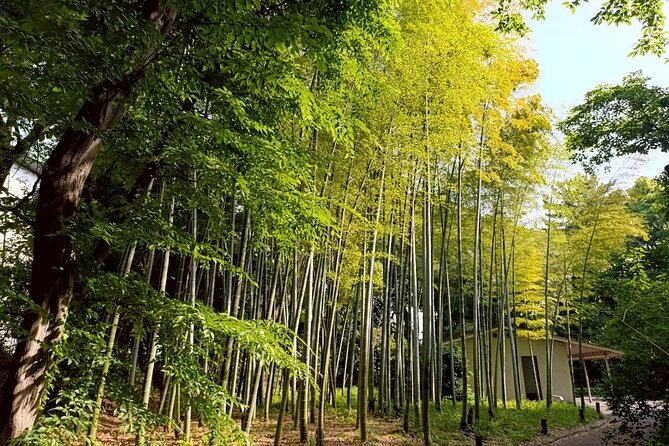
The Imperial Palace is not simply a royal residence behind grand walls. The East Gardens occupy part of the former Edo Castle grounds, once the political center of Japan during the shogun era. That gives this walk two layers: the imperial present and the military government that controlled Japan for centuries.
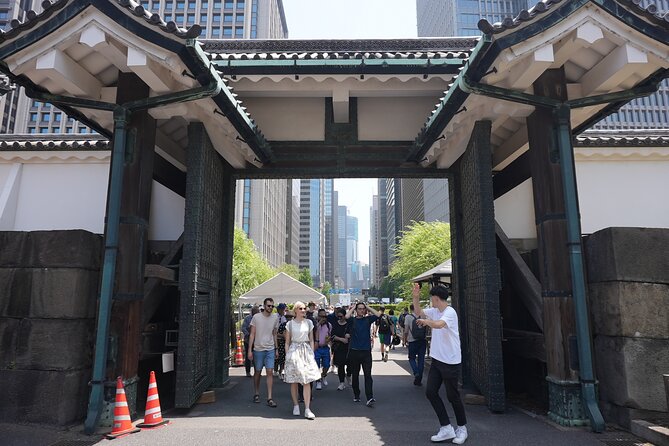
You enter through imposing stone gates and move past surviving sections of castle wall. These are not just decorative ruins. Their scale gives you a sense of how strongly the castle was built and how carefully its approaches were controlled.
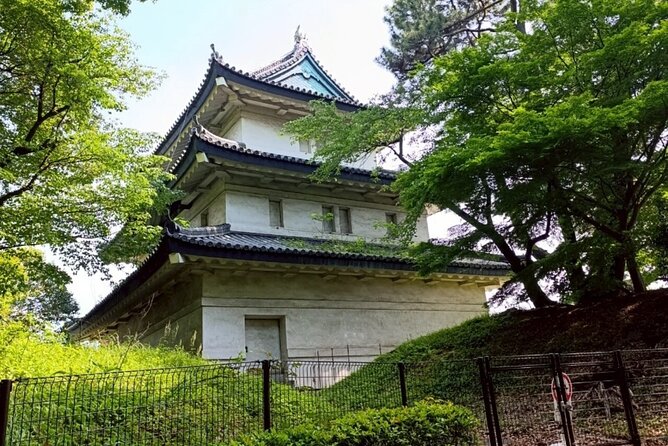
The most striking historical stop is the Edo Castle keep foundation. The wooden keep itself is gone, but the broad stone base remains. From here, your guide can help you picture the scale of the lost building and explain the role of the shogun, feudal lords, and the castle compound.
This is where a guide earns the $22 fee. Without commentary, you see stones, lawns, trees, and paths. With a good guide, those same features become evidence of power, ceremony, defense, and changing government.
More Palace Walking Tours in Japan
- Tokyo Castle & Imperial PalaceーShogun Walking Tour
★ 4.7 · 1,068 reviews - Tokyo: Imperial Palace Japanese History Walking Tour
★ 4.9 · 987 reviews - Tokyo: Imperial Palace and Shogun Walking Tour
★ 4.9 · 935 reviews
The East Gardens route, step by step
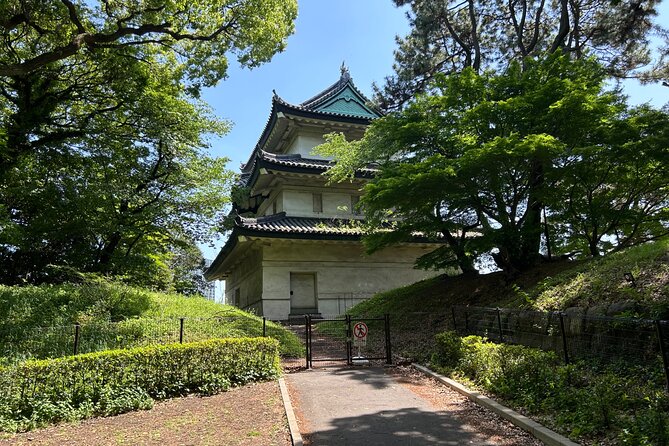
The main garden visit takes about 1 hour and 30 minutes, while the full activity is listed at roughly two hours. The exact pace depends on the group and the guide, but you should expect a steady walk with several stops for explanation.
Stone gates and castle walls
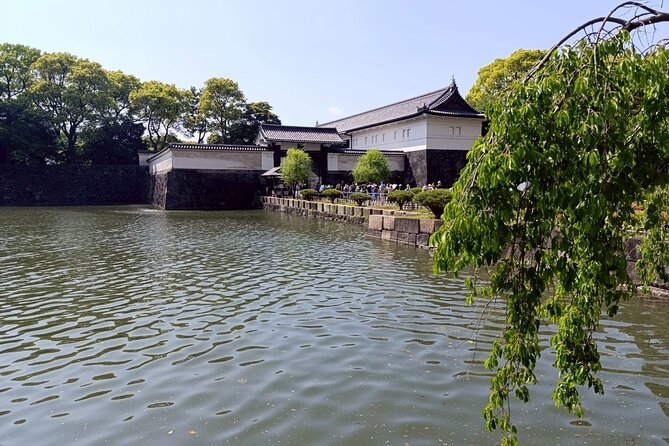
The first part brings you into the old castle precinct through grand gates and along thick stone walls. The gates are worth slowing down for. Their size and design show how entry into Edo Castle was controlled, and they make a strong opening to the tour.
This section also helps set the historical scene. Japan’s political power was not always centered on the emperor in the way modern visitors might assume. The shogunate governed from Edo, now Tokyo, while the imperial court remained in Kyoto for much of that period.
A strong guide such as Jim or Tony can make this shift in power easier to follow. Several guides have been praised for linking the castle’s physical features with Japanese history and modern culture, rather than treating each stop as an isolated fact.
The former castle keep foundation
The castle keep foundation is the clearest physical reminder of Edo Castle’s former importance. You stand on the base of a structure that once towered over the grounds, then look across an area that now feels calm and open.
The contrast is part of the appeal. The site is peaceful today, but the stones point to a time when the castle served as the center of military and political authority. A guide can explain what changed, what disappeared, and how the imperial grounds fit into Tokyo’s later development.
You may spend a long time at this stop. That can be useful if you enjoy history and want to ask questions. If you prefer constant movement, it may feel slow. One assessment of the tour praised the amount of information but found that some explanations ran too long and repeated points.
More Royal Palace Tours in Japan
- Imperial Palace East Garden and Edo Castle Walking Tour in Tokyo
★ 5.0 · 510 reviews - Kyoto: Imperial Palace & Nijo Castle Guided Walking Tour
★ 4.7 · 453 reviews - Tokyo: Imperial Palace East Gardens Walking Tour
★ 4.8 · 353 reviews - Tokyo: Imperial Palace, Sensō-ji Temple, & Tokyo Tower Tour
★ 4.5 · 339 reviews
Ninomaru Garden and seasonal scenery
Ninomaru Garden offers a softer change of mood. Ponds, flowers, and carefully arranged plantings show the aesthetic side of the Edo period. After the hard stone of the walls and foundation, the garden feels more intimate and reflective.
Seasonal changes affect what you see. Flowers and foliage will not look the same at every time of year, so the garden’s visual appeal depends partly on your visit date. The historical value remains, but the exact display of flowers is not fixed.
This is also a good place to notice the tour’s easy pace. You are not simply being moved from one photo stop to the next. The guide can point out details in the garden and explain how beauty, order, and status were expressed in traditional Japanese design.
The guide makes or breaks the experience
The tour has received a 5 out of 5 rating from 2,251 reviews, with 99 percent recommending it. Those figures point to a reliable overall experience, but the comments also make one practical fact clear: your guide matters a great deal.
Jim is repeatedly praised for explaining Japanese history patiently and connecting the palace grounds with modern culture. One particularly useful feature of his approach is the perspective of someone who studied history outside Japan and has lived in Japan for 41 years. That can help you compare Japanese events with the way a visitor from abroad might understand them.
Tony is praised for explaining the Edo period, the shogunate, the emperor, and the imperial family. He is also noted for keeping the group together before moving on, a small detail that matters in busy garden areas.
Miguel is described as an engaging guide who adds historical facts, cultural context, and modern Tokyo insights. He has also been praised for answering questions and staying patient with the whole group.
Izzy is described as friendly and informative. Another guide, Lasse, is especially noted for his passion for Japanese history. Guides named Blake, Michi, Dylan, and John also receive strong praise for storytelling, friendliness, and help with questions or practical directions.
That range of guide styles is both a strength and a small risk. You may get a lively storyteller, a careful history teacher, or someone who is still gaining confidence. One less positive experience described a guide who seemed new and needed help with historical answers. If your main reason for booking is serious historical detail, this variation is worth keeping in mind.
Why the $22 price can make sense
The East Gardens can be visited for free, so you should not book this tour for admission alone. You are paying for interpretation and orientation, not access to a private palace interior.
At $22 per person, the price is modest for a two-hour guided walk in central Tokyo. It can be good value if you want to understand what you are seeing instead of wandering past castle stones without context. The guide also gives you a chance to ask about Japanese history and culture in real time.
The value is strongest for a first visit to Tokyo. The tour can introduce the difference between shogun rule and imperial rule, explain why Edo Castle mattered, and place the palace grounds within the wider story of the city.
You may find the price less worthwhile if you already have a strong command of Japanese history or prefer to explore quietly on your own. The gardens themselves do not require this tour, and the route is not presented as an exclusive behind-the-scenes visit.
A two-hour walk, not a bus excursion

This experience suits people who want to move at street level. You walk through gates, along walls, across open ground, and through the garden. A bus could show you the general area, but it could not give you the same close look at stonework, ruins, ponds, and smaller garden details.
The walking is not described as difficult, but you should expect slopes and time on your feet. One direct piece of advice from the tour experience is to prepare for walking and some inclines. Comfortable shoes are a sensible choice.
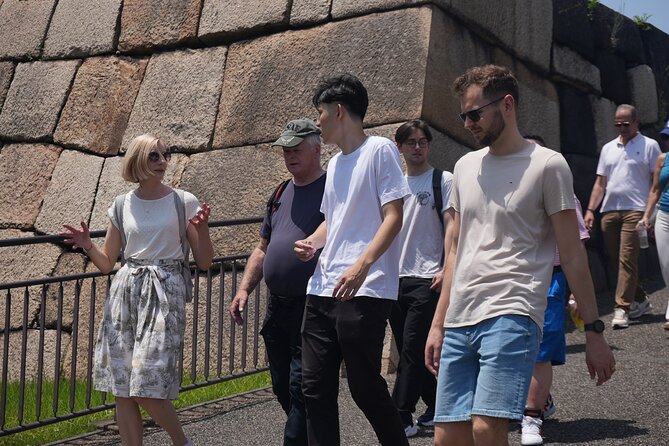
The group limit of 15 keeps the outing more personal than a large sightseeing circuit. You can hear the guide more easily, and the guide can pause for questions without managing a crowd of dozens.
The tradeoff is that a small group does not remove every timing problem. You need to arrive at the stated meeting point, Starbucks Coffee in Kokyo Gaien Wadakura Fountain Park at 3-1 Kōkyogaien, Chiyoda City. The tour ends back there.
One poor experience involved confusion over the meeting location and late contact with the guide. That is not the norm suggested by the overall rating, but it is a useful warning: arrive early, check the meeting details carefully, and keep your phone available. A missed start can shorten the time available in the gardens, especially if the grounds close before the group finishes.
What kind of history lesson should you expect?
You do not need to arrive with a textbook, but a little preparation will help. The tour covers the Edo period, the shogunate, the emperor, the imperial family, castle life, and the opening of Japan to the Western world.
If these subjects are new to you, the guide’s commentary can make the palace grounds much easier to understand. If you already know the basics, you can use the time to ask about details, cultural customs, or how the old political system shaped modern Tokyo.
The most successful versions of this tour treat history as a connected story. The castle walls explain defense. The keep foundation points to political authority. The garden shows refinement and ceremony. The modern imperial connection brings the story forward.
You should also expect some variation in the amount of detail. One guide may give a broad introduction, while another may offer a more extended history lesson. The tour is best for you if you enjoy listening, asking questions, and pausing at historical sites.
Best for first-time Tokyo visitors and curious history fans
I would recommend this walk to a first-time visitor who wants an introduction to Tokyo beyond shopping districts and neon streets. It gives you a calm first look at the city’s political past and can help you understand later visits to temples, museums, or historic neighborhoods.
It also suits travelers who like gardens but want more than scenery. The East Gardens are attractive on their own, yet the old walls and castle foundation gain much more meaning when someone explains their purpose.
Families and mixed-age groups may find the short format manageable, since most travelers can participate and the group is limited to 15. Still, anyone who dislikes walking, slopes, or extended historical explanations may prefer a self-guided visit.
The tour can work early in your stay, when you need historical bearings, or later, when you already have enough context to ask sharper questions. One useful feature is that guides may also explain aspects of modern Japanese culture and how visitors can behave respectfully.
Practical details before you book
The price is $22 per person, and a mobile ticket is provided. Confirmation arrives at booking. The tour is near public transportation, though no specific station or route is provided in the available details.
The activity lasts approximately two hours, with about 1 hour and 30 minutes specifically assigned to the East Gardens and Edo Castle ruins. It begins and ends at the Starbucks Coffee meeting point in Kokyo Gaien Wadakura Fountain Park.
The maximum group size is 15. Most people can participate, but this remains an outdoor walking activity with slopes, so plan your clothing and footwear accordingly.
Free cancellation is available if you cancel at least 24 hours before the start time. Cancellations or changes made less than 24 hours ahead are not accepted for a refund, and the cut-off uses Tokyo local time.
Should you book the Imperial Palace walking tour?
Book it if you want the Imperial Palace East Gardens to make sense, not just look pleasant. The tour’s best features are the castle foundation, the stone gates, the Ninomaru Garden, and the chance to hear a guide connect shogun-era Edo with the modern imperial family.
At $22, it is a sensible buy for first-time visitors, history fans, and anyone who likes small-group walks. I would be more cautious if you dislike extended explanations or already know Japanese history well, since the guide may spend a long time on background information.
Arrive early at the Starbucks meeting point, wear comfortable shoes, and treat the tour as a history walk rather than a palace interior visit. If you want context, questions, and a calmer side of Tokyo, this is a strong choice.
FAQ
How much does the Imperial Palace and Shogun Historical Walking Tour cost?
The tour costs $22 per person.
How long does the tour last?
The activity lasts approximately two hours. The East Gardens and Edo Castle ruins portion is listed as about 1 hour and 30 minutes.
Where does the tour begin?
The meeting point is Starbucks Coffee in Kokyo Gaien Wadakura Fountain Park, at 3-1 Kōkyogaien, Chiyoda City, Tokyo 100-0002, Japan.
Where does the tour end?
The activity ends back at the meeting point.
What will I see during the walk?
You will see the Imperial Palace East Gardens, Edo Castle ruins, large stone gates, castle walls, the former castle keep foundation, and Ninomaru Garden.
How large is the group?
The group can include a maximum of 15 travelers.
Is admission to the gardens included?
Yes. The admission ticket is included in the tour.
Can I cancel for a full refund?
Yes, if you cancel at least 24 hours before the experience start time. Cancellations or changes made less than 24 hours before the start time are not accepted for a refund.
More Royal Palace Tours in the world
- Madrid: Royal Palace Fast-Access Admission Ticket
★ 4.6 · 13,856 reviews - Madrid: Royal Palace Expert Guided Tour with Skip-the-Line
★ 4.7 · 8,407 reviews - Amsterdam: Royal Palace Entry Ticket + Audio guide
★ 4.6 · 7,889 reviews - Dubai To Abu Dhabi: Grand Mosque, Royal Palace & Etihad Towers
★ 5.0 · 7,632 reviews
More Palace Walking Tours in the world
- Venice: Doge’s Palace and St Mark’s Basilica Walking Tour
★ 4.4 · 6,291 reviews - Split: Old Town and Diocletian Palace Walking Tour
★ 4.9 · 4,727 reviews - Walking Tour of Split and Diocletian’s Palace
★ 5.0 · 2,588 reviews - Bangkok: Grand Palace and Wat Phra Kaew Guided Walking Tour
★ 4.4 · 2,417 reviews
Newly added in the world
- Avignon: Around The Palace Tour★ 4.5 · 13 reviews
- Ayutthaya Full-Day Tour with Bang Pa In (Summer Palace)★ 5.0 · 2 reviews
- Bali: Gate Of Heaven and Water Palace Tirta Gangga Package★ 4.7 · 3 reviews
- Aranjuez: Royal Palace Guided Tour★ 4.5 · 93 reviews
- Asia Continent & Topkapı Palace & Harem. Guided, Small group★ 4.9 · 3 reviews
- Kornik Castle and Rogalin Palace Half-Day Private Tour★ 5.0 · 2 reviews
- Antananarivo: Guided Tour and sunset in queen’s palace★ 3.9 · 13 reviews
- Royal Palace of Aranjuez Small-Group Tour with Entry Ticket★ 5.0 · 2 reviews
Palace Walking Tours, compared.
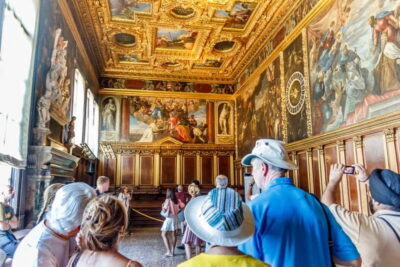
Doge’s Palace and St Mark’s Basilica Walking Tour
Read our review →

Grand Palace and Wat Phra Kaew Guided Walking Tour
Read our review →
Madrid Old Town & Royal Palace Walking Tour Skip the Line Ticket
Read our review →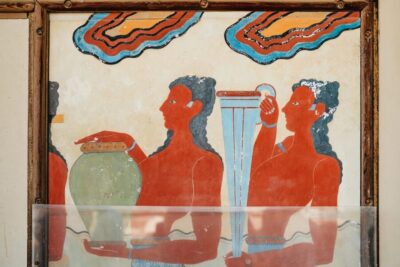
Knossos: Knossos Palace Skip-the-Line Guided Walking Tour
Read our review →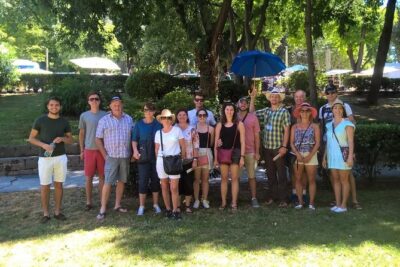
Tokyo Castle & Imperial PalaceーShogun Walking Tour
Read our review →
Buckingham Palace Entry Ticket & Royal Walking Tour
Read our review →Browse the lists this tour appears in